Bangladesh UN peacekeeping troops face scrutiny over human rights record at home
Synopsis
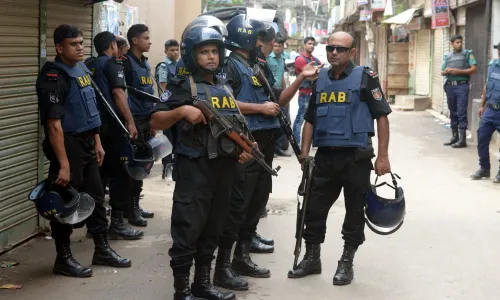
Bangladesh is deploying up to 1,600 troops to Haiti — but a UN-recommended independent screening mechanism to filter out officers linked to the RAB's documented record of killings, torture, and enforced disappearances reportedly remains unconfirmed. The name has changed from RAB to SRB; whether the accountability gap has closed has not.
Key Takeaways
Bangladesh dissolved the Rapid Action Battalion (RAB) on 15 September , replacing it with the Special Response Battalion (SRB) , but the route for accused officers to serve as UN peacekeepers reportedly remains open.
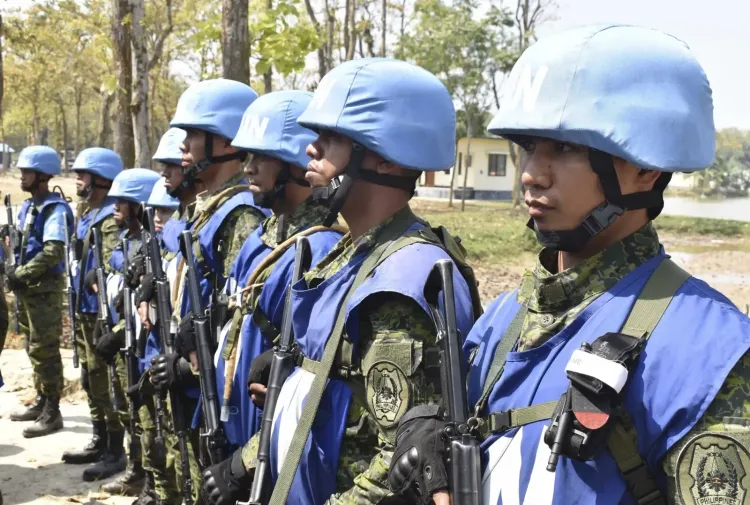
50 Bangladeshi soldiers were deployed to Haiti just one month after the RAB's dissolution, as an advance team for a UN-authorised Gang Suppression Force .
The UN human rights office in 2025 urged Bangladesh to establish an independent screening mechanism before nominating personnel linked to RAB or DGFI for peacekeeping roles.
In November 2025 , UN experts formally warned the Department of Peace Operations about alleged abuses by Bangladeshi military officials against Indigenous communities in the Chittagong Hill Tracts .
Neither the Bangladesh government nor the UN Department of Peace Operations has confirmed whether an independent screening mechanism is now in place.
Bangladesh plans to deploy approximately 1,600 soldiers and police to Haiti , raising the urgency of unresolved vetting questions.
Bangladesh, one of the largest troop-contributing countries to UN peacekeeping missions, is facing growing international scrutiny over whether officers accused of serious human rights abuses at home are being deployed abroad — where they may endanger the very communities they are mandated to protect, according to a report published in The Diplomat.
The RAB Dissolution and Its Replacement
On 15 September, the Bangladeshi government announced the dissolution of the Rapid Action Battalion (RAB), a paramilitary unit accused over two decades of killings, torture, and enforced disappearances. The RAB was immediately replaced with the Special Response Battalion (SRB). Just one month later, 50 Bangladeshi soldiers departed Dhaka for Haiti as the advance team for a UN-authorised Gang Suppression Force.
The RAB was established in 2004 under a Bangladesh Nationalist Party (BNP) government, drawing personnel on deputation from the army, navy, air force, and police. Since its formation, the force has been implicated in several major crimes, as documented in Bangladesh court records, the report noted.
The Screening Gap
The critical question — whether the route for RAB-linked officers to serve as UN peacekeepers has been closed — remains unanswered. As The Diplomat put it: 'Although the name on the door has changed, the door is still open.'
In 2025, the UN human rights office formally recommended that Bangladesh establish an independent screening mechanism for peacekeeping nominations and, pending its creation, refrain from nominating individuals linked to the RAB or the Directorate General of Forces Intelligence (DGFI). Months later, the UN resident coordinator in Dhaka was still publicly stressing that such a mechanism 'must' be put in place — suggesting the system had not yet been operationalised.
Neither the Bangladesh government nor the UN Department of Peace Operations has officially clarified whether the independent screening mechanism is now functioning.
UN Experts Raise the Alarm on Chittagong Hill Tracts
In November 2025, UN experts warned the Department of Peace Operations about the alleged involvement of Bangladeshi military officials in human rights violations against Indigenous people in the Chittagong Hill Tracts. The experts formally wrote to the department asking whether these allegations were considered when selecting peacekeepers for international missions.
The experts cautioned that deploying officers linked to serious abuses could endanger civilians and critically undermine trust in UN missions. The fact that such questions were still being raised about screening procedures deepened concerns over whether independent oversight was truly in place, the report said.
Haiti Deployment Raises Stakes
The concerns carry immediate consequence: Bangladesh is planning to deploy approximately 1,600 soldiers and police personnel to Haiti, a country already under severe humanitarian and security stress. The lack of a credible, independent vetting mechanism ahead of a deployment of this scale is what experts and rights groups say makes the situation especially urgent.
This comes amid broader international debate over accountability standards for UN peacekeeping contributors — a debate that has intensified as missions in fragile states increasingly operate in environments where civilian trust is both scarce and essential.
Point of View
Given that experts were still demanding a screening mechanism months after it was first recommended. What makes this particularly consequential is scale: a 1,600-strong Haiti deployment without credible vetting is not a procedural footnote, it is a liability for the entire UN peacekeeping system. The deeper problem is that the UN's troop-contribution model has long prioritised numbers over accountability, and Bangladesh — which earns significant revenue and prestige from peacekeeping — has little incentive to tighten standards unless external pressure mounts. The Chittagong Hill Tracts angle is the detail mainstream coverage is missing: it signals that the alleged abuses are not historical but ongoing.
NationPress
21 Nov 2026
Frequently Asked Questions
Why are Bangladesh's UN peacekeeping deployments under scrutiny?
Bangladesh is under scrutiny because officers linked to the Rapid Action Battalion (RAB) — accused over two decades of killings, torture, and enforced disappearances — have reportedly continued to be nominated for UN peacekeeping missions even after the unit was dissolved and replaced with the Special Response Battalion (SRB). A UN-recommended independent screening mechanism to filter such nominees has not been confirmed as operational.
What is the Rapid Action Battalion (RAB) and why was it dissolved?
The RAB was a Bangladeshi paramilitary unit established in 2004 under a BNP government, drawing personnel from the army, navy, air force, and police. It was accused of serious human rights violations including extrajudicial killings, torture, and enforced disappearances over two decades, and was dissolved by the government on 15 September, replaced by the Special Response Battalion (SRB).
What has the UN recommended regarding Bangladesh's peacekeeping nominations?
In 2025, the UN human rights office recommended that Bangladesh establish an independent screening mechanism for peacekeeping nominations and, pending its creation, refrain from nominating individuals linked to the RAB or the Directorate General of Forces Intelligence (DGFI). As of the report's publication, neither the Bangladesh government nor the UN Department of Peace Operations had confirmed whether such a mechanism is in place.
What is the concern about Bangladesh's deployment to Haiti?
Bangladesh plans to deploy approximately 1,600 soldiers and police personnel to Haiti as part of a UN-authorised Gang Suppression Force. Rights experts warn that without a verified independent screening mechanism, officers with documented human rights abuse records could be included in this deployment, endangering civilians and undermining trust in the mission.
What were UN experts' concerns about the Chittagong Hill Tracts?
In November 2025, UN experts warned the Department of Peace Operations about alleged human rights violations by Bangladeshi military officials against Indigenous people in the Chittagong Hill Tracts. The experts formally asked whether these allegations were factored into peacekeeper selection, and cautioned that deploying implicated officers could endanger civilians abroad.