Is Bangladesh's Shift Away from India Affecting Cricket?
Synopsis
The India-Bangladesh relationship has hit an all-time low following the July Uprising of 2024, leading to a surge in anti-India sentiments that have infiltrated cricket. This article explores how political tensions are impacting sports and cultural exchanges between the two nations.
Key Takeaways
India-Bangladesh relations are at a historic low.
The geopolitical shift towards Pakistan affects cricket diplomacy.
Cricket is increasingly intertwined with political tensions.
Bangladesh risks significant financial losses due to its withdrawal.
Safety assurances from the ICC highlight the politicization of sports.
Dhaka: The relationship between India and Bangladesh has reached a historic low following the events of the July Uprising in 2024, a trend that continues to decline. This uprising forced Sheikh Hasina to flee the nation, leading New Delhi to confront an unexpected surge of anti-India sentiments in its neighboring country.
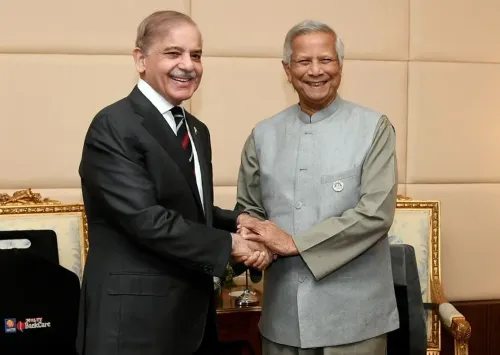
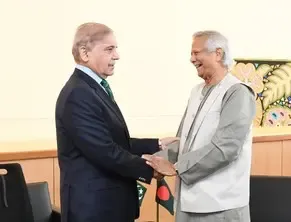
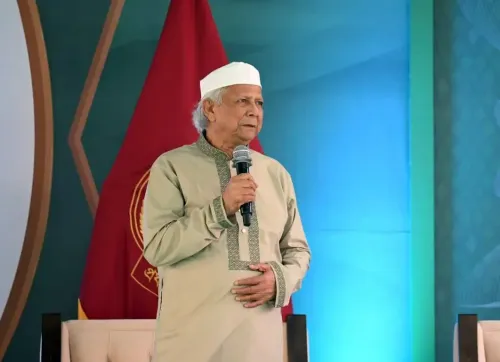
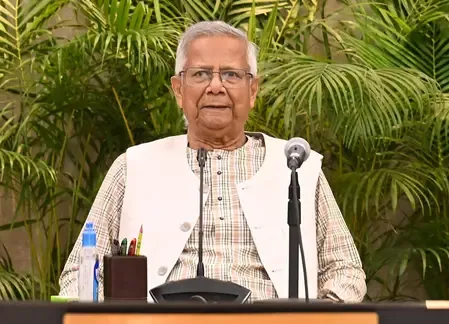
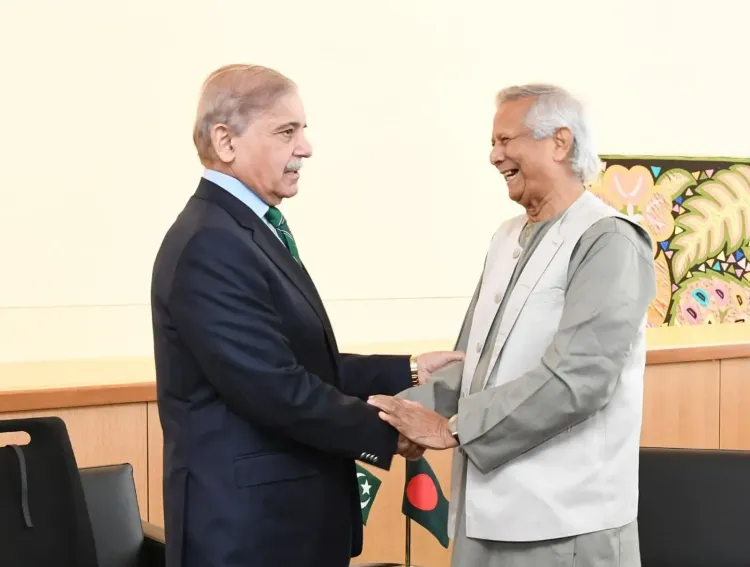
The rise of Islamists and the targeting of minorities, combined with threats to the country’s social and cultural fabric, revealed the driving forces behind these sentiments. The interim government under Muhammad Yunus swiftly initiated a geopolitical pivot away from India towards Pakistan under the guise of ‘recalibration’. It's evident that Islamist forces have infiltrated the current interim administration, further deepening the diplomatic rift between the two nations.
In response to every instance of domestic turmoil in Bangladesh, the interim government has directed blame towards India for supposedly facilitating ‘anti-state activities’. Concerns raised by New Delhi regarding the escalating violence against minorities have repeatedly been dismissed as mere ‘Indian propaganda’, even as international and local human rights organizations echo these worries.
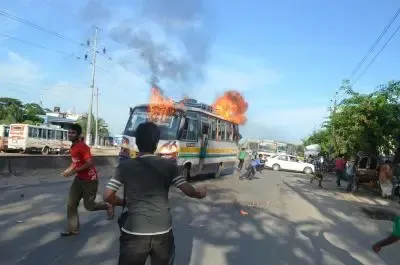
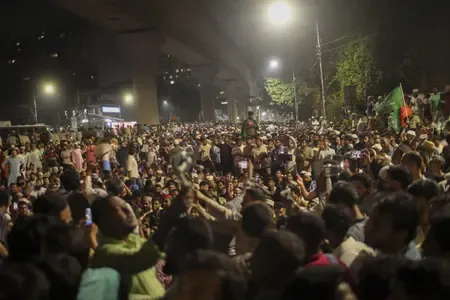
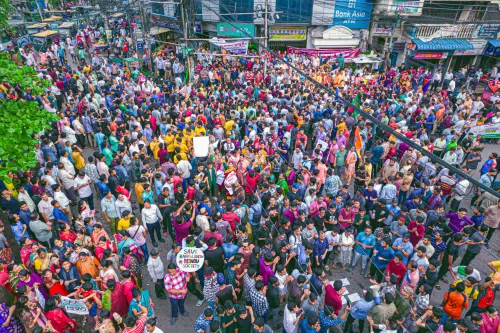
The diplomatic winter reached a nadir in December when the assassination of Osman Hadi, leader of Inqilab Mancha (an anti-India Islamist youth group), prompted unfounded accusations against India. December also saw Islamist extremists launching attacks on key cultural institutions in Bangladesh and prominent media outlets, branding them as ‘pro-India’. Radical demonstrators staged protests outside the Indian High Commission in Dhaka and other cities, intending to execute similar violent actions. The safety of Indian commissions in Bangladesh has been compromised, which led to a precautionary withdrawal of family members of Indian diplomats just ahead of the upcoming 13th national election.
Amidst this turmoil, New Delhi attempted to extend an olive branch when the External Affairs Minister of India attended the funeral of Begum Khaleda Zia, the chief of the Bangladesh Nationalist Party (BNP). Many in Bangladesh viewed this gesture as a potential stabilizing force in bilateral relations, providing a hopeful outlook before the national elections.
However, the cricketing scene turned chaotic in early January.
The Board of Control for Cricket in India (BCCI) instructed the Kolkata Knight Riders (KKR) to release Mustafizur Rahman, the only Bangladeshi pacer auctioned for $1 million, from the 2026 squad, purportedly due to the recent political developments in Bangladesh (no official reason provided). This decision was met with retaliation from Bangladesh, which opted not to broadcast IPL matches. Following BCCI's directive, Bangladesh raised ‘security concerns’ for its players in India and requested the International Cricket Council (ICC) to relocate its T20 World Cup matches to a ‘neutral’ venue, such as Sri Lanka. However, after thorough evaluations, the ICC denied this request, citing a lack of credible security threats for Bangladeshi participants and stating that such a sudden shift would undermine ICC's integrity. The ICC granted Bangladesh a 24-hour deadline on January 23 to finalize its decision.
It’s noteworthy that among all board members present, only the Pakistan Cricket Board (PCB) openly supported Bangladesh’s stance. In a formal letter preceding the ICC meeting, Pakistan even extended an offer to host matches in its territory if necessary. The PCB also threatened to boycott the T20 World Cup in a show of solidarity with Bangladesh, protesting the ICC’s refusal to shift venues. Nonetheless, the PCB chief announced that a final decision would be communicated by January 30 or February 2.
Amidst this, Bangladesh failed to respond within the allotted 24 hours, signaling its intent to withdraw from the T20 World Cup, allowing Scotland to officially take its place on January 24. This raises the question: why did Bangladesh refuse to engage despite the ICC assuring no security threats?
One evident factor in this situation leans towards Pakistan—the only country to back Bangladesh. Speculation suggests that Pakistan’s influence has led the BCB to adopt a stringent position. The PCB cited its own agreement with the BCCI to play ICC matches at neutral venues until 2027. However, parallels cannot be drawn easily as India has shown no hostility towards neighboring Bangladesh, despite the latter's sentiments. Neither has Dhaka raised security issues with the ICC prior to the BCCI's decision to withdraw the lone Bangladeshi player from the IPL, making it clear that ‘security concerns’ are likely mere retaliatory actions. While opinions may differ on whether New Delhi acted appropriately, it is undeniable that India does not pose a security threat to Bangladesh.
In fact, India has consistently supported and played a crucial role in the development of Bangladesh’s cricketing landscape. The BCCI's contributions, particularly in the 1990s, in hosting Bangladesh and offering training and infrastructural support through regular matches, paved the way for its recognition globally within the ICC. The BCCI played a key role in Bangladesh’s entry into the ODI World Cup in 1999, utilizing the Asian bloc. Former BCCI chief Jagmohan Dalmiya's term as ICC President was instrumental in granting Bangladesh full membership and Test status in June 2000, overcoming skepticism from Australia and South Africa while showcasing India’s successful cultural diplomacy.
In contrast, Pakistan has previously complicated Bangladesh's cricketing journey by demanding revenue from the Bangladesh team during home series, despite hosting Bangladesh twice (2011/12-2015). Furthermore, Pakistan withdrew its players from the Bangladesh Premier League (BPL), indefinitely postponing its tour. Currently, political interference from Pakistan, through calls for a boycott under the guise of cricket diplomacy, is believed to have influenced the BCB’s decision to withdraw from this year’s World Cup.
Bangladesh’s choice is proving costly for its cricket team, which will miss out on an estimated $3 million participation fee, in addition to potential earnings for its players in these matches. This jeopardizes Bangladesh’s 4.46 percent cut in ICC central revenue, which constitutes over half of the BCB’s annual income. Moreover, BCB now faces financial penalties for its withdrawal without a valid cause.
Ironically, Bangladesh’s cricket team, currently ranked ninth in the ICC T20 rankings, did not consent to such financial drawbacks and is suffering due to the nation’s anti-India political stance. Curiously, Bangladesh’s security concerns vanished when it approved its shooting team to travel to India for the Asian Rifle and Pistol Championships. This cricketing debacle—intensified by Pakistan’s influence and Bangladesh’s own turbulent politics—leaves only the vibrant cricket team in Bangladesh to bear the consequences.
Point of View
It’s crucial to maintain an unbiased perspective. The ongoing political shifts between India and Bangladesh should be understood within the context of their historical ties and current geopolitical challenges. It's imperative to foster dialogue and engagement, ensuring that sports remain a bridge rather than a barrier.
NationPress
20 Sept 2026
Frequently Asked Questions
What led to the decline in India-Bangladesh relations?
The decline is primarily attributed to the July Uprising in 2024, which resulted in a surge of anti-India sentiments and a political shift towards Pakistan.
How has cricket been affected by political tensions?
The recent withdrawal of Bangladesh from the T20 World Cup highlights how political grievances can overshadow sporting events, affecting player participation and broadcasting rights.
What is the significance of the ICC's response to Bangladesh's security concerns?
The ICC's dismissal of Bangladesh's security concerns underscores the lack of credible threats and the potential misuse of sports for political agendas.
Why did Bangladesh fail to respond to the ICC's deadline?
Bangladesh's lack of response indicates a strategic decision possibly influenced by political backing from Pakistan and an unwillingness to engage with India.
What financial implications does Bangladesh face for its withdrawal?
Bangladesh is set to lose an estimated $3 million in participation fees and jeopardize its share of ICC revenues, which significantly impacts its cricketing budget.