Kashimpur Jail: Bangladesh's Awami League alleges food, water denial to political detainees

Synopsis
Bangladesh's Awami League is alleging that political detainees at Kashimpur High Security Jail are being denied food and clean water as a form of collective punishment — triggered, the party claims, each time exiled former PM Sheikh Hasina speaks publicly. The charges invoke the UN's Nelson Mandela Rules and come as Hasina, speaking from exile in India, declared she plans to return home by year-end.
Key Takeaways
The Awami League alleged on 7 August that political detainees at Kashimpur High Security Central Jail in Gazipur are being denied food and safe drinking water.
The party claimed punitive measures are enforced each time former PM Sheikh Hasina delivers a public address, amounting to collective punishment.
A former detainee alleged prisoners were forced to drink water from washroom facilities, calling it 'degrading and incompatible with basic standards of humane treatment.' The Awami League warned the alleged conditions could violate the UN Nelson Mandela Rules on prisoner treatment.
Families of detainees have demanded an independent investigation and urged authorities to ensure food, water, and medical care for all prisoners.
Hasina , speaking from exile in India , said she plans to return to Bangladesh by year-end and described the country as gripped by fear and economic hardship under the BNP .
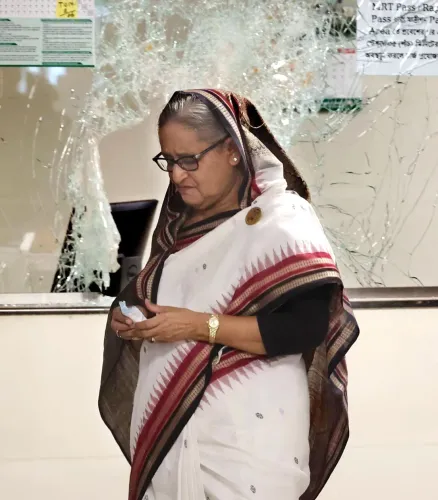
Bangladesh's Awami League has raised serious alarm over alleged human rights violations against political detainees held at Kashimpur High Security Central Jail in Gazipur district, claiming that prisoners linked to the party are being subjected to collective punishment including denial of food and safe drinking water. The allegations, surfaced on 7 August, follow a virtual address delivered by former Prime Minister Sheikh Hasina.
What the Awami League Alleged
Citing accounts from families of detainees and former inmates, the Awami League claimed that punitive measures are enforced inside Kashimpur Jail each time Hasina delivers a public statement. According to the party, these measures include suspension of regular meal distribution and restrictions on access to essential services — amounting to what it described as collective punishment of political prisoners.
Relatives of detainees reportedly told the party that inmates were left without food for much of the day following Hasina's virtual address on Wednesday. Former detainees also alleged that prisoners who attempted to purchase food from the prison canteen using their own funds were repeatedly obstructed from doing so.
In one of the more disturbing claims, a former detainee alleged that prisoners were, at times, compelled to drink water from washroom facilities rather than being supplied with clean drinking water — a practice described as 'degrading and incompatible with basic standards of humane treatment.'
International Standards Cited
The Awami League invoked international human rights frameworks in its statement, warning that if the allegations are verified, they could constitute violations of the UN Standard Minimum Rules for the Treatment of Prisoners — commonly known as the Nelson Mandela Rules. Those rules mandate that all prisoners receive adequate food, clean drinking water, and dignified treatment, free from discrimination or collective punishment.
'Human rights advocates have long maintained that all detainees, regardless of their political affiliation or the charges they face, are entitled to fundamental protections under both domestic law and international human rights norms,' the party stated.
Families Demand Independent Inquiry
Families of the detained individuals have called for an independent investigation into the allegations. They have urged Bangladeshi authorities to ensure that all prisoners are provided with adequate food, safe drinking water, medical care, and protection from abuse, according to the Awami League.
Hasina's Address and Her Remarks on Bangladesh
The allegations emerged in the wake of a press conference held in New Delhi on Wednesday, in which Sheikh Hasina addressed journalists via an audio link from exile. She said that Bangladesh's situation has worsened over the past two years, with citizens continuing to live under conditions of fear, insecurity, and economic distress — even after the Bangladesh Nationalist Party (BNP) assumed office following what she described as a 'rigged election.'
'Even after a rigged election brought the BNP to power, the situation did not change. Bangladesh remains in the grip of fear, terror, depression, economic hardship and deep insecurity,' Hasina said in her address.
Hasina, who has been living in exile in India for the past two years, also reportedly stated that she intends to return to Bangladesh before the end of the year. As the situation inside Kashimpur Jail remains unverified by independent observers, pressure is mounting on Dhaka to allow a credible inquiry into the conditions facing political detainees.
Point of View
With no independent verification from journalists or rights groups inside Kashimpur Jail. That does not make them false — it makes them unconfirmed, and that distinction matters enormously. Bangladesh's current administration has every incentive to dismiss the claims as political theatre, while the Awami League has every incentive to amplify them. What is missing — and what would settle the matter — is access for independent monitors, something neither side has publicly committed to. The invocation of the Nelson Mandela Rules is legally precise and strategically shrewd; it shifts the frame from domestic politics to international human rights law, where Bangladesh's record is under growing scrutiny. Hasina's year-end return pledge, delivered from New Delhi via audio link, adds pressure but also raises questions about whether it is a political signal or a genuine intention.
NationPress
7 Aug 2026
Frequently Asked Questions
What are the allegations against Kashimpur High Security Central Jail?
Bangladesh's Awami League alleges that political detainees linked to the party at Kashimpur Jail in Gazipur are being denied food and safe drinking water as collective punishment, particularly following public addresses by former PM Sheikh Hasina. A former detainee also alleged that prisoners were forced to drink water from washroom facilities.
Which international rules does the Awami League say are being violated?
The Awami League cited the UN Standard Minimum Rules for the Treatment of Prisoners, known as the Nelson Mandela Rules, which require adequate food, clean drinking water, and dignified treatment for all detainees without discrimination or collective punishment.
What did Sheikh Hasina say in her recent address?
Speaking via audio link at a press conference in New Delhi on Wednesday, Hasina said Bangladesh remains gripped by fear, economic hardship, and insecurity even after the BNP came to power through what she called a 'rigged election.' She also said she plans to return to Bangladesh by the end of the year.
Who is Sheikh Hasina and where is she currently?
Sheikh Hasina is the former Prime Minister of Bangladesh and leader of the Awami League. She has been living in exile in India for the past two years following a change in government in Bangladesh.
What have the families of detainees demanded?
Families of political detainees held at Kashimpur Jail have called for an independent investigation into the alleged abuses and urged Bangladeshi authorities to guarantee adequate food, safe drinking water, medical care, and protection from abuse for all prisoners.