Pralhad Joshi Sets Education Agenda for India's BRICS Chairship
Synopsis
Union Minister Pralhad Joshi has outlined India's education priorities for the country's BRICS 2026 chairship, mapping the four-pillar theme of Resilience, Innovation, Cooperation and Sustainability onto the reform of education systems across member states.
Key Takeaways
India holds the BRICS 2026 chairship under the theme Resilience, Innovation, Cooperation and Sustainability.
Minister Pralhad Joshi explicitly linked all four pillars to the reform and strengthening of education systems.
BRICS has an existing education architecture, including the BRICS Network University and academic working groups.
India's 2021 BRICS chairship was themed around continuity and consensus, establishing a precedent for institution-building.
A formal BRICS Education Ministerial meeting or joint programme under the 2026 cycle is the key deliverable to watch.
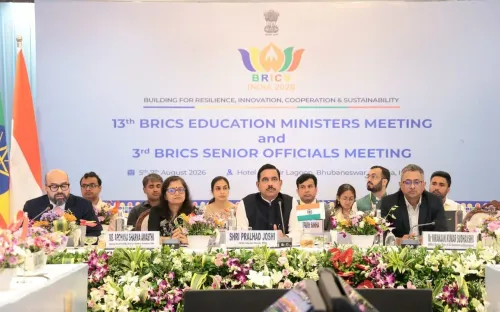
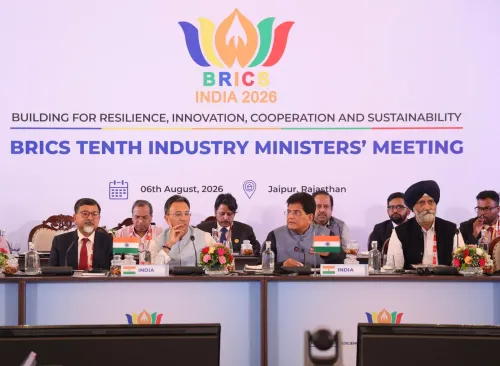
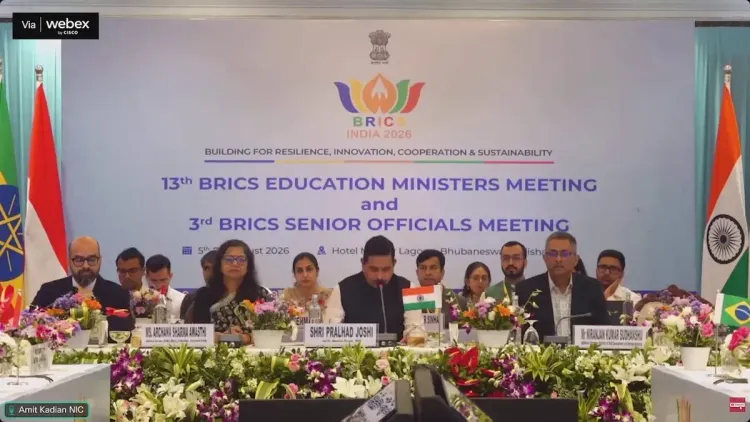
The world's most consequential emerging-economy forum has a new steward — and Union Consumer Affairs and New and Renewable Energy Minister Pralhad Joshi is already framing what India wants to do with the chair. On Friday, 7 August 2026, Joshi took to X to lay out an education vision for India's BRICS 2026 chairship, anchoring it to four pillars: Resilience, Innovation, Cooperation and Sustainability.
Joshi wrote that each of those four values 'holds special relevance for education,' arguing that systems must 'withstand disruptions, embrace continuous innovation, foster deeper cooperation and build sustainable institutions that empower not only the present generation, but generations to come.' The framing is deliberate — it maps the BRICS theme directly onto the architecture of education reform, signalling that New Delhi intends to push human-capital priorities alongside the grouping's traditional economic and geopolitical agenda.
Why BRICS and Education Make an Unlikely — but Logical — Pair
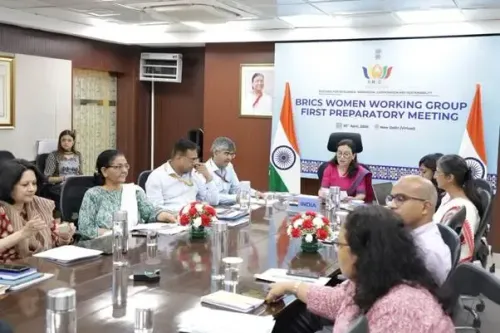
BRICS, the intergovernmental grouping of major emerging economies founded in 2009 and expanded with new members from 2024, has long been seen primarily as a platform for trade, finance and geopolitical coordination. But the bloc has steadily built an education architecture of its own — including the BRICS Network University, a consortium of member-state institutions, and a series of academic working groups that have grown in ambition over successive presidencies. India has consistently used its BRICS turns to stress Global South priorities: multilateralism, resilience and the kind of structural cooperation that outlasts any single summit cycle. The 2021 Indian chairship, themed 'BRICS@15: Intra-BRICS Cooperation for Continuity, Consolidation and Consensus,' set a template of institution-building over spectacle. The 2026 theme — Resilience, Innovation, Cooperation, Sustainability — reads as a natural evolution of that instinct.What Joshi's Post Signals for the 2026 Cycle
The minister's intervention is notable for what it connects: a foreign-policy platform to a domestic-reform conversation. By invoking 'disruptions' that education systems must withstand, Joshi implicitly references everything from post-pandemic learning loss to the rapid displacement of skills by artificial intelligence — challenges that cut across every BRICS member state, from Brazil to Russia, India, China and South Africa. The signal to watch is whether this ministerial framing translates into a formal BRICS Education Ministerial meeting or a joint programme under the 2026 chair — the kind of deliverable that would give the rhetoric institutional weight. Higher education institutions across member states and the expanding bloc's academic networks will be looking for exactly that. If India can convert the four-pillar theme into binding academic cooperation frameworks, it would mark a meaningful upgrade in how BRICS handles the human-development agenda — one that outlasts the summit itself.Point of View
The minister signals an intent to make the agenda internally coherent rather than episodic. It also reflects a broader BJP government instinct to project India as a knowledge-economy leader within the Global South. The real test will be whether this ministerial framing produces a concrete multilateral deliverable — a joint programme, a network expansion, a ministerial communiqué — or remains an aspirational statement.
NationPress
7 Aug 2026
Frequently Asked Questions
What is India's BRICS 2026 chairship theme?
India's BRICS 2026 chairship is guided by the theme of Resilience, Innovation, Cooperation and Sustainability, as stated by Minister Pralhad Joshi.
What did Pralhad Joshi say about BRICS and education?
Joshi said that each of the four pillars of India's BRICS chairship theme holds special relevance for education, and that systems must withstand disruptions, embrace innovation, foster cooperation and build sustainable institutions for future generations.
What is the BRICS Network University?
The BRICS Network University is a consortium of higher education institutions across BRICS member states, established to promote academic cooperation and student and faculty exchange within the bloc.
When did India last hold the BRICS chairship before 2026?
India held the BRICS chairship in 2021 under the theme 'BRICS@15: Intra-BRICS Cooperation for Continuity, Consolidation and Consensus.'
Why is BRICS focusing on education in 2026?
BRICS has been expanding cooperation beyond economics into education, science and sustainability over successive presidencies. India's 2026 chairship appears set to deepen this agenda by tying education reform to the bloc's core theme.