Bangladesh education system: Constitutional gaps and quality crisis exposed
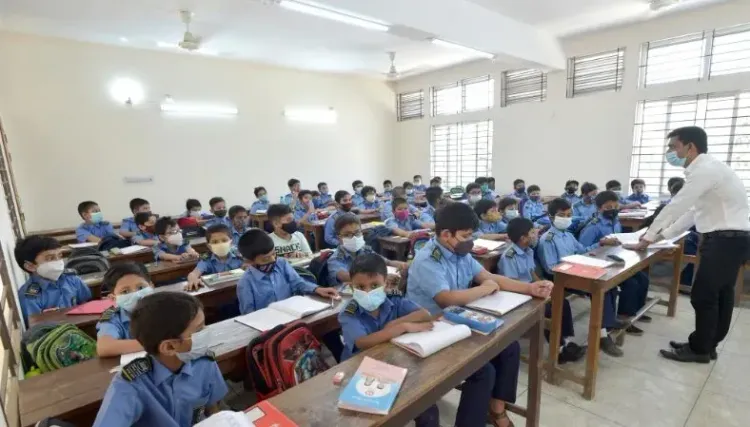
Synopsis
Twelve years of schooling in Bangladesh equals just seven internationally — and citizens have no constitutional right to sue the government over it. A BRAC University analysis in Prothom Alo exposes how Bangladesh's education framework promises equity but delivers stratification, leaving the poorest trapped in under-resourced schools while the 2010 policy to extend compulsory education to Grade VIII sits largely unimplemented.
Key Takeaways
Bangladesh's Constitution places education under Fundamental Principles of State Policy — not as an enforceable fundamental right — limiting citizens' legal recourse.
12 years of schooling in Bangladesh is reportedly equivalent to only 7 years of schooling by international standards.
Compulsory education effectively ends at Grade V , despite the National Education Policy of 2010 recommending extension to Grade VIII .
155 countries globally, including India , Sri Lanka , and Nepal , mandate compulsory education beyond Bangladesh's current level, according to UNESCO data.
Alia madrasa enrolment rose to approximately 40.2 lakh students in 2022 from 38.06 lakh in 2019 , per a 2024 Bonik Barta report.
The education system is described as deeply stratified, with quality access increasingly determined by socio-economic status .
Bangladesh's education system is caught in a deep structural contradiction — while the Constitution enshrines education as a core state obligation, citizens have no enforceable legal recourse when the government fails to deliver equitable or quality schooling, according to an opinion piece published in leading Bangladeshi daily Prothom Alo. The article, authored by Shahariar Sadat, Executive Director of the Centre for Peace and Justice (CPJ) at BRAC University, and Prantick Chowdhury, Lead of the BRAC University Access Programme, lays bare the chasm between official commitments and ground-level outcomes.
The Constitutional Contradiction
Article 17 of Bangladesh's Constitution commits the state to building a 'uniform, mass-oriented and universal' education system, mandating free and compulsory schooling and the elimination of illiteracy. However, the authors point out a critical structural flaw: education has been placed under the Fundamental Principles of State Policy — not recognised as an enforceable fundamental right. This distinction matters enormously in practice.
'Although the Constitution establishes education as a core state obligation and social necessity, citizens have limited scope to hold the state legally accountable for failing to ensure equitable, high-quality education,' the authors wrote. Separately, Article 19, which guarantees equality of opportunity and obligates the state to reduce social and economic disparities, has not prevented persistent inequalities in educational access.
Slow Reform and Learning Loss
Bangladesh took 18 years after adopting its Constitution to enact the Primary Education (Compulsory) Act of 1990 — a timeline the authors cite as emblematic of the country's sluggish reform pace. The National Education Policy of 2010 recommended extending free and compulsory education up to Grade VIII, but implementation has remained limited. In practice, compulsory education effectively ends at Grade V.
The article draws a stark comparison: according to UNESCO data, 155 countries worldwide have made education compulsory from pre-primary through at least the lower secondary level. Neighbouring countries including Sri Lanka, India, Nepal, Pakistan, Uzbekistan, and the Maldives have all extended compulsory education beyond Bangladesh's current practice, placing Dhaka behind much of South and Central Asia on this metric.
The quality deficit is equally alarming. The authors state: 'Twelve years of schooling in Bangladesh is equivalent to seven years of schooling internationally. It is sad and disappointing that we send our children to school with hope. Yet, in reality, they are experiencing a significant loss of learning.'
A Stratified System by Socio-Economic Class
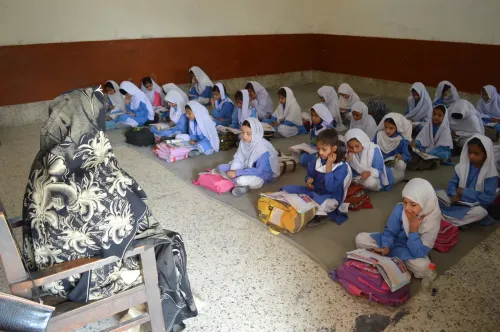
The article examines shifting enrolment patterns across educational streams, citing a recent report in The Daily Star. Alia madrasas are reportedly drawing more students as their curriculum has become increasingly aligned with mainstream education. Qawmi madrasas, meanwhile, continue to attract economically disadvantaged families, largely due to lower costs and provisions such as food, accommodation, and supervision.
A 2024 report by Bonik Barta cited in the article noted that enrolment in Alia madrasas reached its highest level in two decades, rising to approximately 40.2 lakh students in 2022 from around 38.06 lakh in 2019. During the same period, the Qawmi madrasa board reportedly registered an increase of nearly one lakh students.
These trends, the authors argue, have entrenched a deeply stratified education landscape. Affluent families can access globally competitive schooling, while much of the urban middle class relies on the national curriculum with limited English-language instruction. Economically and socially marginalised communities, however, are often left dependent on under-resourced government Bangla-medium schools or madrasa institutions that offer comparatively fewer pathways for upward mobility.
Quantity Over Quality: The Systemic Failure
'While policies and frameworks repeatedly promise equity, inclusion, and quality learning, the system in practice continues to reproduce quantity rather than quality, social inequality, class division, and unequal futures,' the article observed. This critique is directed not merely at implementation failures but at the architecture of the system itself — one that, critics argue, is structurally designed to perpetuate rather than dismantle existing hierarchies.
What Needs to Change
The authors stop short of prescribing a single fix, but the thrust of their argument points toward two urgent reforms: elevating education to the status of an enforceable fundamental right in the Constitution, and accelerating the extension of compulsory schooling to at least Grade VIII in line with the 2010 policy recommendation. Whether Bangladesh's current political environment — still navigating post-2024 institutional transitions — can deliver either reform remains an open question.
Point of View
Not just a delivery failure — and that distinction matters. When education sits under directive principles rather than enforceable rights, governments face no judicial accountability for inaction, and reform timelines stretch to decades, as Bangladesh's own 18-year lag on compulsory education law demonstrates. The madrasa enrolment surge is not a cultural anomaly; it is a rational response by low-income families to a state system that has consistently underserved them. Until Bangladesh constitutionally upgrades education to a justiciable right and enforces the Grade VIII compulsory schooling it promised in 2010, the gap between its progressive policy rhetoric and its classroom reality will only widen.
NationPress
27 Sept 2026
Frequently Asked Questions
Why does Bangladesh's Constitution not protect education as a fundamental right?
Bangladesh's Constitution places education under the Fundamental Principles of State Policy rather than as an enforceable fundamental right. This means citizens cannot legally compel the government to provide equitable, quality education through the courts, even though the state is nominally obligated to do so under Article 17.
How does Bangladesh's compulsory education compare with other South Asian countries?
Bangladesh currently mandates compulsory education only up to Grade V, while countries including India, Sri Lanka, Nepal, Pakistan, Uzbekistan, and the Maldives have extended compulsory schooling further. UNESCO data cited in the Prothom Alo article notes that 155 countries globally mandate education from pre-primary through at least lower secondary level.
What does the 'learning loss' figure mean for Bangladeshi students?
According to the BRAC University authors, twelve years of schooling in Bangladesh is equivalent to only seven years of schooling by international standards. This suggests that despite completing a full school cycle, Bangladeshi students acquire significantly fewer learning outcomes than their global peers.
Why is madrasa enrolment rising in Bangladesh?
Alia madrasas are attracting more students because their curriculum has become more aligned with mainstream education, while Qawmi madrasas appeal to economically disadvantaged families due to lower costs and provisions such as food and accommodation. Alia madrasa enrolment rose to approximately 40.2 lakh students in 2022 from 38.06 lakh in 2019, according to a 2024 Bonik Barta report.
What reforms do the BRAC University authors recommend for Bangladesh's education system?
The authors implicitly call for two key changes: elevating education to an enforceable fundamental right in the Constitution, and fully implementing the National Education Policy of 2010's recommendation to extend free and compulsory schooling to Grade VIII. They argue that without these structural changes, the system will continue to reproduce inequality rather than reduce it.