Is Bangladesh’s Jute Industry Losing Its Global Edge Due to High Costs and Outdated Technology?
Synopsis
The jute industry in Bangladesh is facing significant challenges as high production costs and outdated technology hinder its competitiveness in the global market. BJSA Chairman Tapash Pramanik highlights the need for modernization and innovation to reclaim its former glory.
Key Takeaways
High production costs are hampering the jute industry.
Outdated technology is a significant barrier to competitiveness.
The industry must diversify its product range to meet global demand.
Government policies need to be more cohesive and long-term.
Investment in research and development is crucial for innovation.
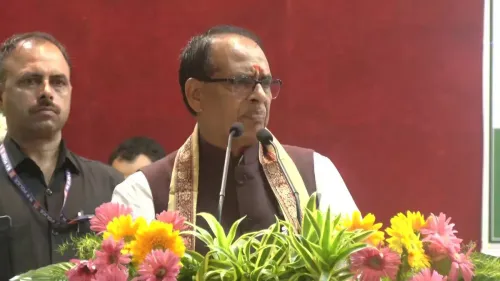
New Delhi, Jan 4 (NationPress) Bangladesh's jute industry is gradually diminishing its competitive advantage in the global arena as elevated production costs, antiquated machinery, and poor productivity persist, according to the Chairman of the Bangladesh Jute Spinners Association (BJSA), Tapash Pramanik.
In an exclusive interview with ‘The Daily Star’, Pramanik pointed out that jute mills in Bangladesh are facing challenges in competing with companies from other nations that have modernized their facilities and achieved cost reductions through enhanced technology and operational efficiency.
He mentioned that the high costs of energy, substantial interest rates on loans, and outdated equipment have inflated the prices of jute products, undermining their competitiveness against synthetic fibers and other natural substitutes.
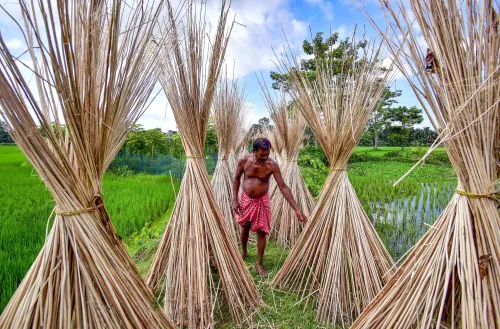
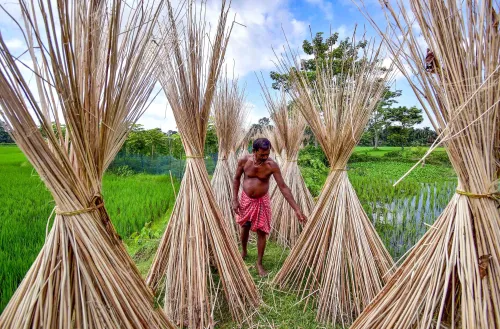
Despite once being labeled the “golden fiber” of the region, jute's significance has diminished as the industry has struggled to adapt to evolving global market trends.
“Currently, most jute exports still rely on traditional items such as yarn, hessian, and sacks, while international buyers are increasingly seeking diversified, value-added, and eco-friendly jute products,” he emphasized.
“Bangladesh has lagged in research and development, product innovation, and the commercial application of new jute-based goods,” he remarked.
He noted that the industry is often viewed as a legacy sector requiring protection, rather than as a modern agro-industrial value chain needing reconstruction for sustainable growth.
Despite the environmental benefits of jute, he indicated that the industry has not been able to reclaim its former prominence due to structural deficiencies, policy shortcomings, and market-related obstacles.
“Government initiatives have been sporadic and short-lived, failing to bring about significant change,” he added.
In contrast to the readymade garments (RMG) sector, Pramanik highlighted that RMG has become Bangladesh's leading export industry due to consistent policy backing, state-of-the-art machinery, improved productivity, accessible financing, and ongoing research and development.
These elements have enabled garment exporters to quickly integrate into global markets, yielding higher profit margins.
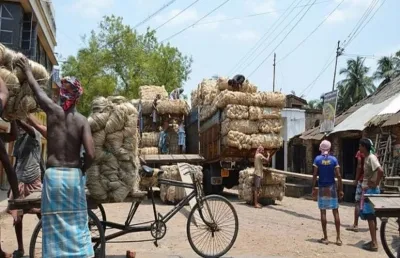
In comparison, the jute industry remains entrenched in low-value bulk exporting, outdated technologies, financial strain, and inadequate institutional support.
Consequently, export revenues from jute and jute products have stagnated between $900 million and $1 billion for over a decade.
Point of View
I recognize the significance of the jute industry in Bangladesh's economic landscape. While the challenges are daunting, the potential for innovation and modernization is immense. A collaborative approach involving government support and private sector investment could pave the way for a revival, transforming jute into a modern agro-industrial powerhouse.
NationPress
6 Oct 2026
Frequently Asked Questions
What are the main challenges faced by the jute industry in Bangladesh?
The jute industry in Bangladesh is dealing with high production costs, outdated machinery, and low productivity, which hinder its competitiveness in the global market.
How has the global market changed for jute products?
There is a growing demand for diversified, value-added, and eco-friendly jute products, but Bangladesh's exports still rely heavily on traditional items.
What factors contributed to the success of the RMG sector compared to jute?
The RMG sector benefited from consistent policy support, modern machinery, better productivity, and access to finance, allowing it to thrive in global markets.
What is the current state of jute exports from Bangladesh?
Export earnings from jute and jute goods have stagnated between $900 million and $1 billion for over a decade, indicating a need for revitalization.
What can be done to improve the jute industry?
Investing in modernization, research and development, and exploring new market trends could help the jute industry regain its competitive edge.