How is Surat's textile industry capitalizing on Bangladesh's mill strike?

Synopsis
As Bangladesh's textile mills announce an indefinite strike, Surat's textile traders are seizing the opportunity to strengthen India's position in the global market. With a focus on quality and innovation, Surat aims to become a leading hub in the textile sector. Discover the implications of this strike and how Surat plans to benefit.
Key Takeaways
Surat is set to benefit from the indefinite strike in Bangladesh.
The strike is due to the impact of low-cost yarn imports from India .
Surat accounts for nearly 65% of India's polyester fabric production.
Investments in skill development and infrastructure are underway.
International buyers may shift sourcing to India .
Surat, Jan 29 (NationPress) The textile sector in Gujarat's Surat is poised for significant growth as traders anticipate a surge in business following the announcement of an indefinite strike by textile mills in Bangladesh, set to commence on February 1, 2023.
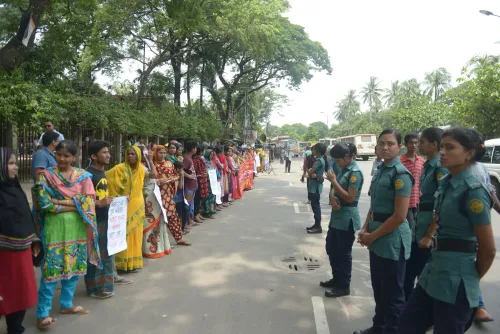
This industrial action has been initiated by the Bangladesh Textile Mills Association (BTMA) to protest against the duty-free importation of low-cost yarn from India, which has drastically impacted the domestic textile industry in Bangladesh.
Reports indicate that the influx of affordable Indian yarn has made it increasingly challenging for Bangladeshi mill operators to maintain their operations and settle bank debts, thereby driving the sector toward a potential shutdown.
This disruption is perceived by Surat's textile industry as a golden opportunity to bolster India's presence in the global garment manufacturing and export sector.
Kailash Hakim, President of the Surat Federation of Textile and Trade Associations, noted that the current instability in Bangladesh, combined with ongoing political unrest, could favor Indian textile exporters.
"Uncertainty in Bangladesh paves the way for India. This scenario underscores the superior quality of Indian yarn. The future is bright for India's textile and garment industry," Hakim stated.
He emphasized that Bangladesh heavily depends on imported fabric and possesses limited local textile production capacity, primarily focusing on garment manufacturing.
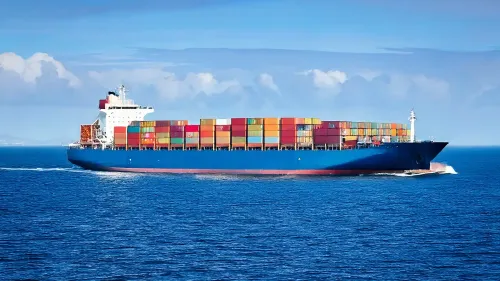
As production in Bangladesh is expected to decline, international buyers may increasingly seek out India for their sourcing needs.
Hakim further mentioned that both governmental and industry players are investing in skill enhancement and infrastructure development to position Indian textiles as a prominent global brand.
Numerous textile and garment parks are being established nationwide, with Surat emerging as a crucial hub.
Although Bangladesh has historically enjoyed an edge due to its inexpensive labor and skilled garment workforce, Surat is closing the gap through cluster-based development and quality improvement initiatives.
The industry is also prioritizing parts manufacturing, quality upgrades, and export expansion.
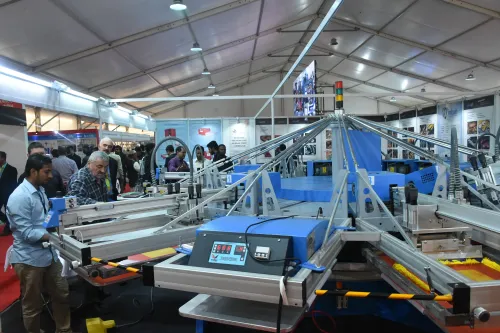
Textile traders have requested the Indian government to establish a Research and Development center in Surat to foster innovation and advanced garmenting techniques.
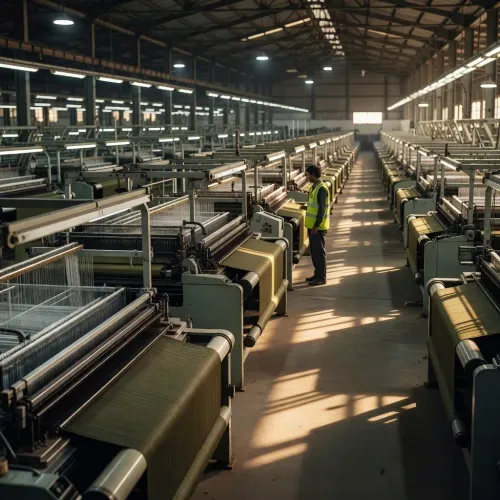
Surat is responsible for nearly 65% of India's polyester fabric production, underscoring its strategic significance in the textile value chain.
Local traders remain optimistic that the turmoil within Bangladesh's textile sector will lead to increased export opportunities for manufacturers based in Surat.
Point of View
The recent announcement of the indefinite strike by Bangladesh's textile mills presents a pivotal moment for the Indian textile industry. It highlights the ongoing challenges faced by Bangladesh's sector while showcasing India's potential to fill the void. The government's and industry's collaborative efforts to enhance skills and infrastructure will be crucial in transforming this situation into a sustainable advantage for Indian exporters.
NationPress
21 Oct 2026
Frequently Asked Questions
What is the reason behind the Bangladesh textile mills' strike?
The strike has been initiated by the Bangladesh Textile Mills Association (BTMA) in protest against the duty-free import of low-cost yarn from India, which is adversely affecting the domestic textile industry.
How will this strike impact India's textile industry?
The disruption in Bangladesh's textile sector is expected to create opportunities for Indian exporters, as international buyers may seek to source their products from India.
What steps are being taken to enhance the Indian textile industry?
Both the government and industry stakeholders are investing in skill development and infrastructure to establish Indian textiles as a global brand, including the development of textile parks.
What percentage of India's polyester fabric production is accounted for by Surat?
Surat accounts for nearly 65% of India's polyester fabric production, highlighting its strategic importance in the textile value chain.
What are the future prospects for Surat's textile industry?
Given the current situation, Surat's textile industry is optimistic about increased export opportunities and aims to enhance its global positioning through quality improvements and innovation.