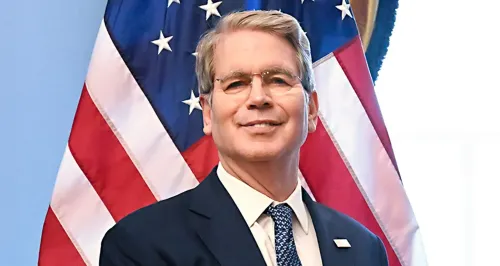
Trump energy dominance central to US economy, AI race: Treasury Secretary Bessent
Synopsis
US Treasury Secretary Scott Bessent told Houston's Petroleum Club that energy dominance is the hidden foundation beneath every Trump economic priority — from AI competitiveness to manufacturing reshoring to geopolitical leverage. With 6,000 new drilling permits issued and the EU sourcing a record 57% of its LNG from the US, the administration is betting that whoever controls cheap, abundant energy controls the next industrial era.
Key Takeaways
Treasury Secretary Scott Bessent called energy dominance the 'base layer' of the Trump administration's economic strategy at the Petroleum Club of Houston on 13 June .
The US has approved 6,000 new drilling permits and opened hundreds of millions of acres to oil and gas production since Trump returned to office.
The US is now the world's largest producer and exporter of petroleum, according to Bessent.
By 2040 , the AI boom is projected to raise US energy demand by 50 per cent , Bessent warned.
The EU sourced a record 57 per cent of its LNG from the US in Trump's first year back; Asian nations signed more than $56 billion in new energy deals.
Bessent cited a Boston Fed assessment affirming that domestic production has significantly reduced US vulnerability to global energy-price shocks.
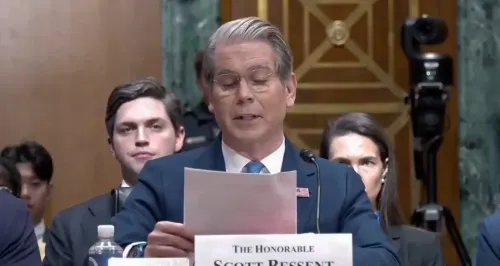
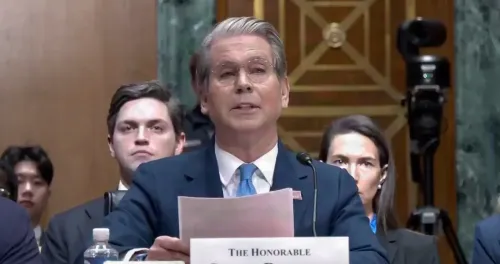
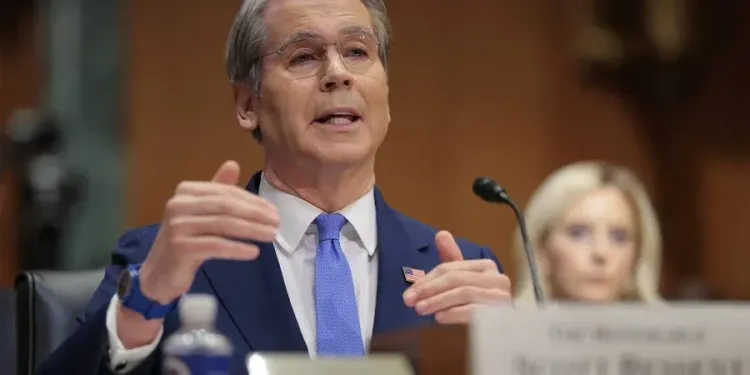
US Treasury Secretary Scott Bessent on Friday, 13 June declared that President Donald Trump's drive for 'energy dominance' is the foundational pillar of the administration's economic agenda, arguing that cheap and abundant domestic energy is indispensable to winning the global race in artificial intelligence, reshoring manufacturing, and safeguarding national security. Bessent made the remarks in a keynote address at the Petroleum Club of Houston, Texas.
Energy as the Base Layer of Economic Strategy
Bessent described the administration's economic framework as resting on three reinforcing pillars — tax, trade, and deregulation — but stressed that energy underpins all of them. 'Beneath each of our priorities, indeed every dimension of our economic life, is a base layer that binds each of them: energy dominance,' he said.
He used Texas and California as contrasting case studies, arguing that policy choices directly determine economic outcomes. 'When capital, companies, and residents all move in the same direction, I believe that is less a trend than a verdict,' Bessent said, crediting Texas with 'fostering the conditions for families and businesses to flourish.'
Production Records and Regulatory Rollback
Bessent said the administration has moved aggressively since Trump returned to office, opening 'hundreds of millions of acres to oil and gas production', approving 6,000 new drilling permits, and reducing regulatory burdens on the energy sector. 'The United States is now the world's largest producer and exporter of petroleum. In fact, we've never produced or exported so much energy,' he said.
He also pointed to strong international demand for American energy exports, noting that the European Union imported a record 57 per cent of its liquefied natural gas from the US during Trump's first year back in office, while Asian countries signed more than $56 billion in new energy deals.
The AI-Energy Link
Bessent tied the energy push directly to the administration's ambitions in artificial intelligence. 'By 2040, the AI boom is expected to increase energy demand in the United States by fifty per cent,' he said. He argued that computational power alone will not determine AI leadership — energy supply will. 'The AI race may be accelerated by the elegance of our code, but it will be won by the abundance of our energy,' Bessent said.
He added that the expansion of domestic manufacturing, driven by Trump's trade policies, would similarly depend on reliable and affordable energy. 'The factory activity sparked by the trade actions we've taken to reshore producers from abroad must be sustained by the resources we unleash here at home,' he said.
National Security Dimension
The Treasury Secretary framed energy production explicitly as a strategic and geopolitical tool. 'Economic security is national security,' he said. Citing a recent assessment by the Boston Fed, Bessent argued that surging domestic output has significantly blunted the impact of global energy-price volatility. 'No foreign power can now so fundamentally disrupt our economy with the stroke of a pen,' he said, in remarks that appeared to reference recent tensions involving Iran and broader instability in global energy markets.
Global Context and What Comes Next
The speech comes as energy security has emerged as a top-tier policy concern worldwide, particularly following disruptions linked to conflicts in Europe and the Middle East. Countries including India have sought to diversify their energy supply chains while balancing growth and climate commitments. Bessent's remarks signal that Washington intends to position American energy exports as a geopolitical instrument, deepening ties with both European and Asian partners. How quickly manufacturing reshoring translates into sustained energy demand — and whether the administration's deregulatory pace holds — will determine whether the 'energy dominance' thesis delivers at scale.
Point of View
The administration is attempting to make fossil-fuel expansion politically unchallengeable — framing any constraint on production as a concession in the AI race. The 57% EU LNG figure is striking, but it reflects a wartime energy emergency in Europe rather than a durable structural shift; conflating crisis-driven demand with long-term strategic alignment risks overstating American leverage. More critically, the speech sidesteps the tension between a 50% AI-driven demand surge by 2040 and the administration's simultaneous rollback of renewable energy policy — the arithmetic of meeting that demand gap is left unaddressed.
NationPress
24 Sept 2026
Frequently Asked Questions
What did US Treasury Secretary Scott Bessent say about Trump's energy policy?
Bessent said Trump's push for 'energy dominance' is the foundational layer beneath all three pillars of the administration's economic strategy — tax, trade, and deregulation. Speaking in Houston on 13 June, he argued that abundant domestic energy is essential to winning the AI race, reshoring manufacturing, and protecting national security.
How much has the US expanded oil and gas production under Trump?
According to Bessent, the administration has opened hundreds of millions of acres to oil and gas production and approved 6,000 new drilling permits since Trump returned to office. He said the US is now the world's largest producer and exporter of petroleum.
Why does Bessent link energy to artificial intelligence?
Bessent cited projections that the AI boom will increase US energy demand by 50 per cent by 2040, arguing that data centres and advanced computing require massive and reliable power supplies. He said the AI race 'will be won by the abundance of our energy', not just algorithmic sophistication.
How are US energy exports affecting global alliances?
Bessent said the EU sourced a record 57 per cent of its liquefied natural gas from the United States during Trump's first year back in office, while Asian nations signed more than $56 billion in new energy deals with the US. He framed this as evidence that demand for American energy had always existed and simply needed a willing administration to meet it.
How does the Trump administration connect energy to national security?
Bessent argued that surging domestic production has reduced US vulnerability to external energy shocks, citing a Boston Fed assessment. He said no foreign power can now 'fundamentally disrupt' the American economy through energy leverage, and described economic security and national security as inseparable.