RSS Chief Bhagwat: Politics now a 'game of self-interest', change must start in society
Synopsis
At a global interfaith gathering in New York, RSS Chief Mohan Bhagwat broke from the usual ideological script to deliver a strikingly candid verdict on modern politics: it has become a 'game of self-interest'. His prescription — build society first, shape politics second — carries weight far beyond the conference hall, reflecting the RSS's long-held belief that cultural groundwork outlasts electoral cycles.
Key Takeaways
RSS Chief Mohan Bhagwat addressed the 'One World, One Humanity' programme in New York on 30 August .
He described politics as a 'game of self-interest' and said lasting change must begin within society, not at the political level.
Bhagwat called for grassroots interfaith dialogue reaching down to district and block levels across countries.
He acknowledged the goal of influencing political decisions and preventing wars, but said direct political engagement cannot be the starting point.
Bhagwat warned that changing public attitudes would be a long process: 'It is not so easy to clean up public mind.' The RSS , founded in 1925 by K.B.
Hedgewar , marked its centenary in 2025 ; Bhagwat has led it since 2009 .
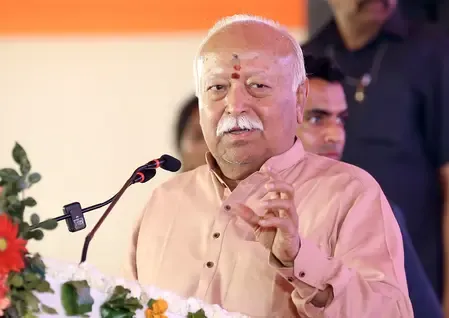
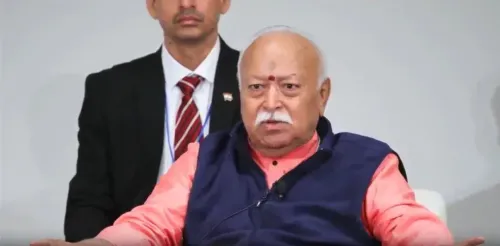
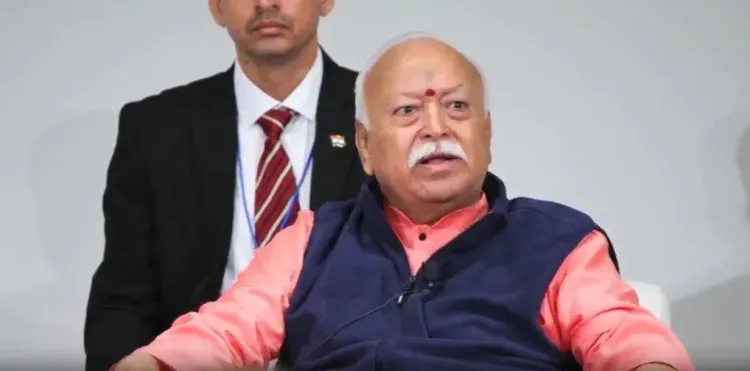
Rashtriya Swayamsevak Sangh (RSS) Chief Mohan Bhagwat on 30 August declared that politics has become a 'game of self-interest', arguing that meaningful and lasting change must be rooted in society before it can shape governments or public policy. He was speaking at the 'One World, One Humanity' programme in New York, addressing an audience of religious leaders from across the world.
What Bhagwat Said
'These things do not happen through politics. Sorry to say, but the fact is, politics has now become a game of self-interest,' Bhagwat said, in remarks that drew a clear line between political action and genuine social transformation. He added that the overemphasis on individual interests had made it increasingly difficult to bridge deep social divisions.
Offering an alternative framework, he said collective thinking was the only viable path forward. 'Where there is me, I am I. There is no solution. We and ours is the solution,' he said. He stressed that the process of change must begin at the societal level — 'our experience in Bharat is that we have to start with the society.'
On Influencing Politics and Preventing Wars
Bhagwat acknowledged that religious leaders ultimately seek to shape political decisions — to prevent wars and steer governments toward responsible policies. However, he cautioned that such influence cannot be built by engaging politics directly at the outset.
'We want to change, influence the policies before they happen, influence them in the right way. We want to stop wars, we want to do all these things,' he said. 'Therefore we want to influence the politics. We have to at some point of time. But we cannot start with those.'
Instead, he said the foundation must be public opinion, built through dialogue, service, and practical examples of cooperation. 'Politics today, especially in democracy, it depends on the public view,' he said. 'If there is public opinion, then no politician will dare to go against it.'
A Call for Grassroots Interfaith Engagement
Bhagwat urged participants to carry their shared commitments back to their home countries and begin working within local communities. He called for interfaith dialogue to move beyond senior religious leadership and reach communities at the provincial, district, and block levels.
'If we start at this level and start instructing our own people and then try to have this dialogue in all the countries, in the provinces of those countries, district level, block level, if you go like that, then the atmosphere will change,' he said.
He also called on communities to develop working models of the kind of world they wished to build, and to sustain the dialogue that connects those efforts. 'We should create at our own place the models of the world we want. And we should connect. We should keep on this dialogue,' he said.
A Long Road Ahead
Bhagwat was candid about the scale of the challenge, cautioning that shifting public attitudes would be neither quick nor easy. He argued that knowledge alone was insufficient unless it translated into daily conduct and practice.
'If we together start working, we can change the situation of the world,' he said. 'But it will take long time. It is not so easy to clean up public mind.'
Mohan Bhagwat has led the RSS as its Sarsanghchalak — the organisation's highest-ranking office — since 2009. Founded in Nagpur in 1925 by K.B. Hedgewar, the RSS marked its centenary in 2025. It describes itself as a volunteer-based cultural organisation with a nationwide network of branches and affiliated bodies. Bhagwat's New York address signals the organisation's intent to project its social philosophy on a global interfaith platform.
Point of View
By itself, cannot deliver the social transformation the RSS has spent a century pursuing. That is a significant admission, and it reframes the RSS's grassroots model not as a complement to political influence but as its prerequisite. The irony is that the RSS's affiliated political wing, the Bharatiya Janata Party, holds the most dominant electoral position in independent India's history — yet Bhagwat is telling a global audience that politics alone is insufficient. Whether this reflects genuine ideological conviction or a strategic distancing from government accountability is a question mainstream coverage has largely left unasked.
NationPress
14 Oct 2026
Frequently Asked Questions
What did RSS Chief Mohan Bhagwat say about politics in New York?
Mohan Bhagwat said politics has become a 'game of self-interest' and argued that it cannot by itself create unity or resolve deep social divisions. He made the remarks on 30 August at the 'One World, One Humanity' interfaith programme in New York, urging religious leaders to build change from within society before seeking to influence governments.
What is the 'One World, One Humanity' programme?
It is an interfaith gathering held in New York that brought together religious leaders from multiple countries. RSS Chief Mohan Bhagwat addressed the event on 30 August, calling for grassroots interfaith dialogue and community-level models of unity and service.
What did Bhagwat mean by 'We and ours is the solution'?
Bhagwat used the phrase to contrast collective thinking with individualism, arguing that an exclusive focus on personal interest — 'Where there is me, I am I' — produces no solutions. He said a shift toward shared purpose and community action is the only path to genuine social change.
How does Bhagwat propose to influence politics and prevent wars?
Bhagwat said the route to influencing political decisions runs through building public opinion first — via dialogue, service, and practical examples of cooperation — rather than engaging politics directly. He argued that in democracies, strong public opinion compels politicians to act. 'If there is public opinion, then no politician will dare to go against it,' he said.
Who is Mohan Bhagwat and what is the RSS?
Mohan Bhagwat is the Sarsanghchalak — the highest-ranking office-bearer — of the Rashtriya Swayamsevak Sangh (RSS), a post he has held since 2009. The RSS is a volunteer-based cultural organisation founded in Nagpur in 1925 by K.B. Hedgewar; it marked its centenary in 2025 and operates a nationwide network of branches and affiliated bodies.