BLA and ISKP in Balochistan: Ideological gap doesn't rule out tactical ties
Synopsis
A judge's assassination in Mastung, Balochistan has reopened a question security analysts rarely ask: can groups as ideologically opposed as the BLA and ISKP still cooperate tactically? The attack remains unresolved, but the attribution game alone — whoever actually pulled the trigger — is reshaping how militant influence is measured in Pakistan's most volatile provinces.
Key Takeaways
District and Sessions Judge Abdul Hakeem Kakar and his police guard were killed in Mastung, Balochistan on 23 July ; Additional Sessions Judge Tariq Lashari was injured.
ISKP reportedly claimed responsibility, but the claim remains unverified and the investigation is ongoing.
Analysts say ideological differences between the ethno-nationalist BLA and the jihadist ISKP do not rule out limited tactical interaction.
The attack is part of a broader pattern of violence targeting security personnel and civilian infrastructure in Balochistan and Khyber Pakhtunkhwa .
A police constable was separately killed in Upper South Waziristan on 22 July in a similar targeted attack.
The killing of a judge in Mastung district of Pakistan's Balochistan province on 23 July has not yet established a proven operational link between the Balochistan Liberation Army (BLA) and the Islamic State Khorasan Province (ISKP), but analysts say it signals a significant shift in how contemporary terrorism operates — where information and attribution can be as powerful as the attack itself.
The Mastung Attack: What Happened
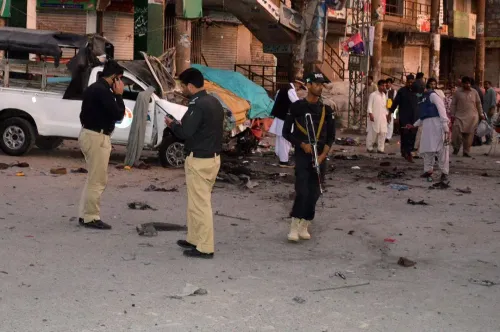
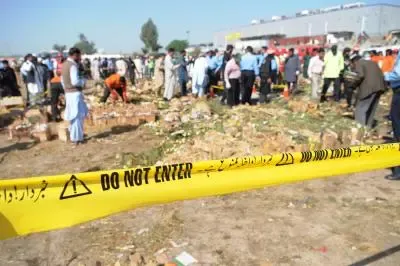
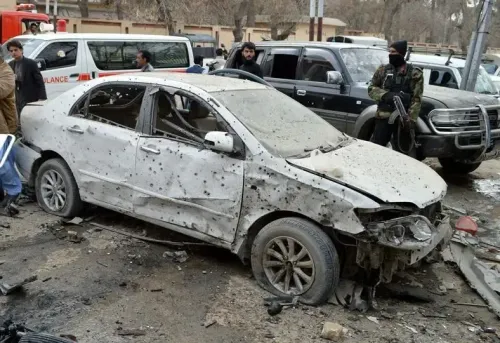
District and Sessions Judge Abdul Hakeem Kakar and his police guard were killed when armed assailants targeted a vehicle carrying judicial officers travelling from Quetta to Mastung on 23 July. Additional Sessions Judge Tariq Lashari sustained injuries in the assault. Shortly after the attack, reports emerged claiming that ISKP had taken responsibility — a claim that could not be independently verified. An investigation to identify the actual perpetrators remains ongoing, according to reports citing Asia Times.
Why the Attribution Game Matters
According to the analysis, militant groups today compete fiercely for territory and visibility, treating public attention as a strategic asset. A group associated with a high-profile attack — even if it did not carry it out — can expand its perceived operational reach, attract financing, boost recruitment, and amplify media influence. The Mastung attack, the report noted, 'illustrates the growing relationship between violence and information.'
Judicial officers hold a particularly sensitive position in any state's counterterrorism architecture — overseeing trials, evaluating evidence, and sustaining the legal process through which militant violence is prosecuted. Their targeting, analysts argue, is rarely incidental.
BLA, ISKP and the Limits of Ideological Boundaries
Traditionally, the BLA and ISKP occupy opposing ideological positions. The BLA is an ethno-nationalist separatist movement rooted in Baloch identity, while ISKP is the Islamic State's regional affiliate operating across Afghanistan and Pakistan. These differences are fundamental — but analysts caution that ideological divergence does not preclude limited tactical interaction.
The reported ISKP claim, according to the analysis, could reflect one of several scenarios: the group actually conducted the attack; it claimed credit for an operation carried out by another organisation to boost its profile; or it signals some form of logistical assistance, shared propaganda interests, or a restricted tactical arrangement between different militant outfits. Notably, none of these possibilities has been substantiated by available evidence.
Broader Pattern of Violence in Pakistan's Border Provinces
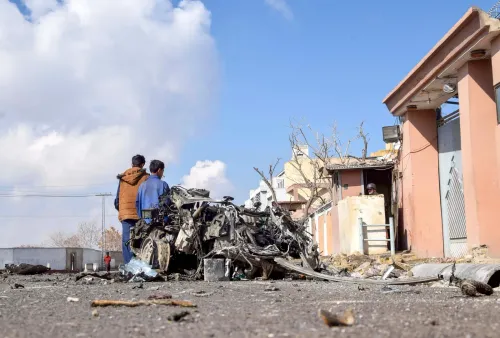
The Mastung assassination did not occur in isolation. It took place amid a series of incidents targeting security personnel, civilian infrastructure, and transport links in the district. Whether these constitute a coordinated campaign remains unconfirmed. Taken together, however, they illustrate how sustained insecurity can strain governance, restrict mobility, and erode public confidence in state institutions.
On 22 July, a police constable was killed in the Sarvekai area of Upper South Waziristan district in Khyber Pakhtunkhwa after unidentified assailants opened fire on him near a stream in the Moley Khan Sarai area as he was heading to his post, according to Dawn. He succumbed to his injuries before medical assistance could reach him. The incident is part of a documented rise in attacks on law enforcement personnel across Balochistan and Khyber Pakhtunkhwa.
What Investigators Are Looking At
Authorities have yet to complete their investigation into the Mastung killing. Each of the possible scenarios — direct ISKP involvement, a false-flag claim, or inter-group tactical coordination — requires independent verification. The attack has, however, already prompted a wider conversation among security analysts about the evolving nature of militant alliances in Pakistan's restive western provinces, and what it means when ideological incompatibility no longer guarantees operational separation.
Point of View
But in a theatre where visibility is currency, a shared interest in weakening state institutions can create transactional alignments that don't require a formal alliance. What is more troubling than the attack itself is the unresolved attribution — an investigation that has not yet named a perpetrator weeks later signals either genuine complexity or institutional reluctance. Either way, the pattern of targeting judicial officers is a deliberate strategy to hollow out the legal infrastructure that counterterrorism depends on, and that deserves far more analytical attention than it is currently receiving.
NationPress
28 Oct 2026
Frequently Asked Questions
Who was killed in the Mastung attack in Balochistan?
District and Sessions Judge Abdul Hakeem Kakar and his police guard were killed on 23 July when armed assailants targeted a vehicle carrying judicial officers from Quetta to Mastung. Additional Sessions Judge Tariq Lashari was injured in the same attack.
Did ISKP carry out the Mastung judge killing?
ISKP reportedly claimed responsibility for the attack, but the claim could not be independently verified. An investigation is ongoing and no perpetrator has been officially identified.
Can BLA and ISKP work together despite opposing ideologies?
Analysts say ideological differences between the ethno-nationalist BLA and the jihadist ISKP do not automatically rule out limited tactical interaction. Possible scenarios include logistical assistance, shared propaganda interests, or a restricted operational arrangement — none of which has been proven by available evidence.
Why are judicial officers being targeted in Pakistan?
Judicial officers oversee terrorism trials, assess evidence, and uphold the legal process through which militant violence is prosecuted, making them high-value symbolic targets. Analysts note that attacking judges is a strategy to undermine the state's counterterrorism legal infrastructure.
What is the broader security situation in Balochistan and Khyber Pakhtunkhwa?
Both provinces have seen a documented rise in attacks targeting law enforcement personnel, civilian infrastructure, and transport links. A police constable was killed in Upper South Waziristan on 22 July in a separate targeted shooting, reflecting a sustained pattern of militant violence in Pakistan's western border provinces.