Pakistan blasphemy laws target religious minorities, report finds
Synopsis
A detailed report in The Asian Lite maps over a decade of Pakistan's blasphemy prosecutions — from Asia Bibi to Kamran Masih in 2026 — showing that for Christians, Hindus and Ahmadis, a single accusation, true or fabricated, can mean years on death row or a mob burning down your home. The laws, critics argue, are not a fringe tool but a feature of Pakistan's own legal architecture.
Key Takeaways
Pakistan's penal code contains some of the world's most severe blasphemy provisions, with penalties including the death sentence.
Christian teenager Nabeel Masih was imprisoned from 2016 to 2021 over a Facebook post; Christian man Nadeem James was sentenced to death in 2017 .
Asia Bibi , a Christian woman, spent nearly a decade in prison before Pakistan's Supreme Court overturned her conviction in 2018 ; she now lives in Canada .
In 2021 , Ahmadiyya leaders reported 61 community members charged under blasphemy laws since 2019 .
Hindu teacher Notan Lal was sentenced to life imprisonment in 2022 on a blasphemy charge the accusing student later admitted was fabricated.
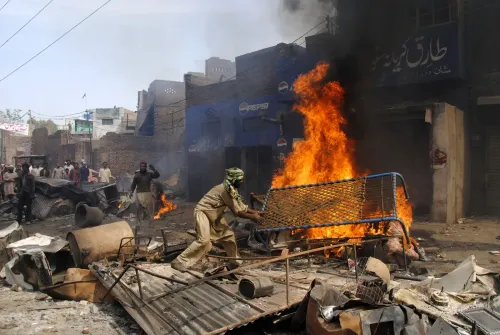
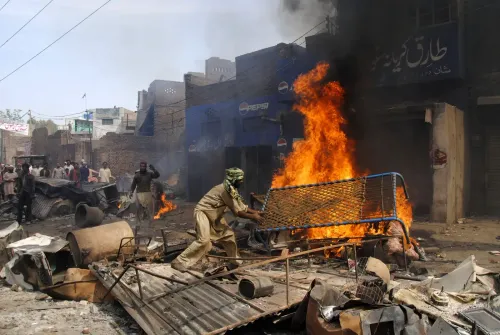
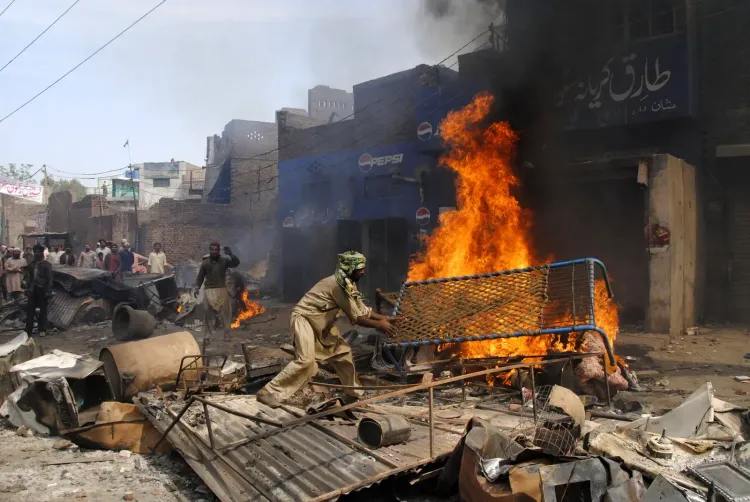
In October 2026 , more than 35 Christian families fled their homes in Punjab after a mob set Kamran Masih's house and pharmacy ablaze following a blasphemy accusation.
Pakistan's blasphemy laws systematically expose Christian, Hindu, and Ahmadiyya communities to prosecution, with a single religious accusation capable of escalating rapidly from allegation to arrest, a death sentence, or mob violence, according to a detailed report published in UK-based newspaper The Asian Lite. The findings underscore that the danger to minorities is not confined to extralegal extremism — it is embedded in the country's legal architecture itself.
The Legal Framework
Under Pakistan's constitution, Islam is designated the state religion, and the country's penal code contains some of the world's most severe blasphemy provisions. Beyond conventional blasphemy statutes, the legal framework imposes specific restrictions on the Ahmadiyya community, including prohibitions on presenting themselves as Muslims or describing their places of worship as mosques.
'The country has not carried out a state execution specifically for blasphemy, but those accused can remain imprisoned for years, sometimes on death row. The legal framework extends beyond conventional blasphemy provisions... The result is a system in which religious identity itself can become legally consequential,' wrote Sakariya Kareem in The Asian Lite.
Key Cases and Documented Prosecutions
The report cites a series of high-profile cases spanning nearly a decade. In 2016, a Christian teenager, Nabeel Masih, was arrested after being accused of sharing allegedly blasphemous content on Facebook and remained imprisoned until 2021. In 2017, a Christian man, Nadeem James, was detained after forwarding allegedly blasphemous material to a friend and was subsequently sentenced to death under blasphemy provisions.
Perhaps the most widely publicised case is that of Asia Bibi, a Christian woman who spent nearly a decade in prison after being convicted and sentenced to death. Pakistan's Supreme Court overturned her conviction in 2018, and she later sought asylum in Canada. In 2021, Ahmadiyya community leaders reported that 61 members of the community had been charged under blasphemy laws since 2019.
In 2022, Hindu teacher Notan Lal was sentenced to life imprisonment after a student accused him of insulting Prophet Muhammad. The student later admitted to fabricating the allegation after Lal had reprimanded him — a pattern critics say illustrates how the laws are weaponised for personal grievances.
Misuse for Personal and Social Disputes
According to the report, Pakistan's blasphemy provisions have been misused in cases tied to personal disputes, property conflicts, and social hostility. The Notan Lal case is cited as emblematic of a broader pattern in which accusations serve ends far removed from genuine religious offence. Notably, the laws offer accused individuals little structural protection, as even an acquittal or judicial reversal does not guarantee safety from mob reprisals.
Recent Violence in Punjab
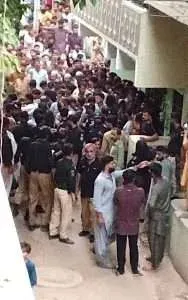
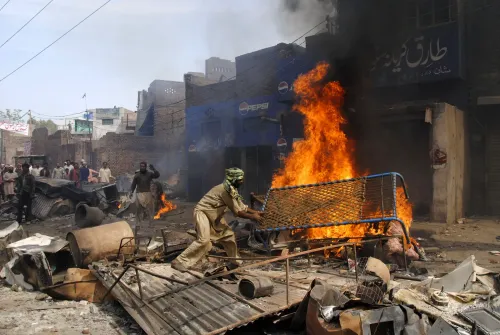
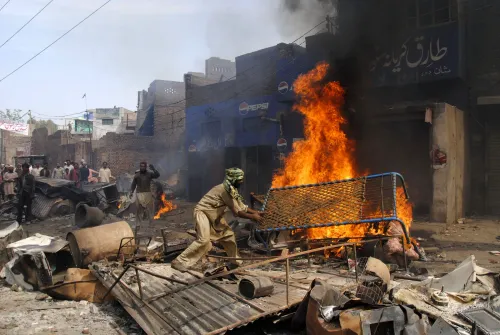
In October 2026, a Christian man's house and shop were set ablaze by a Muslim mob in Pakistan's Punjab province after he was accused of blasphemy. Subsequently, more than 35 Christian families were forced to flee their homes amid fears of further attacks, according to reports citing Christian Daily International.
A day before the arson, police arrested a 40-year-old Christian man identified as Kamran Masih, who operated a small pharmacy in Gharial Kalan village in Punjab. Local Muslims accused him of sharing a blasphemous video in WhatsApp groups. 'As word of Masih's arrest spread, his family and other Christians started fleeing the village, fearing a mob attack,' a source told Christian Daily International-Morning Star News on condition of anonymity.
'Over the past decade, the record of Pakistan's blasphemy cases — from Nabeel Masih and Nadeem James to Asia Bibi, Notan Lal, Ashfaq Masih, Jaranwala and the cases still emerging in 2026 — shows the human consequences when religious accusation acquires the force of criminal law,' Kareem wrote.
Broader Pattern and What It Signals
The accumulation of cases documented by The Asian Lite points to a structural, rather than incidental, vulnerability for religious minorities in Pakistan. With blasphemy provisions carrying penalties as severe as death, and with social pressure often making acquittals dangerous to enforce, the gap between formal law and practical justice remains wide. Human rights observers continue to call for reform of the statutes, though legislative momentum in that direction has historically been met with intense resistance.
Point of View
Severe enough to deter acquittals, and structurally insulated from reform by the political cost of challenging them. What mainstream coverage often misses is that even judicial vindication, as Asia Bibi's case showed, does not guarantee safety — it can intensify mob risk. Until Pakistan decouples religious accusation from automatic legal jeopardy, minority communities will remain hostage to a single neighbour's grievance.
NationPress
2 Nov 2026
Frequently Asked Questions
What do Pakistan's blasphemy laws say?
Pakistan's penal code includes some of the world's most severe blasphemy provisions, with penalties ranging from imprisonment to the death sentence. The laws criminalise religious expression and, in the case of the Ahmadiyya community, restrict how a group can identify and practise its faith — including prohibitions on calling themselves Muslims or their places of worship mosques.
Who are the key individuals prosecuted under Pakistan's blasphemy laws?
Documented cases include Christian teenager Nabeel Masih, imprisoned from 2016 to 2021 over a Facebook post; Christian man Nadeem James, sentenced to death in 2017 for forwarding a message; Asia Bibi, a Christian woman on death row for nearly a decade whose conviction was overturned by Pakistan's Supreme Court in 2018; and Hindu teacher Notan Lal, sentenced to life imprisonment in 2022 on an accusation the student later admitted was false.
What happened to Asia Bibi after her conviction was overturned?
Asia Bibi was released after Pakistan's Supreme Court overturned her conviction in 2018, following nearly a decade in prison on death row. She subsequently left Pakistan and sought asylum in Canada, given the threat of mob violence she faced even after acquittal.
What is the most recent blasphemy-related violence in Pakistan?
In October 2026, a mob set ablaze the house and pharmacy of Kamran Masih, a 40-year-old Christian man in Gharial Kalan village in Pakistan's Punjab province, after he was accused of sharing a blasphemous video on WhatsApp. More than 35 Christian families fled the area fearing further attacks.
How are Pakistan's blasphemy laws misused?
According to the report, Pakistan's blasphemy provisions have been weaponised in cases involving personal disputes, property conflicts, and social hostility. The Notan Lal case is a documented example: the accusing student later admitted the allegation was fabricated after the teacher had reprimanded him, yet Lal was still sentenced to life imprisonment.