C K Raut Exits Politics After Setback for Madhes Parties in Nepal
Synopsis
C K Raut, leader of the Madhes-centric Janamat party, has announced his retirement from parliamentary politics following a significant election defeat. This marks a pivotal moment for regional parties in Nepal's political landscape.
Key Takeaways
C K Raut retires from parliamentary politics.
Madhes-centric parties suffered significant electoral losses.
No representation for these parties in Nepal's lower house.
Rastriya Swatantra Party dominated the elections.
Future of Madhes-centric politics remains uncertain.
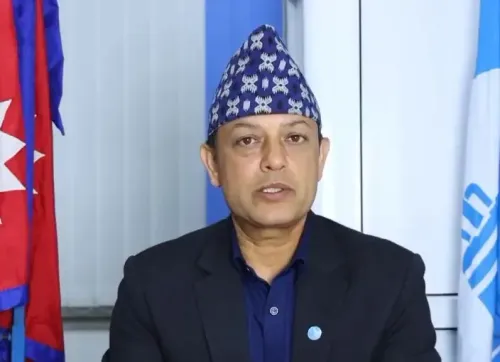
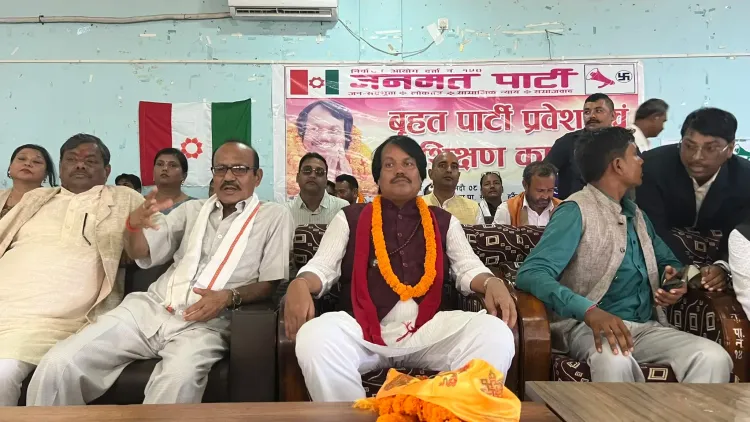
Kathmandu, March 16 (NationPress) C K Raut, the Chairperson of the Madhes-focused Janamat political party, has declared his intention to step away from parliamentary politics following significant losses for Janamat and other regional parties from the southern plains in the recent parliamentary elections.
No regional party engaged in identity politics in Madhes was able to secure a single seat under the First-Past-the-Post (FPTP) electoral system, and none met the minimum three percent vote threshold necessary under the proportional representation system to secure any representatives in the House of Representatives, the lower legislative chamber.
Of the 275 seats in the House of Representatives, 165 are filled by elected representatives via the FPTP method, while 110 are filled through proportional representation.
In an interview with local Prime Television, Raut, who had emerged as a prominent figure in Madhes politics during the 2022 parliamentary elections, announced his retirement from parliamentary politics. He revealed that he had run for parliament against his own wishes and stated he would not pursue future candidacies.
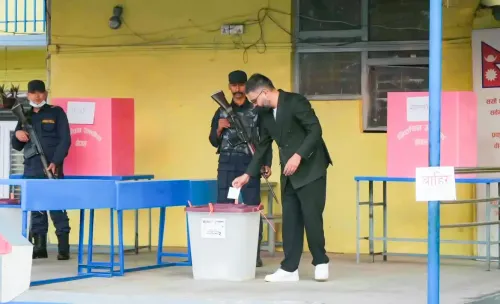
Having transitioned into parliamentary politics by renouncing his secessionist activities in 2022, Raut faced defeat in the March 5 elections in Saptari-2 against Ramji Yadav from the Rastriya Swatantra Party (RSP), which dominated the elections.
Although Raut finished third in the voting for his constituency, he clarified that he would remain at the helm of the party as long as it requires his leadership, even though he will not seek a parliamentary seat again. In the 2022 elections, his party had gained prominence as a national party by securing six seats in the House of Representatives.
Raut's announcement is particularly significant as it marks a point where regional political parties will lack representation in Nepal's lower house, ending a continuous presence since the 1991 elections.
In the province's 32 FPTP seats, Prime Ministerial candidate Balen Shah's RSP won an impressive 30 seats. The Nepali Congress managed to secure just one seat, as did the Communist Party of Nepal (Unified Marxist-Leninist).
Many Madhes-centric parties rose to prominence after the 2007 Madhes uprising, gaining strong representation in the Constituent Assembly following the 2008 elections. However, their influence has declined in subsequent elections, facing criticism for straying from the Madhes agenda due to power struggles, alongside internal conflicts that have fragmented Madhes-based forces.
On January 19, Balen Shah, who enjoys popularity among the youth in the hilly regions, characterized himself as the 'son of Madhes' while addressing voters in Maithili. In a compelling nine-minute speech, he urged voters to support the RSP to elect Nepal’s first Prime Minister from the Madhesi community.
Shah represents the Madhesi community, which has Indian roots and has long felt marginalized within Nepal's hill-dominated political landscape.
His impactful address resonated widely, enabling the RSP to sweep the elections in Madhes, a stark contrast to the party's performance in the 2022 elections when they received around 75,000 votes without winning any seats from the region.
In the 2022 election, the RSP garnered only about 75,000 votes and failed to win any provincial seats. However, in just four years, the party claimed around 95 percent of the FPTP seats, overshadowing the Nepali Congress and others in the proportional representation vote tally.
The current standing of Madhes-centric parties is the weakest it has been since the 1991 elections. Prior to the 2007 Madhes movement, the Nepal Sadbhawana Party held a significant position in the region with parliamentary representation.
In addition to Raut, Upendra Yadav, the president of the Janata Samajbadi Party Nepal (JSPN), lost his seat in Saptari-3. Similarly, Aam Janata Party's Prabhu Sah was defeated in Rautahat-3, while Rajendra Mahato, who founded the National Mukti Party and contested in Sarlahi-2, finished in fourth place.
Keshav Jha, Secretary-General of the Rastriya Mukti Party, remarked to IANS that the 'Balen wave' had detrimental effects on both Madhes-centric and traditionally dominant political parties in the recent elections.
“The defeats faced by Madhes-centric parties stem from the shortcomings of historically large political entities like the Nepali Congress, the Communist Party of Nepal (Unified Marxist-Leninist), and the Nepal Communist Party,” he stated. “It’s akin to the collateral damage inflicted on smaller structures when a larger building collapses.”
Despite the electoral setbacks, he expressed confidence that the Madhes agenda will persist. “We will return stronger in the future,” he affirmed.
Point of View
It is essential to observe the implications of C K Raut's retirement from parliamentary politics. His decision reflects a broader trend of diminishing influence for Madhes-centric parties in Nepal, marking a significant shift in the political dynamics of the region. The recent election results signal challenges ahead for these parties as they navigate their identity and representation in a changing political landscape.
NationPress
30 Sept 2026
Frequently Asked Questions
What caused C K Raut to retire from politics?
Raut announced his retirement following significant electoral losses for his party and other Madhes-centric parties in the recent parliamentary elections.
What was the performance of Madhes-centric parties in the elections?
Madhes-centric parties failed to secure any seats under the FPTP system and did not reach the required vote threshold for proportional representation in the recent elections.
What does this mean for the future of Madhes-centric politics?
The defeat signifies a critical juncture for Madhes-centric politics in Nepal, raising questions about their future representation and influence in the political landscape.
How did the Rastriya Swatantra Party perform in the elections?
The Rastriya Swatantra Party achieved significant success, winning 30 out of 32 FPTP seats in the province, marking a major shift in political power.