Rastriya Swatantra Party's Majority in Nepal: A Game Changer for Policy and Investment
Synopsis
The Rastriya Swatantra Party's recent electoral success in Nepal is set to stabilize the political landscape and enhance policy predictability, opening new avenues for economic reforms and improving investor confidence, according to Fitch Ratings.
Key Takeaways
RSP's victory likely reduces political uncertainty.
Potential for enhanced governance and economic reforms.
Ambitious growth targets set by the RSP.
Challenges in implementation and governance effectiveness remain.
Investor sentiment may improve with stable governance.
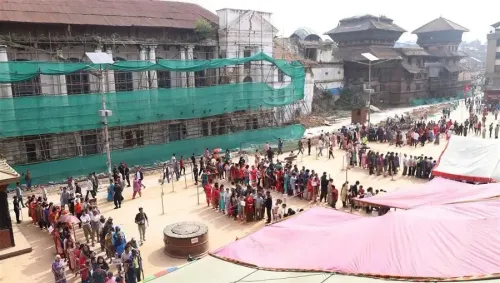
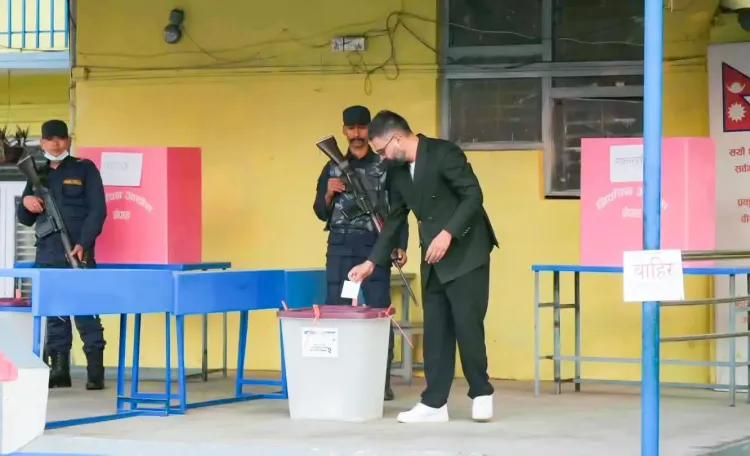
Kathmandu, March 11 (NationPress) The recent parliamentary elections in Nepal have resulted in a decisive majority for the Rastriya Swatantra Party (RSP), which is anticipated to minimize short-term political volatility and enhance policy stability in the region, according to a statement from Fitch Ratings on Wednesday.
“This situation opens avenues for improved policy consistency and the execution of necessary governance and economic reforms,” the international rating agency elaborated. The relatively new political party, which has been active for over three years, successfully captured 125 out of 165 seats in the First-Past-the-Post (FPTP) electoral format, along with nearly 48 percent of the votes in the proportional representation system, based on data from the Election Commission of Nepal. This outcome positions the RSP to potentially secure a near two-thirds majority—184 out of 275 seats—in the House of Representatives, the lower chamber of parliament.
Fitch pointed out that this electoral result should diminish the risk of extended coalition negotiations following last year’s significant unrest, likely reducing the frequency of governmental changes that have plagued the country in recent years. It could also lead to a positive shift in investor sentiment if there are clear indications of meaningful advancements in governance and economic reform.
In the wake of the fractured mandates from the 2022 parliamentary elections, Nepal experienced several governmental transitions over the past three years, as traditional political factions concentrated on forming and dissolving coalitions. Public sentiment regarding corruption among political leaders spurred massive protests from Gen Z in September, resulting in the ousting of then-Prime Minister KP Sharma Oli, who is the leader of the Communist Party of Nepal (Unified Marxist-Leninist) or CPN (UML).
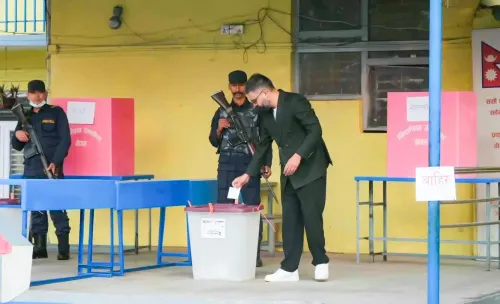
An interim government, led by Sushila Karki, subsequently organized elections for the House of Representatives on March 5, awarding the RSP a new mandate to establish the next government, possibly under the leadership of senior party figure Balen Shah.
“The magnitude of the RSP’s victory signifies a voter-driven demand for a departure from the traditional power-sharing politics,” Fitch observed. With both the Nepali Congress and CPN-UML losing seats, a single-party majority—pending the final endorsement from the Election Commission—could streamline the political transition and reinforce reform efforts, particularly in leveraging hydropower investments for broader economic advancement.
The RSP has ambitious plans to achieve an average real economic growth rate of about seven percent over the next five years, with a target to elevate per capita income above USD 3,000. According to Fitch, the new administration’s policy direction will be critical in determining whether economic growth can exceed the agency’s current projection of 4.5 percent for the fiscal year concluding on July 15, 2027. The party intends to prioritize productivity enhancements, formal job creation to reduce emigration, and private-sector-led investments across various sectors including infrastructure, agriculture, services, digital, and innovation.
Fitch reaffirmed Nepal’s ‘BB-’ sovereign rating with a Stable Outlook in November 2025, emphasizing that robust, sustainable growth backed by governance improvements and investment-friendly regulations could significantly elevate Nepal’s credit profile. However, the agency warned that implementation challenges could pose risks. “Nepal’s relatively weak scores in government effectiveness and regulatory quality compared to its peers may hinder execution, especially if reform sequencing is ambiguous or governance outcomes fail to meet expectations,” Fitch added. The organization also indicated that both private and foreign investments would hinge on observable enhancements in the business climate, accountability mechanisms, and ongoing anti-corruption initiatives.
Point of View
It is essential to recognize the significance of the Rastriya Swatantra Party's electoral success. This decisive victory may signal a shift in Nepal's political dynamics, offering a chance for governance reforms and improved economic prospects. However, the real test lies in the new government's ability to implement these changes effectively.
NationPress
28 Sept 2026
Frequently Asked Questions
What is the significance of the RSP's majority in Nepal?
The RSP's majority is expected to reduce political uncertainty and enhance policy predictability, allowing for effective governance and economic reforms.
How many seats did the RSP win in the elections?
The RSP won 125 out of 165 seats in the recent parliamentary elections.
What are the RSP's economic growth targets?
The RSP aims for an average real economic growth of around seven percent over the next five years.
What challenges could the new government face?
The new government may face challenges related to implementation capacity and potential risks in governance effectiveness.
How does this election outcome affect investor sentiment?
A stable government can enhance investor sentiment by providing a more predictable and conducive environment for investments.