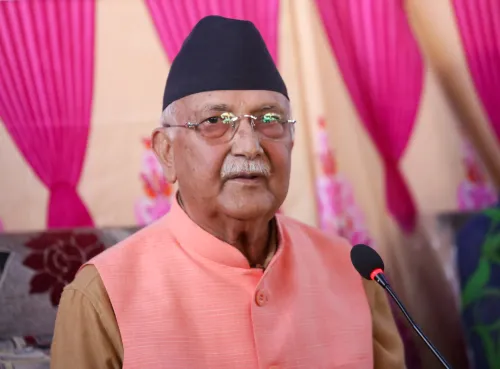
K.P. Sharma Oli Concedes Major Election Defeat as RSP Dominates Nepal's Vote
Synopsis
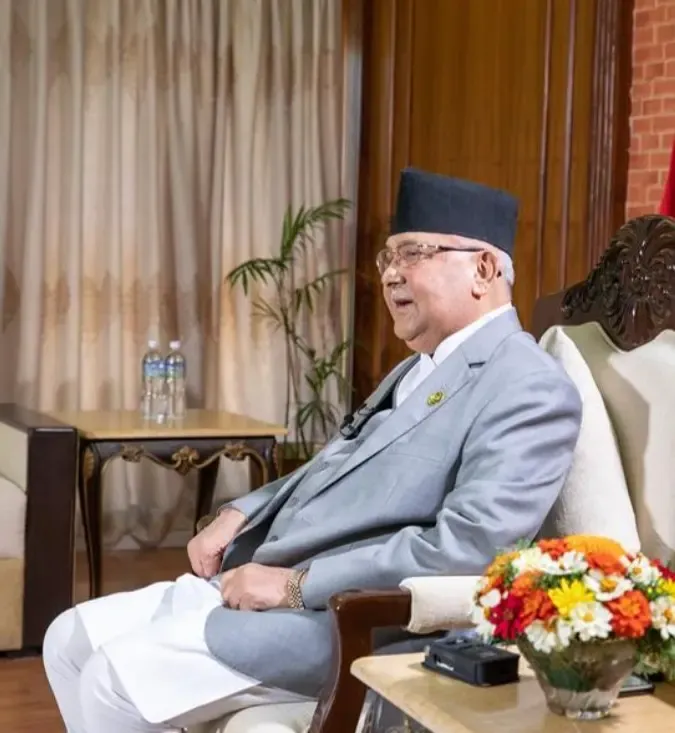
In a surprising turn of events, former Prime Minister K.P. Sharma Oli has accepted the people's decision after his party faced a significant electoral defeat. The Rastriya Swatantra Party (RSP) emerged as a powerful new force, reshaping the political landscape in Nepal.
Key Takeaways
Sharma Oli accepts election defeat with respect.
Balen Shah of RSP secures record votes.
CPN (UML) faces significant losses.
RSP emerges as a major political force.
Public discontent drives electoral change.
Kathmandu, March 12 (NationPress) The former Prime Minister of Nepal, K.P. Sharma Oli, has publicly acknowledged the people's decision with utmost respect following the significant electoral defeats experienced by him and his party during the House of Representatives elections held on March 5.
Oli, who leads the Communist Party of Nepal (Unified Marxist–Leninist) or CPN (UML), faced a stunning defeat against Balen Shah, the prime ministerial nominee of the Rastriya Swatantra Party (RSP), in the Jhapa-5 constituency located in eastern Nepal, a region historically dominated by the UML. This outcome was deemed unimaginable by many political observers.
Shah, previously the mayor of Kathmandu Metropolitan City, triumphed over Oli with an astonishing 68,348 votes, marking the highest vote count ever recorded by a candidate in Nepal's parliamentary history. In contrast, the former Prime Minister garnered only 18,734 votes, resulting in a devastating loss to the newcomer.
Moreover, his party could only secure nine seats out of the 165 available under the First Past the Post (FPTP) system within the 275-member House of Representatives. The remaining seats are allocated through the proportional representation electoral system, totaling 110 seats.
The relatively young RSP, steered by President Rabi Lamichhane and prime ministerial candidate Shah, claimed victory in 125 seats under the FPTP system. The party has also significantly led in vote share under the proportional representation system as traditional political parties like the CPN (UML), Nepali Congress, and the Nepali Communist Party faced severe setbacks.
“The results of this election did not meet my expectations, nor did they reflect what our party hoped to achieve,” former Prime Minister Oli shared in a Facebook post.
“In a democracy, the ultimate decision belongs to the populace, and it is my responsibility, as well as that of my party, to honor that decision. I wholeheartedly accept the people's mandate.”
He acknowledged that the election results were not favorable for his party, stating, “Nevertheless, our dedication and commitment to serving the public remain steadfast.”
Oli expressed that despite the challenging circumstances facing his party, it would continue to engage with the public, striving to strengthen the “trust relationship” with them.
In light of this devastating electoral defeat, numerous videos have surfaced on social media showcasing the former Prime Minister Oli belittling the RSP and its leader Shah, which have drawn ridicule from users.
Key leaders from established political parties, including Oli, faced humiliating losses in the elections, reflecting the growing public discontent towards them. These leaders have been embroiled in persistent power struggles, forming and dissolving governments over recent years, while allegations of corruption against some senior figures further deteriorated the electoral climate.
In September of the previous year, an anti-corruption Gen Z movement led to the collapse of the Oli-led coalition government, resulting in the loss of 77 lives and damages to public and private property estimated at over NPR 84 billion, according to government reports.
Subsequently, an interim government headed by Sushila Karki was established, which conducted elections on March 5 this year, paving the way for the RSP to ascend to power.
Point of View
It is evident that voters are seeking new leadership. This is a pivotal moment for Nepal's democratic landscape.
NationPress
16 Oct 2026
Frequently Asked Questions
What were the election results for K.P. Sharma Oli?
K.P. Sharma Oli faced a significant defeat, garnering only 18,734 votes against Balen Shah's 68,348 votes, and his party won just nine seats out of 165 available.
Who won the most votes in the election?
Balen Shah, the candidate from the Rastriya Swatantra Party (RSP), won the highest number of votes in Nepal's parliamentary history with 68,348 votes.
What does this election signify for Nepal's political landscape?
The election results indicate a shift in public sentiment, with the RSP emerging as a powerful new force, challenging traditional political parties like the CPN (UML) and Nepali Congress.
How did the public react to the election results?
Public reactions have been mixed, with many expressing frustration towards traditional political leaders, which was evident in the significant losses they faced during the elections.
What were the circumstances leading to the elections?
The elections were held following the collapse of the Oli-led coalition government amidst public outcry over corruption and political instability.