Rastriya Swatantra Party Dominates Nepal Elections, Captures 125 Seats
Synopsis
In a stunning electoral outcome, the Rastriya Swatantra Party (RSP) has claimed approximately 76% of the parliamentary seats in Nepal's elections, signaling a significant shift in the political landscape. Leading this charge is Balen Shah, who has set a new record with his vote tally.
Key Takeaways
RSP achieved 76% of parliamentary seats.
Balen Shah set a new voting record.
Public discontent with established parties was evident.
The RSP's victory could reshape governance in Nepal.
Historical context shows the rarity of such majorities.
Kathmandu, March 9 (NationPress) As the vote tally wrapped up in 163 out of 165 constituencies utilizing the First-Past-the-Post (FPTP) electoral method, the Rastriya Swatantra Party (RSP) achieved a remarkable victory, claiming approximately 76 percent of the available seats in the House of Representatives.
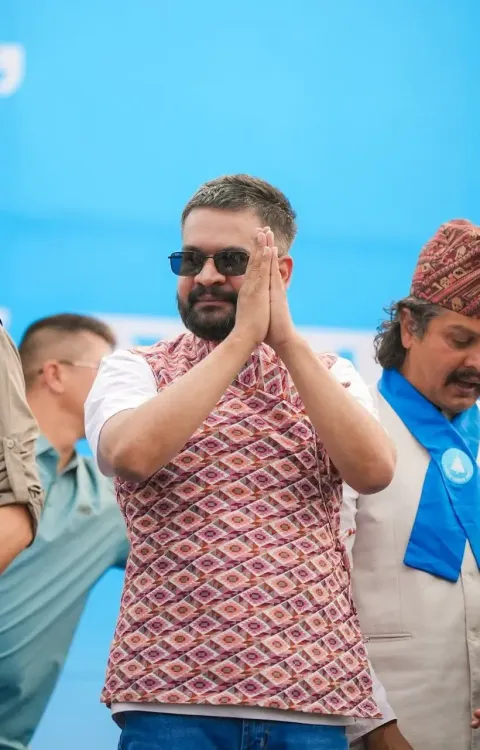
This party, which has only been around for three and a half years, under the leadership of Rabi Lamichhane and Prime Ministerial contender Balen Shah, won 125 seats. This electoral triumph saw numerous prominent figures from established political factions, such as former Prime Minister K P Sharma Oli, fall to the RSP’s momentum.
In one of the remaining contests, Arjun Kumar Karki from the Communist Party of Nepal (Unified Marxist–Leninist) (CPN-UML) is leading against RSP's Mingma Sherpa. A legal challenge is also underway in the Dhanusa-1 constituency due to the disqualification of an RSP candidate by the Election Commission of Nepal, citing a blacklist issue from the Credit Information Bureau of Nepal.
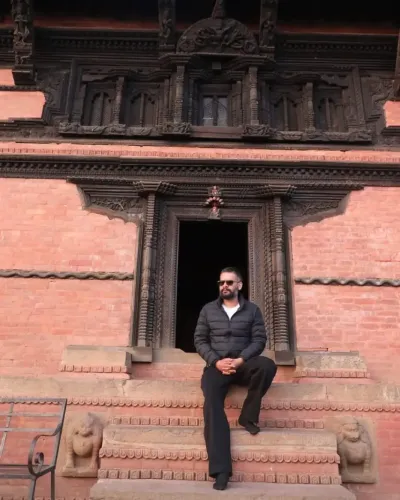
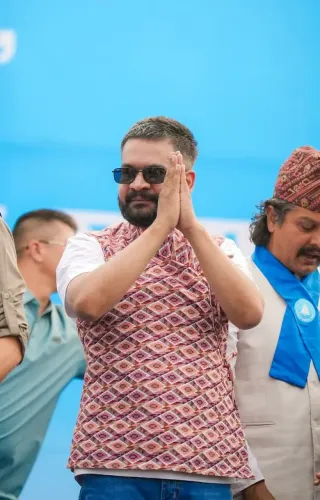
Balen Shah, the ex-Mayor of Kathmandu Metropolitan City, garnered 68,348 votes—the highest number recorded in Nepal’s parliamentary elections—defeating Oli in the traditionally strong Jhapa-5 constituency.
As of Monday evening, the RSP is also leading in the proportional representation system, amassing over 48 percent of the votes. If this trend persists, the party is poised to claim nearly a two-thirds majority—around 184 seats—in the 275-member House of Representatives, which is the lower chamber of Parliament.
No political party has achieved a two-thirds majority in the lower house since the 1991 elections. The closest was in 2017 when two communist factions—the CPN-UML and the former CPN (Maoist Centre)—formed an alliance that nearly reached that mark.
After a brief unity in 2018 that resulted in the formation of the Nepal Communist Party (NCP), the government enjoyed near two-thirds strength until internal conflicts led to its disintegration, primarily due to clashes between co-chairs K P Sharma Oli and Pushpa Kamal Dahal, known as ‘Prachanda’.
Historically, the Nepali Congress achieved a two-thirds majority in the inaugural democratic elections of 1959, winning 74 out of 109 seats. However, an RSP victory potentially securing two-thirds of the seats would be unprecedented, particularly given the complexity of securing even a simple majority due to the proportional representation system filling 40 percent of the seats. The RSP appears to have accomplished this challenging task, signaling a clear message from the electorate.
“The electorate's choice underscores a growing dissatisfaction with established political entities and their governance failures, as state institutions have been heavily populated with individuals linked to political factions rather than skilled professionals,” remarked Rajendra Maharjan, a political analyst, in comments to IANS.
“This trend mirrors the mismanagement seen during the Panchayat system in Nepal before 1990 and even in recent democratic administrations,” he added.
Analysts note that the Gen-Z protests in September of last year, which resulted in the downfall of K P Sharma Oli’s coalition government, served as an early warning of escalating public frustration towards traditional political parties.
“The signs were evident, yet the leadership of these established parties remained arrogant and neglected to initiate necessary leadership transitions,” Maharjan stated.
Following the Gen-Z movement, Oli further solidified his hold within his party, while former Prime Minister Sher Bahadur Deuba attempted to stall a special general convention that eventually saw Gagan Thapa rise to leadership in the Nepali Congress this past January.
Thapa, who was positioned as the party's Prime Ministerial candidate, faced a significant defeat against RSP candidate Amaresh Kumar Singh in Sarlahi-4 constituency, located in Madhesh Province.
“By the time Thapa took over as president following the special convention and launched the election campaign, it was already too late to sway public opinion,” commented Arun Subedi, a political analyst and former foreign policy advisor to Deuba during his 2022 premiership. “This leadership shift could not overcome the prevailing anti-incumbency sentiment among voters.”
For the past two decades, the Nepali Congress, CPN-UML, and the former CPN (Maoist Centre) have cycled through power.
Their leaders—Sher Bahadur Deuba, K P Sharma Oli, and Pushpa Kamal Dahal—have maintained their positions for almost a decade.
“In addition to anti-incumbency, the economic and foreign policy missteps by established leadership contributed to the rise of new political forces,” Subedi noted.
With the economy stagnating, job creation has remained weak, prompting many young citizens to seek employment abroad. The former political leadership is widely criticized for this predicament.
“Conversely, the international community has also been on the lookout for a fresh democratic force in Nepal, given the failings of established political parties’ foreign policies,” Subedi suggested, hinting at possible influences from Western democracies. “A combination of these elements has fueled the emergence of a new political force that is sweeping through the political landscape,” he concluded.
Point of View
It's crucial to recognize the seismic shift occurring in Nepal's political arena. The RSP's victory indicates a clear public demand for change, reflecting widespread dissatisfaction with traditional parties. This electoral response not only reshapes the political landscape but also underscores the need for accountability and reform in governance.
NationPress
2 Oct 2026
Frequently Asked Questions
What is the significance of RSP's victory in the elections?
The RSP's victory signifies a major shift in Nepal's political dynamics, with the party securing approximately 76% of the seats, reflecting public discontent with traditional political parties.
What challenges does the RSP face moving forward?
The RSP will need to address the expectations of the electorate and navigate the complexities of governance, especially in a political landscape dominated by established parties.
How does this election result compare to previous elections in Nepal?
No single party has secured a two-thirds majority in the lower house since 1991 elections, making RSP's potential majority a historic achievement.
What factors contributed to the rise of the RSP?
Public dissatisfaction with established parties, economic challenges, and a demand for new leadership contributed to the RSP's rise in these elections.