Canada: No defence industry without steel, warns trade minister at G20
Synopsis
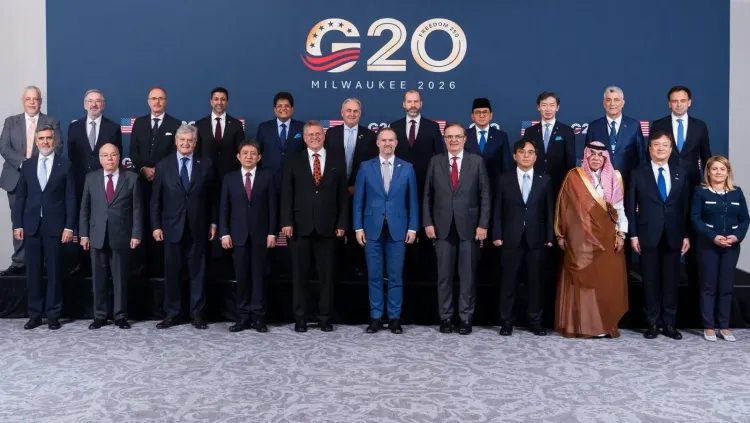
At the G20 Trade Ministers' Meeting in Milwaukee, Canada's Trade Minister Maninder Sidhu drew a direct line between steel and national defence, warning that overcapacity and dumping are gutting domestic producers. The blunt message — no steel, no defence industry — signals a sharp pivot in how Western governments are reframing industrial policy as a sovereignty issue.
Key Takeaways
Canadian International Trade Minister Maninder Sidhu warned at the G20 Trade Ministers' Meeting in Milwaukee on 1 October 2026 that global steel overcapacity is placing domestic producers under severe stress.
Sidhu argued that a domestic steel industry is essential to national sovereignty and the defence sector: 'Without a steel industry, you won't have a defence industry.' Canada has already implemented protective measures in response to overcapacity; the UK and EU have taken similar steps.
Sidhu raised concerns about steel dumping but declined to name the countries responsible.
Canada's steel sector is also seen as critical for energy infrastructure and electricity grid projects, beyond defence.
Sidhu called for closer Canada-US cooperation, citing deeply integrated auto and steel supply chains.
Canadian International Trade Minister Maninder Sidhu on 1 October 2026 warned that global steel overcapacity is placing domestic producers under severe pressure, arguing that a functional steel industry has become inseparable from national sovereignty and defence capability. The remarks came on the sidelines of the G20 Trade Ministers' Meeting in Milwaukee, where governments are grappling with excess production capacity, distorted supply chains, and mounting stress on domestic manufacturing.
The Sovereignty Argument
'Of course, you know, our steel industry is under tremendous stress,' Sidhu told reporters at the Milwaukee gathering. 'And as you all understand, without a steel industry, you won't have a defence industry.' The minister went further, linking steel directly to Canada's broader strategic posture: 'I think for sovereignty, you need a steel industry. You need a steel industry in your country to ramp up your defence industry, and that's what we're focused on in Canada.'
This framing — treating steel not merely as an industrial commodity but as a pillar of national security — reflects a broader shift in how governments in the West are approaching critical manufacturing sectors. Notably, this is the same logic driving reshoring debates across the European Union, the United States, and now more explicitly, Canada.
Dumping Concerns and Protective Measures
Sidhu also raised concerns about steel dumping, saying such practices were compounding pressure on industries already navigating disrupted supply chains. 'There are some countries out there that, with supply chains the way they are, the dumping of certain steel products is not helpful,' he said, though he declined to name specific countries. Canada, he noted, has already taken protective measures in response to overcapacity originating elsewhere. He pointed to similar actions by the United Kingdom and the European Union as evidence that the challenge was not Canada's alone to bear.
Beyond Defence: Energy and Infrastructure
The minister broadened the case for protecting Canada's steel sector beyond national security, citing critical infrastructure needs. 'The projects that we're building in energy or vertical minerals or an electricity grid, we're doing well with our steel industry so they can build more domestically,' Sidhu said. The remarks underscore how steel has become a multi-sector strategic asset — equally relevant to power grids and energy infrastructure as it is to military procurement.
Canada-US Manufacturing Ties
Sidhu also pointed to the deeply integrated manufacturing supply chains between Canada and the United States, particularly in steel and automobiles, arguing that both countries' workers face overlapping pressures. 'I strongly believe the auto sector is stronger when we're able to work together,' he said at the press conference. The statement signals that despite recent bilateral trade tensions, Ottawa sees closer industrial coordination with Washington as part of any long-term solution.
The Bigger Picture at G20
Steel overcapacity has become a recurring flashpoint in international trade forums, with major producing and consuming economies debating how to manage excess output, government subsidies, and the cross-border movement of lower-priced steel. Discussions at Milwaukee, Sidhu indicated, included closed-door consultations on coordinating support for workers and preserving industrial capacity. 'Part of that is the conversation with closed doors, of how we can support each other, how we can support our workers, and how we can support the steel industry, frankly,' he said. The growing overlap between trade policy, industrial policy, and national security looks set to dominate G20 economic diplomacy well into 2027.
Point of View
While pointing fingers obliquely, illustrates the diplomatic bind: G20 members need each other too much to be candid. The more important question left unanswered in Milwaukee is whether trade partners can agree on enforceable overcapacity rules, or whether each country simply retreats behind its own tariff wall and calls it sovereignty. For a forum meant to coordinate global economic governance, that outcome would be a quiet failure dressed up as resolve.
NationPress
2 Oct 2026
Frequently Asked Questions
What did Canada's trade minister say about steel at the G20?
Canadian International Trade Minister Maninder Sidhu warned at the G20 Trade Ministers' Meeting in Milwaukee on 1 October 2026 that global steel overcapacity is severely pressuring domestic producers. He argued that a functioning steel industry is essential to national sovereignty and the ability to sustain a defence industry.
Why does Canada say steel is a national security issue?
Sidhu linked steel directly to defence manufacturing, arguing that without domestic steel production, a country cannot build or scale up its defence industry. He also cited steel's role in energy infrastructure and electricity grid construction as further reasons to protect the sector.
Which countries is Canada concerned about regarding steel dumping?
Sidhu raised concerns about countries dumping steel products into global markets but declined to identify them by name, saying the practice was compounding pressure on industries already dealing with disrupted supply chains.
What measures has Canada taken to protect its steel industry?
Canada has implemented protective measures in response to global overcapacity, according to Sidhu. He noted that the UK and EU have taken comparable steps, framing the issue as a shared challenge among allied economies rather than a uniquely Canadian problem.
What is the G20 Trade Ministers' Meeting and why is steel on the agenda?
The G20 Trade Ministers' Meeting is a gathering of trade officials from the world's largest economies to discuss global commerce challenges. Steel overcapacity — driven by excess production, government subsidies, and cross-border dumping — has become a recurring issue at such forums as governments seek to balance open trade with the protection of strategically critical domestic industries.