Central African Republic forms new government under Touadera's third term
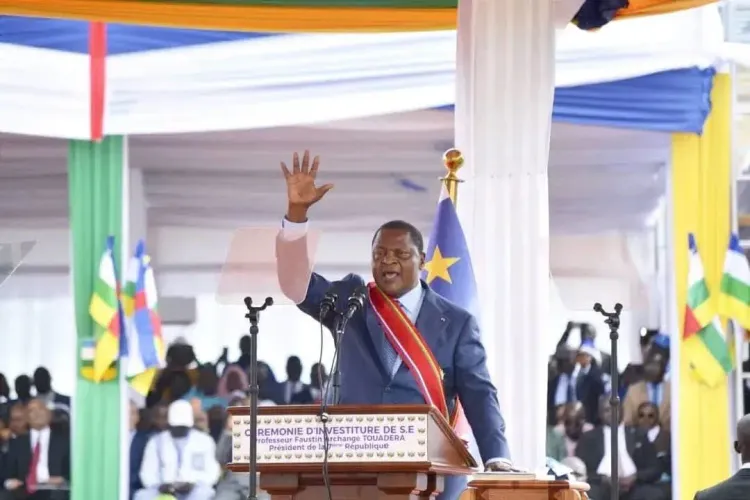
Synopsis
Just weeks after winning re-election with nearly 78% of the vote, CAR President Touadera has sworn in a new cabinet — retaining key finance and foreign affairs ministers while elevating the ruling party's spokesperson to a minister of state role. The reshuffle signals continuity over transformation in a country still grappling with armed conflict.
Key Takeaways
President Faustin-Archange Touadera signed a decree on 22 May 2025 forming a new government in Bangui .
The cabinet comprises 4 ministers of state , 26 ministers , and 2 minister delegates .
Felix Moloua was reappointed as Prime Minister six days earlier, becoming the first PM of the Seventh Republic .
Key ministers for Finance and Foreign Affairs were retained, signalling policy continuity.
Touadera won the 28 December 2025 presidential election with 77.9% of the vote; this is his third term since 2016 .
The new cabinet has been tasked with advancing development and reinforcing peace in the conflict-affected country.
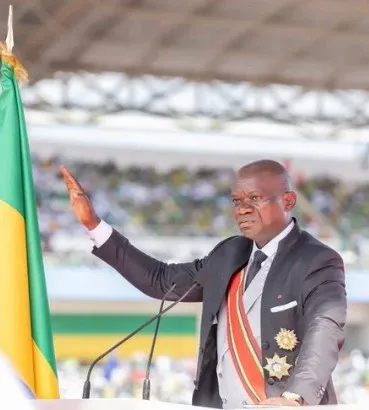
President Faustin-Archange Touadera of the Central African Republic (CAR) on Thursday, 22 May 2025, signed a decree constituting a new government in Bangui, appointing four ministers of state, 26 ministers, and two minister delegates at the proposal of Prime Minister Felix Moloua. The reshuffle follows Moloua's reappointment as head of government six days earlier, making him the first prime minister under the country's newly proclaimed Seventh Republic.
Key Appointments and Retentions
Arnaud Djoubaye Abazene was retained as Minister of State for Justice, Human Rights Promotion and Good Governance and keeper of the seals, while Aurelien Simplice Zingas kept his portfolio as Minister of State for National Education. Continuity was also maintained at critical economic and diplomatic posts: Sylvie Baipo Temon remained Minister of Foreign Affairs, Francophonie and Central Africans Abroad, and Herve Ndoba held on to the Finance and Budget ministry.
Among the notable changes, former Minister of Energy Development and Hydraulic Resources Arthur Bertrand Piri was elevated to Minister of State for Equipment and Public Works. Evariste Ngamana, spokesperson for the ruling party United Hearts Movement, was named Minister of State for Communication and Media and government spokesperson.
Context: Post-Election Government Formation
The decree arrives more than a month after Touadera's swearing-in for a new seven-year term, following the 28 December 2025 presidential election in which he reportedly secured 77.9 per cent of the vote. In keeping with post-election convention, Moloua had submitted his resignation in early May; Touadera accepted it before reappointing him days later. Moloua, who was first appointed prime minister in 2022, previously served as the country's minister of planning, economy, and cooperation.
The 68-year-old Touadera, who has been president since 2016, is now serving his third term in office. Local media reports indicate the new cabinet has been tasked with accelerating development and reinforcing peace efforts in the conflict-affected nation.
Significance for a War-Torn Nation
The Central African Republic has endured prolonged instability, with armed groups controlling significant portions of its territory for over a decade. The formation of a new government under a fresh presidential mandate is being watched closely as a signal of whether Touadera's administration can consolidate the fragile security gains of recent years. Notably, the retention of key ministers in finance and foreign affairs suggests a preference for policy continuity over sweeping change.
With the cabinet now in place, attention turns to whether the government will translate its stated development and peace mandate into measurable progress on the ground.
Frequently Asked Questions
What is the new government formed in the Central African Republic?
President Faustin-Archange Touadera signed a decree on 22 May 2025 constituting a new cabinet of 4 ministers of state, 26 ministers, and 2 minister delegates. The government was formed at the proposal of reappointed Prime Minister Felix Moloua.
Who is Felix Moloua and why was he reappointed?
Felix Moloua is the Prime Minister of the Central African Republic, first appointed to the role in 2022. He was reappointed after submitting a customary post-election resignation, and now leads the first government of the country's Seventh Republic.
What were the results of the Central African Republic's December 2025 election?
President Faustin-Archange Touadera reportedly won the 28 December 2025 presidential election with 77.9% of the vote, securing a new seven-year term. It is his third term as president since first taking office in 2016.
Which ministers were retained in the new CAR cabinet?
Among those retained were Arnaud Djoubaye Abazene as Minister of State for Justice, Aurelien Simplice Zingas for National Education, Sylvie Baipo Temon as Foreign Affairs Minister, and Herve Ndoba as Finance and Budget Minister.
What are the priorities of the new Central African Republic government?
According to local media reports, the new cabinet has been tasked with enhancing development and reinforcing peace efforts in the Central African Republic, which has faced prolonged armed conflict for over a decade.