Canada not ready to sign US trade deal yet, says PM Carney
Synopsis
Canadian Prime Minister Mark Carney has flatly said Canada is not ready to sign a trade deal with the US — directly contradicting Donald Trump's claims of rapid progress. With the US midterm deadline looming on 3 November and Ontario already drawing on a CAD 8.7 billion support shield, Ottawa appears to be settling in for a long haul rather than a last-minute handshake.
Key Takeaways
Canadian PM Mark Carney said on 29 October 2026 that Canada is not yet in a position to finalise a trade deal with the United States .
Carney's remarks come ahead of the US midterm elections on 3 November , amid speculation over a pre-election deal.
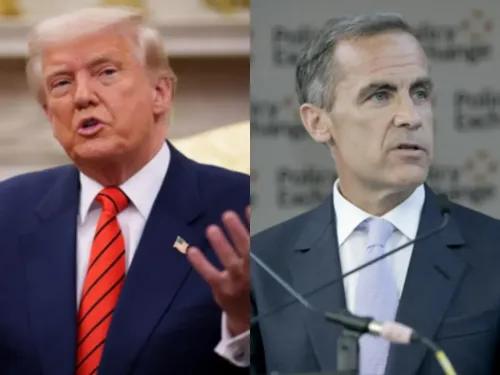
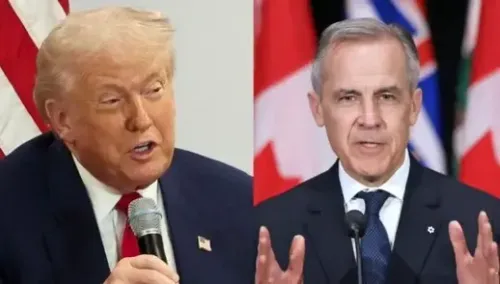
US President Donald Trump had claimed rapid progress toward an agreement, drawing scrutiny in Ottawa.
Carney and Ontario Premier Doug Ford earlier announced a CAD 8.7 billion (approx.
USD 6.18 billion ) industry support plan for Ontario's steel, automotive, and critical mineral sectors.
Ontario is among the hardest-hit provinces due to its heavy reliance on auto and steel exports to the US.
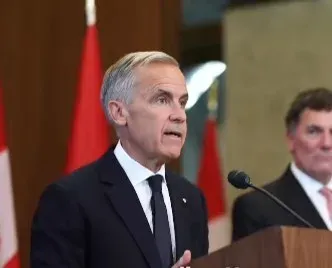
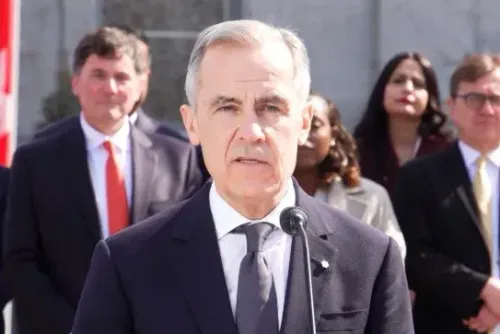
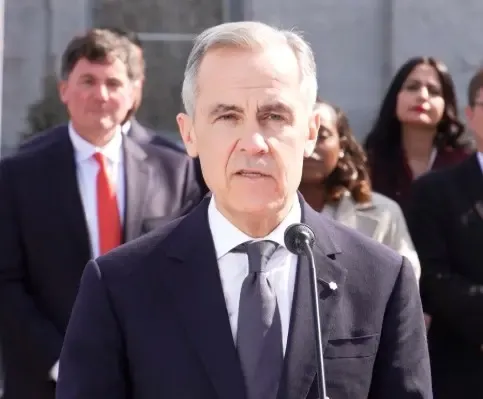
Canadian Prime Minister Mark Carney said on 29 October 2026 that Canada is not yet in a position to finalise a trade agreement with the United States, dampening speculation that a deal could be struck before the US midterm elections on 3 November. Carney made the remarks to reporters in Ottawa ahead of a Liberal caucus meeting, according to local media reports.
What Carney Said
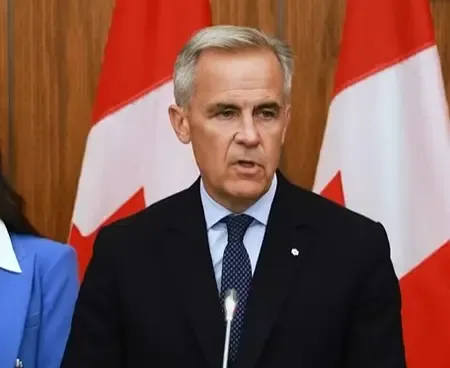
Speaking in measured terms, Carney stressed that Ottawa is holding out for 'the right deal for Canadians.' He acknowledged the possibility of an agreement in principle but set clear conditions. 'There are deals that are in the best interests of Canada, first and foremost, but also are in the interests of the United States,' Carney said. 'If those deals present themselves, we will pursue them. But we're not at that position right now.'
US Election Deadline Pressure
With Canada-US trade tensions emerging as a significant issue ahead of the US midterm elections, questions have mounted this week over whether Ottawa could reach a deal before the 3 November vote. Recent remarks by US President Donald Trump claiming rapid progress toward an agreement drew close scrutiny in Ottawa, suggesting the two sides may have diverging assessments of where negotiations stand.
Ontario's CAD 8.7 Billion Shield
Earlier this month, Carney and Ontario Premier Doug Ford jointly announced a series of strategic industry support initiatives totalling 8.7 billion Canadian dollars (approximately 6.18 billion US dollars), designed to cushion workers and businesses hit by US tariffs and drive long-term economic growth. The action plan focuses on safeguarding Ontario's steel, automotive, and critical mineral sectors — industries that form the backbone of Canada's manufacturing economy.
Key measures under the plan include establishing a joint steel action fund, supporting automakers in upgrading production lines to build connected and electric vehicles, and constructing road infrastructure alongside streamlined approval processes to develop a critical mineral supply chain in Ontario's north.
Why Ontario Matters Most
As Canada's manufacturing heartland, Ontario hosts world-class automotive and steel industries and sits atop vast deposits of critical minerals. Its economy is deeply export-dependent — particularly in autos and steel destined for the US — making it one of the provinces hardest hit by American tariffs. Notably, this domestic support package signals that Ottawa is preparing for a prolonged standoff rather than banking on a quick diplomatic resolution.
What Comes Next
Analysts will be watching closely whether the US midterm election outcome shifts Washington's negotiating posture. A deal before 3 November now appears unlikely following Carney's remarks. The CAD 8.7 billion Ontario package, meanwhile, is expected to begin rolling out in the coming weeks, with the steel fund and EV production line upgrades among the first initiatives to move forward.
Point of View
Particularly in Ontario's auto belt. The more interesting question is whether a post-midterm Washington recalibrates its leverage, or doubles down.
NationPress
29 Oct 2026
Frequently Asked Questions
Why has Canada said it cannot sign a US trade deal yet?
Canadian Prime Minister Mark Carney said on 29 October 2026 that Canada has not yet found terms that are in the best interests of Canadians, declining to be rushed ahead of the US midterm elections on 3 November. He stressed Ottawa would pursue a deal only if the right conditions presented themselves.
What did Donald Trump say about Canada-US trade progress?
US President Donald Trump had recently claimed rapid progress toward a Canada-US trade agreement, but those remarks drew close scrutiny in Ottawa and appear at odds with Carney's assessment that no deal is imminent.
What is the CAD 8.7 billion Ontario support plan?
It is a joint action plan announced by PM Carney and Ontario Premier Doug Ford earlier in October 2026, worth 8.7 billion Canadian dollars (about 6.18 billion US dollars). The plan supports Ontario's steel, automotive, and critical mineral sectors affected by US tariffs, including a joint steel fund and EV production line upgrades.
Which Canadian industries are most affected by US tariffs?
Ontario's automotive and steel industries are among the hardest hit, given the province's deep economic dependence on exports to the United States. Ontario also holds significant critical mineral deposits, making its supply chains a key focus of the government's mitigation strategy.
Could a Canada-US trade deal still happen before the US midterms?
Following Carney's 29 October statement, a deal before the 3 November US midterm elections appears unlikely. Ottawa has indicated it will not sign an agreement unless it meets Canadian interests, regardless of political timelines in Washington.