China accounts for 93% of counterfeit goods seized in 2024, report warns
Synopsis
China and Hong Kong accounted for 93% of the value of all counterfeit goods seized globally in 2024 — a dominance the report links not just to trade fraud but to CCP-backed IP theft feeding military modernisation. With carcinogen levels in fake products reportedly 930 times above legal limits and annual IP theft costs estimated at $600 billion, the counterfeit crisis is no longer just an economic problem — it is a public health and geopolitical one.
Key Takeaways
China and Hong Kong accounted for 93 per cent of the value of all IP-infringing goods seized globally in 2024 .
A 2023 South Korean government probe found counterfeit items with carcinogens at 930 times above legal limits.
Experts estimated China's IP theft costs the US economy up to $600 billion annually.
Platforms DHgate , DouyinShangcheng , Pinduoduo , and Taobao are flagged as major cross-border counterfeit facilitators.
The report identified 37 online and 32 physical markets worldwide enabling counterfeiting, with China hosting key hubs.
Analysts allege counterfeit production aids CCP military modernisation through dual-use technology access.
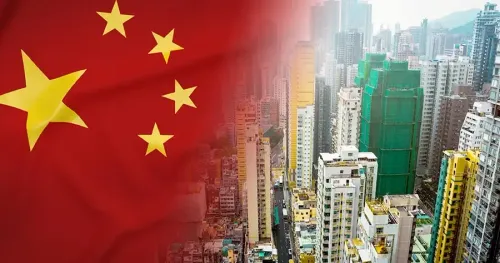
China, including Hong Kong, accounted for 93 per cent of the value of all intellectual-property infringing goods seized in 2024, according to a new report, which warned that the country's dominance in the global counterfeit economy poses direct threats to 'international trade and consumer safety.' The findings underscore a systemic challenge that extends well beyond trade statistics into public health and national security.
Scale of the Counterfeit Network
The report cited a 2025 assessment identifying 37 online markets and 32 physical markets worldwide that facilitate counterfeiting, with China hosting some of the most notorious hubs. Key physical centres include the Baiyun Leather Trading Center, Huaqiangbei Electronics Malls, Luohu Commercial City, Kinsun Market, and Wu'ai Market.
Although foot traffic at these physical locations has reportedly declined, they continue to function as distribution nodes for online sales and as 'sample testing' centres for counterfeit merchandise — effectively serving as the back-end infrastructure for a digital-first counterfeit supply chain.
Chinese e-commerce platforms including DHgate, DouyinShangcheng, Pinduoduo, and Taobao are identified as major facilitators of cross-border counterfeit sales, enabling sellers to reach consumers globally with minimal friction.
Health and Safety Risks to Consumers
The report flagged serious health hazards linked to counterfeit products, citing a 2023 South Korean government investigation that found certain counterfeit items contained carcinogens at levels 930 times above legal limits. 'Substandard counterfeit toys, electronics, and cosmetics can endanger consumers, while pirated digital content often exposes users to malware,' the report stated.
This comes amid growing global concern about the unregulated flow of consumer goods through informal online channels, where quality verification is largely absent.
Geopolitical and Strategic Dimensions
Analysts cited in the report alleged that the Chinese Communist Party (CCP) benefits directly from intellectual property theft, with counterfeit production and economic espionage reportedly aiding military modernisation. 'Economic espionage and counterfeit production provide access to advanced technologies with dual civilian-military applications, including artificial intelligence and surveillance systems,' the report noted.
Experts estimated that China's theft of US intellectual property alone costs the American economy up to $600 billion annually, according to the report. Notably, this figure has been cited in multiple prior assessments, though independent verification of the precise estimate varies by methodology.
Calls for International Action
The report called for stronger international cooperation and enhanced customs enforcement, alongside technological solutions such as blockchain-based supply-chain verification and public awareness campaigns to suppress consumer demand for counterfeit goods. 'The counterfeit crisis has become a geopolitical weapon, undermining trust in global trade and eroding innovation,' the report concluded.
Experts argue that without coordinated multilateral action, the structural incentives sustaining counterfeit production are unlikely to diminish, particularly as cross-border e-commerce continues to expand at pace.
Point of View
But the more consequential detail is the alleged CCP-military link — if counterfeit production is genuinely feeding dual-use technology transfer, this reframes the issue from a trade-enforcement problem to a national security one for importing nations, including India. The $600 billion IP theft estimate, while widely cited, is contested methodologically, and its uncritical repetition risks overstating certainty. What the report does establish clearly is the health dimension: carcinogens at 930 times legal limits in consumer goods is not a trade abstraction — it is a direct threat to end consumers. India, as both a major importer of Chinese goods and a country with its own growing counterfeit challenge, has particular reason to track these findings and push for tighter customs-level verification frameworks.
NationPress
26 Sept 2026
Frequently Asked Questions
What share of counterfeit goods seized globally came from China in 2024?
China, including Hong Kong, accounted for 93 per cent of the value of all intellectual-property infringing goods seized in 2024, according to the report. This makes China by far the dominant source in the global counterfeit economy.
What health risks do counterfeit products pose?
A 2023 South Korean government investigation cited in the report found that some counterfeit items contained carcinogens at levels 930 times above legal limits. Counterfeit toys, electronics, and cosmetics can endanger consumers, while pirated digital content often exposes users to malware.
How much does China's IP theft cost the US economy annually?
Experts cited in the report estimated that China's theft of US intellectual property costs the American economy up to $600 billion annually. This figure has appeared in multiple prior assessments, though methodologies vary.
Which Chinese platforms are linked to counterfeit sales?
The report identified DHgate, DouyinShangcheng, Pinduoduo, and Taobao as major facilitators of cross-border counterfeit sales, enabling sellers to reach global consumers with limited oversight.
What solutions does the report recommend to tackle the counterfeit crisis?
The report calls for stronger international cooperation, enhanced customs enforcement, blockchain-based supply-chain verification, and public awareness campaigns to reduce consumer demand. It frames the counterfeit crisis as a geopolitical challenge requiring coordinated multilateral action.