China fires submarine-launched ICBM into Pacific, US warns of nuclear risk

Synopsis
China's public acknowledgement of a submarine-launched ICBM test into the Pacific is a deliberate break from its usual strategic opacity — and Washington's sharp response signals this is no routine military exercise. With Australia, New Zealand, and Japan all registering alarm, the launch has crystallised Indo-Pacific anxieties about China's nuclear modernisation at a moment when global arms control frameworks are already under severe strain.
Key Takeaways
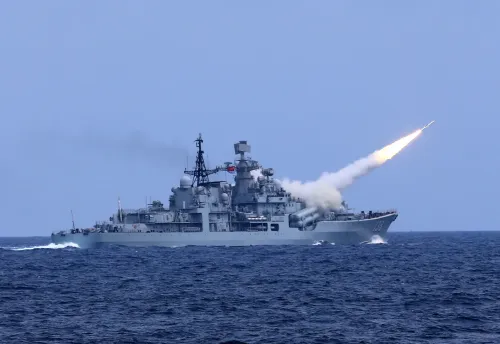
China launched an unarmed ICBM from a submarine into the southern Pacific Ocean on 7 July , carrying a dummy warhead.
State Department spokesperson Tommy Pigott said Beijing's 'rapid and opaque nuclear weapons buildup is of great concern to the region and the world.' The US urged China to join formal arms control discussions and adopt a regularised launch-notification arrangement consistent with other P5 members.
New Zealand called the test 'unwelcome and concerning'; Australia labelled it 'destabilising'; Japan flagged intensifying Chinese military activity.
China stated it had notified relevant countries in advance — one of its most transparent public admissions of a submarine-based strategic missile test.
China on 7 July publicly acknowledged launching an unarmed intercontinental-range ballistic missile (ICBM) from a submarine into the southern Pacific Ocean, in a rare demonstration of its sea-based strategic strike capability. The United States swiftly expressed concern, with the State Department warning that Beijing's expanding nuclear arsenal directly undermines global non-proliferation efforts.
What the US Said
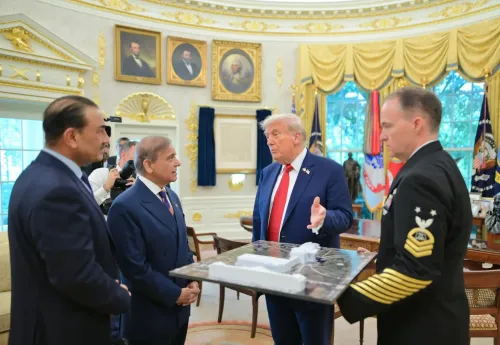
State Department spokesperson Tommy Pigott confirmed that Washington had monitored the launch of 'an unarmed intercontinental-range ballistic missile' from a Chinese submarine. 'At a time when the United States is working harder than ever to prevent nuclear proliferation, China is doing the opposite,' Pigott said.
He described Beijing's 'rapid and opaque nuclear weapons buildup' as being 'of great concern to the region and the world.' The statement called on China to enter formal arms control discussions and establish a regularised notification arrangement for all ICBM and space launches — a commitment already made by all other P5 members, according to Pigott.
China's Acknowledgement
Chinese authorities confirmed the launch, stating the missile carried a dummy warhead and landed in a designated area in the Pacific Ocean. Beijing said it had provided advance notification to relevant countries before conducting the test. The exercise marked one of China's most visible public demonstrations of its submarine-based nuclear deterrent to date.
Regional Reactions
New Zealand described the launch as an 'unwelcome and concerning development.' Australia called it 'destabilising to the region.' Japan also voiced concern, citing what it characterised as an intensification of China's military activities in the broader Indo-Pacific.
US Security Commitments Reaffirmed
The State Department statement reiterated Washington's defence posture across the region. 'The United States remains steadfast in our defence commitments to our allies and partners,' it said. This comes amid a broader pattern of US-China strategic competition, with Washington pushing Beijing to join multilateral arms control frameworks that currently bind only the other permanent members of the UN Security Council.
Analysts note this is among the first times China has publicly announced such a submarine-launched ICBM test, signalling a deliberate choice to demonstrate capability rather than maintain strategic ambiguity. Whether Beijing's disclosure opens a path to dialogue — or is intended to deter — remains an open question ahead of any future arms control talks.
Point of View
At a moment when US-China strategic competition is intensifying and multilateral arms control is effectively dormant. The US demand that China adopt P5-style launch notifications is reasonable on paper, but Washington has little leverage to compel it; Beijing has consistently refused to join any bilateral or trilateral nuclear framework. The regional chorus of concern from Australia, New Zealand, and Japan underscores that the Indo-Pacific security order is being stress-tested in real time, and existing diplomatic architecture is not keeping pace.
NationPress
7 Jul 2026
Frequently Asked Questions
What did China launch in its July 7 missile test?
China launched an unarmed intercontinental-range ballistic missile (ICBM) from a submarine into the southern Pacific Ocean on 7 July. The missile carried a dummy warhead and landed in a pre-designated area after Beijing said it had notified relevant countries in advance.
Why is the US concerned about China's missile test?
The US State Department said China's 'rapid and opaque nuclear weapons buildup' runs counter to global non-proliferation efforts. Spokesperson Tommy Pigott specifically called out Beijing for not adopting the regularised launch-notification arrangements that all other P5 members have committed to.
How did regional countries react to the Chinese ICBM test?
New Zealand called it an 'unwelcome and concerning development,' Australia described it as 'destabilising to the region,' and Japan voiced concern over what it characterised as an intensification of China's military activities.
What is the US asking China to do following the test?
Washington is urging Beijing to engage in meaningful arms control discussions and to establish a regularised notification arrangement for all ICBM and space launches — a standard already observed by the other four permanent members of the UN Security Council.
Why is this test significant compared to previous Chinese missile tests?
This launch is notable because China publicly acknowledged it, marking a rare and deliberate display of its submarine-based strategic missile capability. Analysts view the transparency as a calculated signal rather than routine disclosure, reflecting China's growing confidence in its sea-based nuclear deterrent.