China pressured Nepal over Kathmandu Tibetan studies conference: ICT report

Synopsis
Weeks after China's new Ethnic Unity and Progress Law took effect, Beijing leaned on Nepal to suppress critical voices at an international Tibetan studies seminar in Kathmandu — prompting the Central Tibetan Administration to pull its researchers rather than risk the conference being shut down. The ICT says this is no isolated incident: it is Beijing exporting ideological control into independent academic spaces.
Key Takeaways
China reportedly pressured Nepal ahead of the 17th IATS Seminar scheduled in Kathmandu from 23–29 August .
Chinese Ambassador Zhang Maoming raised concerns with Nepal's Foreign Secretary Amrit Bahadur Rai on 21 July , urging officials to prevent criticism of China at the event.
The Central Tibetan Administration (CTA) decided not to send researchers in an official capacity to avoid jeopardising the conference.
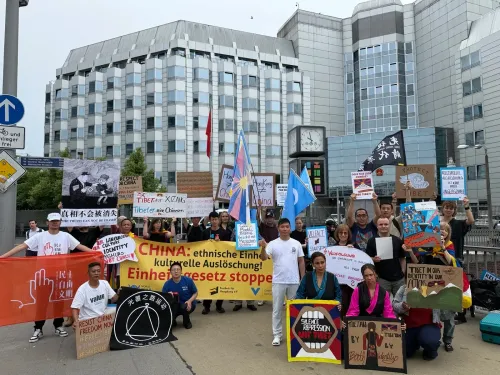
The International Campaign for Tibet (ICT) links the intervention to China's new Ethnic Unity and Progress Law .
China's state-controlled China Tibetology Research Centre is reportedly sending delegates to the same independent academic seminar.
The ICT has called on global governments and institutions to recognise Beijing's pattern of transnational repression in academic settings.
China has reportedly pressured Nepal to restrict an upcoming international academic conference on Tibetan studies in Kathmandu, according to a report by the International Campaign for Tibet (ICT). The development comes just weeks after Beijing's new 'Ethnic Unity and Progress Law' came into force, raising alarm among scholars and rights advocates over the reach of China's transnational influence.
Key Developments
The 17th Seminar of the International Association for Tibetan Studies (IATS) is scheduled to take place in Kathmandu from 23 August to 29 August. According to the ICT report, Nepal's Foreign Secretary Amrit Bahadur Rai and Chinese Ambassador to Nepal Zhang Maoming met on 21 July, during which Zhang raised concerns about anticipated criticism of China at the event.
Citing a senior Nepalese foreign ministry official, the Kathmandu Post reported on 22 July that the Chinese Ambassador urged Nepalese officials to ensure that 'some individuals could speak against China and in support of Tibet' did not happen at the seminar. The ICT report notes there was no formal diplomatic protest or written demand for cancellation.
CTA Withdraws Researchers to Protect the Conference
The Dharamshala-based Central Tibetan Administration (CTA) has decided not to send its researchers to the seminar in an official capacity. According to reports, the decision was taken to 'avoid jeopardising the conference and to ease Chinese pressure on Nepal.' The ICT report directly links this withdrawal to Beijing's diplomatic intervention.
What the ICT Report Says
Tencho Gyatso, President of the ICT, said the incident signals a wider and more systematic effort by Beijing. 'The significance of this incident extends well beyond a single academic conference. Beijing is institutionalising a system in which diplomacy, repressive domestic legislation implemented outside China's borders, and state-directed academic scholarship reinforce one another,' she said.
Gyatso further stated that the new Ethnic Unity and Progress Law, combined with China's efforts to recast Tibetology as a vehicle for 'forging a strong sense of the Chinese national community,' is 'designed to advance the forced assimilation of Tibetans while reshaping international understanding of Tibet.'
China's Participation and Academic Concerns
The ICT report also flagged that China is reportedly sending delegates from the state-controlled China Tibetology Research Centre to the same independent academic seminar. The report described this as 'a cause of major concern,' noting that the centre has been mandated by the Chinese Communist Party (CCP) to advance a narrative aligned with Beijing's forced assimilation agenda.
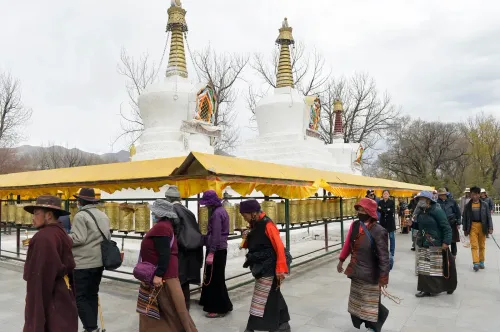
Nepal's position is particularly sensitive given that a significant portion of its northern population bordering Tibet shares cultural and religious traditions with Tibetan people, and the country hosts a substantial Tibetan refugee community.
Broader Pattern of Transnational Pressure
According to the ICT, Beijing's intervention over the IATS seminar fits a broader pattern of attempts to control all international discourse on Tibet. The report characterised China's actions as an expansion of its 'campaign of transnational repression into academic discourse.' The ICT has called on global governments and academic institutions to recognise this pattern and demand the repeal of the Ethnic Unity and Progress Law.
With the seminar still weeks away, it remains to be seen whether Nepal will impose any conditions on participants — and whether other delegations adjust their participation in response to the diplomatic pressure.
Point of View
Economically dependent on China and geographically squeezed between two giants, is an easy target; the CTA's pre-emptive withdrawal shows the pressure worked without a single formal demand being made. What is underreported is the parallel insertion of the state-run China Tibetology Research Centre into an independent academic forum — a soft-power play that launders official narratives as scholarship. If academic institutions globally do not draw a clear line here, the template will be replicated at every major Tibet-related conference going forward.
NationPress
3 Aug 2026
Frequently Asked Questions
Why did China pressure Nepal over the Tibetan studies conference?
China reportedly objected to the possibility that participants at the 17th IATS Seminar in Kathmandu could speak critically of Beijing or in support of Tibet. Chinese Ambassador Zhang Maoming raised these concerns directly with Nepal's Foreign Secretary on 21 July, according to the ICT report.
What is the International Association for Tibetan Studies (IATS) seminar?
The IATS seminar is an independent international academic conference on Tibetan studies. The 17th edition is scheduled to be held in Kathmandu from 23 to 29 August, bringing together scholars from around the world.
Why did the Central Tibetan Administration withdraw from the seminar?
The Dharamshala-based CTA decided not to send its researchers in an official capacity in order to avoid jeopardising the conference and to ease Chinese diplomatic pressure on Nepal, according to reports cited in the ICT document.
What is China's Ethnic Unity and Progress Law?
It is a new Chinese law that came into effect shortly before this incident. The ICT describes it as legislation designed to advance the forced assimilation of Tibetans and to recast Tibetology as a tool for promoting a unified Chinese national identity, with implications that extend beyond China's borders.
Who is attending the seminar from China?
According to the ICT report, the state-controlled China Tibetology Research Centre is sending delegates to the seminar. The ICT has flagged this as a concern, noting the centre is mandated by the CCP to promote narratives aligned with Beijing's assimilation agenda at what is otherwise an independent academic forum.