Tibet group urges US Congress to pass Tibet Act, condemn China's unity law
Synopsis
During Captive Nations Week, the International Campaign for Tibet pressed US lawmakers to pass H.R. 8982 — a bill that would formally recognise Tibet's elected government and outlast the 14th Dalai Lama — while also demanding condemnation of China's new ethnic unity law. The push follows the first recorded Tibetan self-immolation on American soil, raising the political stakes considerably.
Key Takeaways
The International Campaign for Tibet (ICT) urged US Congress to pass the Assuring the Future of Tibet Act of 2026 (H.R.
8982) during Captive Nations Week , 19–25 July .
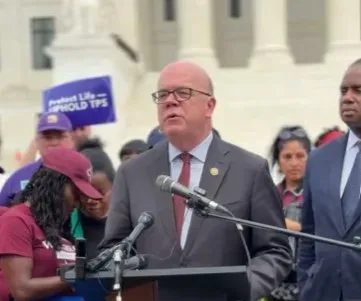
The bill, introduced by Congressman James P.
McGovern and Congressman Michael McCaul , would elevate US recognition of the Central Tibetan Administration .
ICT called on the Trump administration to condemn China's Promoting Ethnic Unity and Progress Law , in force since 1 July , citing forced assimilation of Tibetans, Uyghurs, and Southern Mongolians.
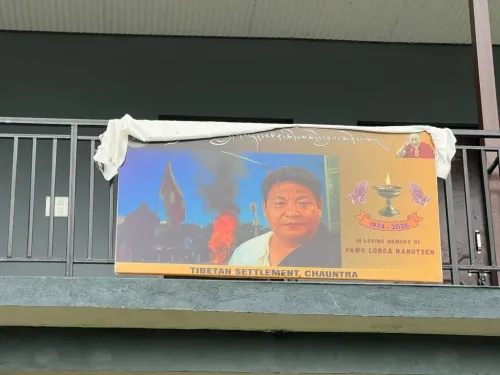
Tibetan activist Lobsang Palden (Lobga Rangzen) self-immolated outside UN headquarters in New York on 2 July — the first such incident on US soil, according to ICT.
Captive Nations Week has recognised Tibet since 1959 , when Congress first passed the resolution under President Dwight D.
The International Campaign for Tibet (ICT) on 20 July urged the US Congress to pass legislation that would strengthen Washington's formal engagement with Tibet's elected leadership, and called on the Trump administration to publicly condemn China's Promoting Ethnic Unity and Progress Law, which came into force on 1 July. The appeal was timed to coincide with Captive Nations Week, observed from 19 to 25 July, which the group said should be used to reaffirm bipartisan American solidarity with the Tibetan people.
The Assuring the Future of Tibet Act of 2026
At the centre of ICT's legislative push is H.R. 8982, the Assuring the Future of Tibet Act of 2026, introduced in the House of Representatives by Democratic Congressman James P. McGovern and Republican Congressman Michael McCaul. The bill would allow the US government to elevate its engagement with and formal recognition of the Central Tibetan Administration as the democratically elected representative of the Tibetan people.
Crucially, the legislation also seeks to ensure that US support for Tibet continues beyond the lifetime of the 14th Dalai Lama — a forward-looking provision that addresses a long-standing concern about policy continuity in Washington.
ICT President Tencho Gyatso said in a statement: 'At a time when Beijing has abandoned any pretence of offering autonomy for Tibetans and refuses to engage in dialogue with the Tibetan side, the United States needs to take a bold step forward in defence of freedom and democracy for the Tibetan people. This bill answers that call.'
China's Ethnic Unity Law: What ICT Says
ICT separately urged Washington to condemn China's Promoting Ethnic Unity and Progress Law, which the organisation said expands policies aimed at the forced assimilation of Tibetans, Uyghurs, Southern Mongolians, and other non-Chinese communities. According to ICT, the law promotes Chinese-language dominance and ideological conformity while imposing restrictions on religion and expanding state control over education and culture.
The group also flagged provisions it said raise concerns about transnational repression — the practice of states targeting dissidents and minorities beyond their own borders. ICT called on the administration to raise the issue in bilateral engagements with Beijing and to coordinate opposition through the United Nations and like-minded governments.
Lobsang Palden's Self-Immolation
The appeal followed the death of Tibetan activist Lobsang Palden, widely known as Lobga Rangzen, who self-immolated outside UN headquarters in New York on 2 July. ICT described it as the first Tibetan self-immolation on US soil, underscoring the urgency with which the advocacy group is pressing its case before Congress and the administration.
Historical Context: Captive Nations Week
Captive Nations Week was established by Congress in 1959 and first proclaimed by President Dwight D. Eisenhower to recognise peoples living under communist and authoritarian rule. Tibet was among the nations originally named that year — months after China suppressed the Tibetan National Uprising and the Dalai Lama fled into exile. More than six decades later, ICT argues the designation remains as relevant as ever.
'Captive Nations Week reminds us that freedom cannot be taken for granted and calls on America to stand consistently with people who are denied their fundamental rights and act in solidarity with those who continue to defend it,' Gyatso said. Whether Congress acts on H.R. 8982 before the session ends will be a key indicator of how far bipartisan Tibet support translates into binding policy.
Point of View
Because it is a concrete, dateable policy change rather than a continuation of existing repression. Whether the Trump administration, which has simultaneously pursued trade negotiations with Beijing, will risk diplomatic friction by formally condemning the law is the central tension this advocacy campaign cannot resolve on its own.
NationPress
20 Oct 2026
Frequently Asked Questions
What is the Assuring the Future of Tibet Act of 2026?
It is a US House bill (H.R. 8982) introduced by Congressmen James P. McGovern and Michael McCaul that would allow Washington to formally recognise the Central Tibetan Administration as the democratically elected representative of the Tibetan people. It also seeks to ensure US support for Tibet continues beyond the lifetime of the 14th Dalai Lama.
What is China's Promoting Ethnic Unity and Progress Law?
It is a Chinese law that came into force on 1 July and, according to ICT, expands policies of forced assimilation targeting Tibetans, Uyghurs, Southern Mongolians, and other non-Chinese communities. ICT says the law promotes Chinese-language dominance, restricts religion, and expands state control over education and culture.
Why did ICT make this appeal during Captive Nations Week?
Captive Nations Week, established by US Congress in 1959 and first proclaimed by President Dwight D. Eisenhower, was created to recognise peoples living under communist and authoritarian rule. Tibet was named among the original captive nations that year, making the week a symbolic and politically resonant moment for ICT to press its case.
Who was Lobsang Palden and why is his death significant?
Lobsang Palden, also known as Lobga Rangzen, was a Tibetan activist who self-immolated outside UN headquarters in New York on 2 July. ICT described it as the first Tibetan self-immolation on US soil, adding urgency to the group's appeal to Congress and the Trump administration.
What specific actions has ICT asked the US government to take?
ICT has asked Congress to pass H.R. 8982, urged the Trump administration to publicly condemn China's ethnic unity law, called for the issue to be raised in bilateral engagements with Beijing, sought coordination through the UN and like-minded governments, and requested stronger protections against transnational repression along with greater support for Tibetan language, religion, education, and cultural preservation.