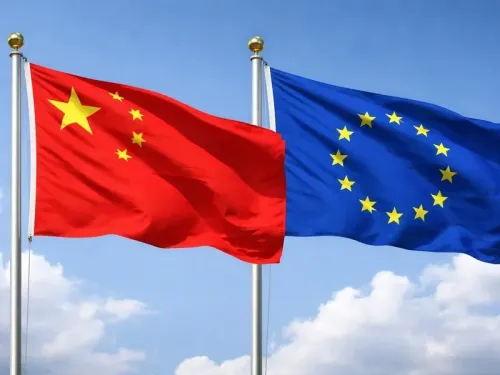
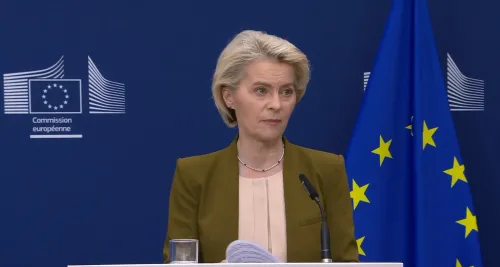
China sanctions two Polish institutions over EU's Russia package
Synopsis
China has sanctioned two Polish high-tech institutions — a leading satellite and drone research university and a defence-grade infrared manufacturer — in direct retaliation for the EU's 21st Russia sanctions package. The move is calibrated as a political warning rather than an economic blow, but it signals Beijing's readiness to target European defence-adjacent research institutions as the China-West technology rivalry intensifies.
Key Takeaways
China sanctioned Wrocław University of Science and Technology (WUST) and Vigo Photonics in response to the EU's 21st sanctions package against Russia .
The EU package had targeted several Chinese and Hong Kong firms accused of supplying technologies supporting Russia's war in Ukraine .
Vigo Photonics said it had pre-empted restrictions by diversifying supply chains across Japan and Europe , with over a year's inventory secured.
Under China's export control rules, the sanctions are not a full trade ban — exports can resume with government approval.
Analysts describe the move as a political signal rather than a measure aimed at causing significant economic harm.
The sanctions coincide with Poland expanding ties with Taiwan and deepening its role in European defence and semiconductor sectors.
China has imposed sanctions on two Polish high-technology institutions in a direct counter-move to the European Union's 21st sanctions package against Russia, deepening the technology and trade rift between Beijing and Brussels. The targeted entities are Wrocław University of Science and Technology (WUST) and infrared components manufacturer Vigo Photonics, according to an analysis by The Diplomat.
Who Was Targeted and Why
WUST is among Poland's foremost technical universities, with established expertise in satellite technologies, space research, military drones, and battlefield artificial intelligence. The university also maintains research collaborations with Chinese universities in semiconductor development — a detail that adds a layer of complexity to Beijing's decision to sanction it.
Vigo Photonics manufactures infrared detectors supplied to the Polish Armed Forces for use in unmanned aerial vehicles, precision-guided weapons, surveillance systems, and air-defence platforms. The company said it had anticipated possible Chinese restrictions and had already diversified its supply chain, sourcing key materials from Japan and Europe while maintaining inventory sufficient for more than a year of production.
Beijing's Stated Rationale
Chinese Foreign Ministry spokesperson Lin Jian said the measures were a response to the EU's 'erroneous decision' to sanction Chinese companies and were 'not aimed at any specific country.' The EU's 21st sanctions package against Russia had included restrictions on several firms from China and Hong Kong over allegations that they supplied technologies and components supporting Russia's war effort in Ukraine.
Scope and Limits of the Sanctions
Under China's export control rules, the measures do not constitute a complete trade ban. Chinese exporters may still supply dual-use goods to the sanctioned entities after obtaining government approval, giving Beijing discretionary control over future exports. According to the analysis, the decision appears intended primarily as a political signal rather than a move designed to inflict major economic damage.
Broader Geopolitical Context
The sanctions arrive as Poland deepens cooperation with Taiwan and expands its role in Europe's semiconductor, defence, and space sectors — areas that have grown increasingly sensitive in the wider rivalry between China and Western nations. Notably, this is not the first time Beijing has used targeted sanctions as a calibrated warning to EU member states; similar measures have previously been deployed against Lithuania and individual European parliamentarians. The move signals that China is willing to escalate technology-sector pressure on European institutions that intersect with defence and dual-use research, even when those institutions are not the primary authors of the sanctions that triggered the retaliation.
Point of View
Active semiconductor collaboration with Chinese universities on the other — makes it an awkward target that reveals the contradictions in China's own technology partnerships. The sanctions are deliberately under-powered by design: a full trade ban would hurt Chinese exporters and sever research ties Beijing still values. What China is doing instead is building a retaliatory toolkit it can tighten incrementally, mirroring the EU's own escalation ladder. For Poland, the timing is pointed — Warsaw's pivot toward Taiwan and its growing role in European defence supply chains is clearly being watched and logged in Beijing.
NationPress
14 Sept 2026
Frequently Asked Questions
Why did China sanction Polish institutions?
China sanctioned Wrocław University of Science and Technology and Vigo Photonics in retaliation for the EU's 21st sanctions package against Russia, which had targeted Chinese and Hong Kong firms accused of supplying technologies supporting Russia's war in Ukraine. Chinese Foreign Ministry spokesperson Lin Jian described the measures as a response to the EU's 'erroneous decision' to sanction Chinese companies.
What is Wrocław University of Science and Technology and why was it targeted?
WUST is one of Poland's leading technical universities, known for expertise in satellite technologies, space research, military drones, and battlefield artificial intelligence. It is involved in several EU-funded defence-related projects and also maintains research collaborations with Chinese universities in semiconductor development.
What does Vigo Photonics do and how will it be affected?
Vigo Photonics manufactures infrared detectors used by the Polish Armed Forces in drones, precision-guided weapons, surveillance systems, and air-defence platforms. The company said it had anticipated restrictions and diversified its supply chain through Japan and Europe, with inventory sufficient for more than a year of production.
Are China's sanctions a complete trade ban?
No. Under China's export control rules, Chinese exporters may still supply dual-use goods to the sanctioned entities after obtaining government approval. Analysts describe the move as a calibrated political signal rather than a measure designed to cause major economic damage.
How does this fit into the broader China-EU relationship?
The sanctions reflect deepening technology and trade tensions between Beijing and Brussels, with China increasingly using targeted measures to signal displeasure at EU actions on Russia. The move also comes as Poland expands cooperation with Taiwan and strengthens its role in Europe's semiconductor, defence, and space sectors — areas of acute sensitivity in the China-West rivalry.