Chinese mining projects in Afghanistan sidelining local communities
Synopsis
China moved swiftly into Afghanistan after the US exit, locking in 25-year oil contracts and gold and copper mining deals with the Taliban — but communities living near extraction sites say they are bearing the environmental and economic costs while the revenue flows elsewhere. It is a pattern that mirrors Chinese resource deals in Africa, and it is now playing out in one of the world's most mineral-rich and politically isolated countries.
Key Takeaways
China has become one of Afghanistan's largest trading partners after maintaining its Kabul embassy post-US withdrawal.
In January 2023 , the Taliban signed a 25-year oil extraction deal with Xinjiang Central Asia Petroleum and Gas Co. , with a promised investment of $540 million .
A Chinese consortium holds a copper mining contract at Mes Aynak , Logar province , one of the world's largest undeveloped copper deposits.
The Samti gold concession in Takhar province was awarded to the China-Afghanistan Company , which began operations in January 2026 .
Residents near both Takhar and Badakhshan projects report exclusion from economic benefits and loss of access to land and water.
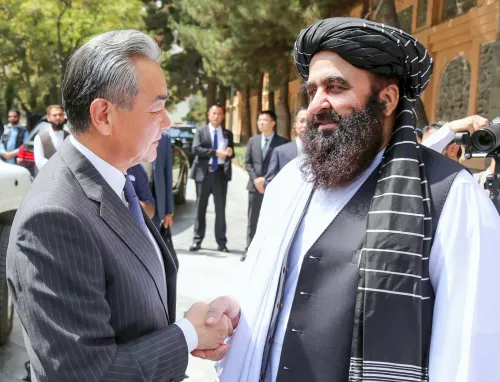
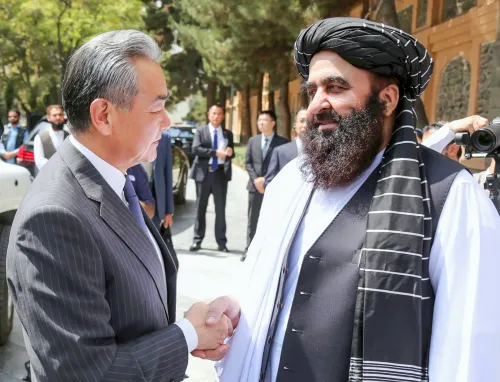
China has significantly expanded its footprint in Afghanistan following the US withdrawal, securing major mining contracts under the Taliban government that critics say are leaving local communities worse off, according to a report by The National Interest. The findings raise fresh questions about Beijing's extractive economic model in conflict-affected states.
How China Built Its Afghan Foothold
As Western nations shuttered their embassies and pulled diplomatic staff after the Taliban takeover, China kept its mission in Kabul open and cultivated a working relationship with the new rulers. Unlike Western governments, Beijing attached no conditions related to human rights — a posture the Taliban found attractive as it sought revenue and legitimacy.
China has since emerged as one of Afghanistan's largest trading partners. The Taliban's Ministry of Foreign Affairs, Ministry of Mines and Petroleum, and Ministry of Industry and Commerce are reportedly hiring and training hundreds of Dari- and Pashto-speaking Afghans who also speak Chinese, tasked with guiding prospective investors to mineral sites and facilitating deals, according to the report.
Key Contracts and Investment Commitments
In January 2023, the Taliban signed a 25-year contract with Chinese firm Xinjiang Central Asia Petroleum and Gas Co. to extract oil from the Amu Darya basin. The company has promised to invest $540 million at the site. Separately, a Chinese mining consortium holds a copper mining contract at Mes Aynak in Logar province, one of the world's largest undeveloped copper deposits.
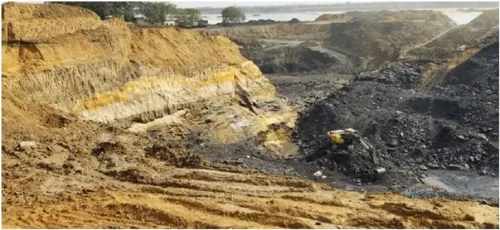
A more recent development involves the Samti gold concession in Takhar province in northern Afghanistan, awarded by the Taliban to the China-Afghanistan Company, which began mining and processing operations in January 2026.
Local Communities Bear the Costs
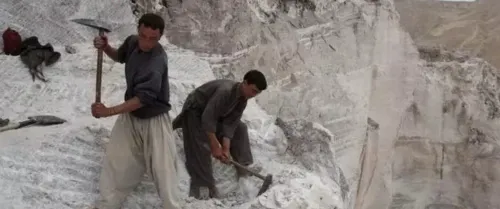
Despite the Taliban government framing these deals as revenue sources for the state, communities near the extraction sites report being excluded from economic benefits while absorbing environmental and social costs. Residents near the Samti project described tensions with the mining company over the distribution of gold revenues, alleging they had received nothing while their land and livelihoods were disrupted.
In Badakhshan province, where Chinese partnerships in gold extraction have also been reported, local residents complained of losing access to land and water sources, with the report flagging concerns about large-scale environmental damage in the area. This pattern — of resource extraction deals that enrich state and corporate actors while bypassing host communities — is one that development economists have documented in other Chinese-backed projects across Africa and Central Asia.
Strategic Calculus for Beijing and Kabul
The arrangement suits both sides at the governmental level. The Taliban gains hard currency and a veneer of international economic engagement without ceding political ground on governance or rights. China, meanwhile, secures access to mineral-rich territories — including lithium, copper, and rare earths — that could be strategically significant for its own industrial supply chains.
Notably, this comes amid broader Chinese efforts to lock in resource partnerships across politically isolated states, a pattern observers have described as 'resource diplomacy.' Afghanistan's estimated $1 trillion in untapped mineral wealth makes it a high-value target in that framework.
What Comes Next
As Chinese investment deepens, scrutiny from regional powers including India is likely to intensify. New Delhi has historically regarded Chinese encroachment in its neighbourhood with concern, and Taliban-era Afghanistan sits at a sensitive geopolitical juncture involving India, Pakistan, China, and Central Asian states. Whether the Taliban government will renegotiate terms to include community-benefit clauses remains uncertain, but pressure from within affected provinces could force the issue.
Point of View
State-to-state deals, and extraction contracts that route revenue to the ruling authority while communities near the sites absorb the environmental fallout. The Taliban, desperate for revenue and international engagement, is an ideal counterparty. What is missing from this arrangement is any credible mechanism for community benefit-sharing or environmental oversight — and with no free press, no independent judiciary, and no civil society, there is no domestic force to demand one. For India, watching Beijing entrench itself in a country on its strategic periphery with long-term resource contracts is a development that deserves more analytical attention than it typically receives in the region.
NationPress
2 Nov 2026
Frequently Asked Questions
What mining contracts has China signed in Afghanistan?
China has secured several major mining agreements in Afghanistan, including a 25-year oil extraction contract signed in January 2023 with Xinjiang Central Asia Petroleum and Gas Co. for the Amu Darya basin, worth a promised $540 million investment. A Chinese consortium also holds a copper mining contract at Mes Aynak in Logar province, and the China-Afghanistan Company began gold mining at the Samti concession in Takhar province in January 2026.
How have local Afghan communities been affected by Chinese mining projects?
Communities near Chinese-operated sites in Takhar and Badakhshan provinces have reported being excluded from economic benefits while bearing environmental and economic costs. Residents near the Samti gold project claim disputes over revenue distribution, while those in Badakhshan have alleged loss of access to land and water sources, alongside concerns about environmental damage.
Why did China maintain ties with the Taliban after the US withdrawal?
China kept its embassy in Kabul open after the Taliban takeover and engaged the new government without attaching human rights conditions — a posture that contrasted with Western nations, which evacuated their missions. This allowed Beijing to build early influence and secure investment access in a country with an estimated $1 trillion in untapped mineral wealth.
What is the Mes Aynak copper project in Afghanistan?
Mes Aynak in Logar province is one of the world's largest undeveloped copper deposits, and a Chinese mining consortium holds a contract to extract copper there. The project has been in various stages of negotiation and development and represents one of the most high-profile Chinese resource investments in Afghanistan.
Why does Chinese investment in Afghanistan matter for India?
Afghanistan sits at a geopolitically sensitive juncture involving India, Pakistan, China, and Central Asian states. China's deepening economic presence — particularly through long-term resource contracts — is seen by analysts in New Delhi as an extension of Beijing's broader regional influence strategy, raising concerns about encirclement and supply chain control over critical minerals.