China's Laos airfield: Beijing's first overseas air facility raises Southeast Asia alarm
Synopsis
China's 'joint support and training centre' in Ban Keun, Laos is more than a bilateral training deal — it is Beijing's first publicly acknowledged overseas air-focused military facility, and the latest node in a fast-growing network that already spans Djibouti and Cambodia. With eight light attack aircraft already on site and Washington's regional influence eroding, the question is whether the US can shift from sanctions reflexes to a strategy that actually works in Southeast Asia.
Key Takeaways
The Chinese Ministry of Defence announced a 'joint support and training centre' at Ban Keun, Laos on 29 September , described as China's first publicly acknowledged overseas facility focused on airpower.
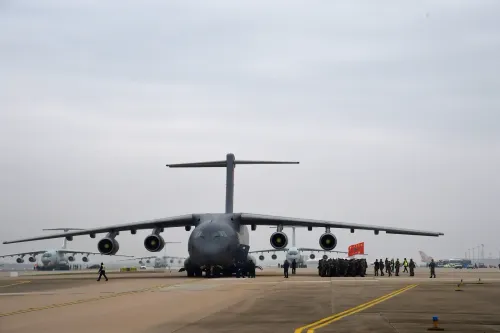
Satellite imagery shows eight light attack aircraft and support vehicles on a 2,000-metre runway currently under construction.
The facility joins China's Djibouti base and Cambodia's Ream Naval Base (opened 2025 ) as part of Beijing's expanding overseas military network.
Indonesia expects delivery of Chinese J-10 fighter jets ; Beijing has overtaken the US as Bangkok's primary arms supplier.
Analysts warn the facility could enhance China's power projection across mainland Southeast Asia, with implications for US forces in the eastern Indian Ocean.
Analysts caution Washington against reflex sanctions, calling instead for a 'tailored approach' to counterbalance Beijing in the region.
China has established what analysts describe as its first publicly acknowledged overseas military facility focused on airpower, at an airport in Ban Keun, Laos — a development drawing sharp scrutiny from security analysts and policymakers across the region. The Chinese Ministry of Defence announced on 29 September the creation of a 'joint support and training centre' at the site, framing it as a non-threatening bilateral arrangement, though observers say the strategic calculus runs considerably deeper.
What the Facility Reveals
According to a report by American security publication War on the Rocks, satellite imagery of the Ban Keun site shows eight light attack aircraft and support vehicles positioned on a 2,000-metre runway currently under construction. While the runway length is reportedly insufficient to support long-range bombers, analysts assess that the facility meaningfully enhances China's logistics and intelligence capabilities in mainland Southeast Asia. Beijing has been explicit that the centre is 'not targeted at any third party,' and has stopped short of calling it a military base — but the distinction, critics argue, is largely semantic.
Part of a Wider Network
The Ban Keun installation does not exist in isolation. According to the report, it forms part of an expanding Chinese overseas military and security infrastructure network that includes China's base in Djibouti and Cambodia's Ream Naval Base, which opened under official Cambodian control in 2025 and hosts a rotating naval deployment. Together, these facilities signal a deliberate effort by Beijing to diversify its strategic access points beyond the South China Sea. The Laos facility, notably, extends that footprint to landlocked mainland Southeast Asia — a geographic domain where China had previously lacked a formal military presence.
Why Laos is a Willing Partner
Laos, a landlocked, single-party communist state, does not perceive China as a direct security threat, making it a natural candidate for deepened bilateral military ties, the report noted. Chinese assistance in air force training and material support could strengthen Laos' own military capabilities while delivering economic benefits — a calculus familiar to several smaller Southeast Asian states. The trade-off, analysts caution, is growing strategic dependence on Beijing, with limited leverage to resist future demands.
Regional Security Implications
The report warns that the joint centre could eventually enhance the Chinese Air Force's ability to project power across mainland Southeast Asia, with potential implications for US forces operating in the eastern Indian Ocean. For Vietnam, the development compounds an already acute sense of strategic encirclement. More broadly, Cambodia, Laos, and Thailand stand out for the depth of their military-to-military relationships with Beijing. Indonesia, Malaysia, and Thailand have recently established 2+2 dialogues with China involving foreign and defence ministers. On the arms sales front, Indonesia reportedly expects delivery of J-10 fighter jets, and Beijing has surpassed the United States as Bangkok's primary military supplier, according to the report.
Washington's Strategic Dilemma
The report cautions against reflexive US responses of the kind seen after Cambodia's Ream Naval Base drew sanctions. 'The reflex among many policymakers in Washington after each rumoured or announced Chinese military facility overseas is to interpret it through the lens of US-Chinese competition,' it observed, arguing that such an approach 'misunderstands the nuanced interests driving regional partners to work with China.' At the same time, it notes that no Southeast Asian government actually wants the United States absent from the region — creating space for a more calibrated American re-engagement. 'A broad brush risks abdicating the initiative to China, but a tailored approach can better counterbalance Beijing,' the report concluded. The coming months will test whether Washington has the institutional appetite to pursue one.
Point of View
000-metre runway is not a power-projection asset — but because of what it normalises. Each successive Chinese military facility in the Indo-Pacific reduces the diplomatic cost of the next one. Washington's instinct to respond with sanctions, as it did with Cambodia, has demonstrably failed to reverse the trend and may accelerate hedging by smaller states who read American reactions as punitive rather than protective. The deeper problem is structural: China offers infrastructure, arms, and non-interference; the US offers alliances with conditions. Until that value proposition gap narrows, Beijing will keep finding willing partners in a region that, as the report rightly notes, does not want America gone but is no longer certain it will stay.
NationPress
23 Oct 2026
Frequently Asked Questions
What is the Chinese military facility established in Laos?
It is a 'joint support and training centre' announced by the Chinese Ministry of Defence on 29 September at an airport in Ban Keun, Laos . Analysts describe it as China's first publicly acknowledged overseas military facility focused on airpower, with satellite imagery showing eight light attack aircraft on a runway under construction.
Why has the Laos airfield raised security concerns?
The facility is seen as extending China's strategic military reach into landlocked mainland Southeast Asia for the first time. Combined with Beijing's base in Djibouti and Cambodia's Ream Naval Base, it forms a growing overseas network that could enhance China's logistics, intelligence, and power-projection capabilities in the region.
How does this affect US strategic interests in Southeast Asia?
Analysts warn the facility could complicate US force posture in the eastern Indian Ocean and signal weakening American influence in the region. The report cautioned Washington against reflex sanctions, recommending a more tailored engagement strategy to counterbalance China's growing military and economic relationships in Southeast Asia.
Which Southeast Asian countries have deepened military ties with China?
According to the report, Cambodia, Laos, and Thailand have the deepest military-to-military relationships with Beijing. Indonesia, Malaysia, and Thailand have recently established 2+2 ministerial dialogues with China, and Beijing has surpassed the United States as Thailand's primary arms supplier.
Is the Ban Keun facility officially a Chinese military base?
Beijing has not described it as a 'base' and maintains it is 'not targeted at any third party.' However, security analysts argue the distinction carries limited strategic weight, noting that the facility's capabilities and its place within China's broader overseas infrastructure network suggest clear military utility.