Mekong River: China's water strategy stokes Southeast Asia tensions
Synopsis
A report by Myanmar's Mizzima News lays out a damning case: China cooperates on water-sharing only where its own security is at stake — as with Kazakhstan and Mongolia — but refuses binding commitments on the Mekong, where it holds dominant upstream power. With Vietnam's rice bowl and Cambodia's fisheries at risk, the 4,900-km river has become the region's sharpest geopolitical fault line.
Key Takeaways
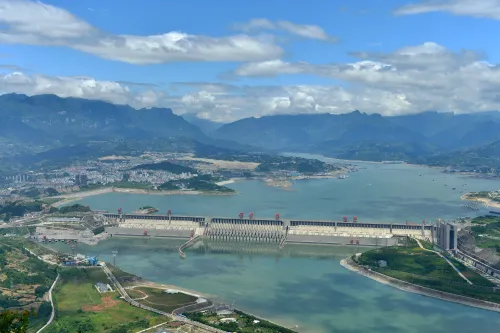
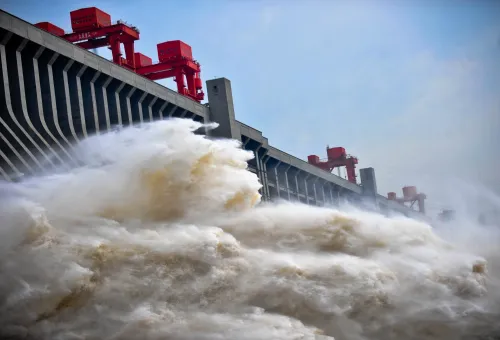
China's unilateral dam operations on the Mekong River benefit its hydropower interests while giving Beijing geopolitical leverage over Laos , Cambodia , Thailand , Vietnam , and Myanmar .
The river sustains the livelihoods of more than 60 million people across Southeast Asia.
By contrast, China has signed binding water-sharing agreements with Kazakhstan and Mongolia , where upstream disputes directly affect its own border stability.
Declining sediment levels are reportedly threatening biodiversity and accelerating erosion across the lower Mekong basin.
The report warns that growing distrust could destabilise ASEAN -China relations and undermine regional integration.
China's refusal to enter into binding water-sharing arrangements with downstream neighbours has transformed the nearly 4,900-km Mekong River from a shared resource into a geopolitical fault line, according to a report by Myanmar media outlet Mizzima News. The river, which sustains the livelihoods of more than 60 million people across Laos, Cambodia, Thailand, Vietnam, and Myanmar, is increasingly contested by competing national interests rather than managed through regional cooperation.
The Strategic Calculus Behind China's Approach
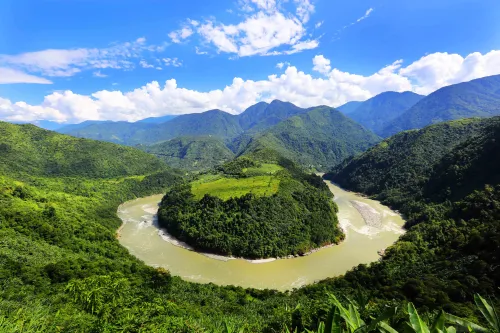
The report argues that China's behaviour on the Mekong is not a product of incapacity but of deliberate strategic choice. Flowing from the Tibetan Plateau through Yunnan province into Southeast Asia, the river represents a lever of influence that Beijing has little incentive to surrender. According to the report, 'Beijing sees little incentive to bind itself to restrictive agreements when unilateral dam operations provide both hydropower benefits and geopolitical leverage.'
Cooperation, the report contends, is kept 'voluntary, symbolic, and selective,' allowing China to retain maximum control while using water flows as an instrument of regional influence.
A Tale of Two Policies: The Contrast With Central Asia
The report draws a sharp distinction between China's posture on the Mekong and its conduct with upstream or midstream neighbours in Central Asia. With Kazakhstan and Mongolia, Beijing has reportedly signed binding water-sharing agreements and set up joint river-management commissions for waterways such as the Irtysh and the Ili.
The reason, critics argue, is self-interest rather than goodwill. China relies on predictable river flows to sustain Xinjiang's agriculture, industry, and border security. Prolonged disputes with countries that share sensitive northern borders carry direct domestic costs. On the Mekong, that existential pressure is absent — downstream nations possess far weaker leverage, making concessions unnecessary from Beijing's perspective.
What Is at Stake for Downstream Nations
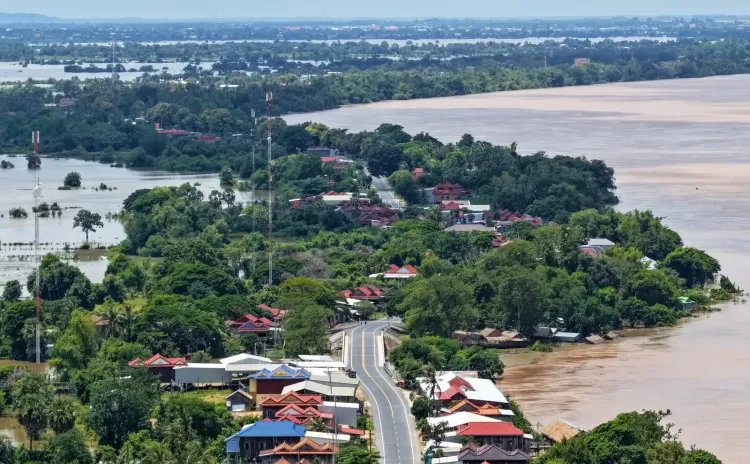
The consequences of unilateral dam operations are documented and wide-ranging, according to the report. Vietnam's rice-producing delta regions and Cambodia's inland fisheries — among the world's most productive — face severe disruption if river flows remain unpredictable. Declining sediment levels are reportedly threatening biodiversity and accelerating riverbank erosion across the lower basin.
Notably, droughts and floods are intensifying across the region, a trend that unregulated upstream dam operations are expected to worsen rather than mitigate.
Threat to ASEAN-China Relations
The report warns that deepening distrust over water management could destabilise ASEAN-China relations and undermine broader regional integration at a moment when multilateral cooperation is already under strain. 'The Mekong is no longer just a river; it is a geopolitical fault line where livelihoods, food security, and regional trust are at stake,' the report stated.
This comes amid growing scrutiny of China's infrastructure footprint across Southeast Asia, including its financing of hydropower projects in Laos that critics say compound downstream flow irregularities. As climate pressures mount, the pressure on regional governments and multilateral bodies such as the Mekong River Commission to secure enforceable agreements is likely to intensify.
Point of View
Not principled. The contrast with its Central Asia agreements is the most damaging evidence — Beijing clearly understands binding water diplomacy; it simply calculates that downstream Southeast Asian nations lack the leverage to compel it. What mainstream coverage often misses is the compounding risk: as climate change intensifies Mekong variability, unilateral dam operations will increasingly look less like infrastructure policy and more like coercion. ASEAN's structural inability to speak with one voice on China — given members' divergent economic dependencies on Beijing — means that enforceable agreements remain a distant prospect absent external pressure.
NationPress
3 Oct 2026
Frequently Asked Questions
Why is China's Mekong water strategy considered a geopolitical issue?
China controls the upper reaches of the Mekong and operates dams that regulate water flows into Southeast Asia, affecting more than 60 million people. Because Beijing refuses binding agreements, downstream nations have little recourse when flows are disrupted, turning a shared river into a source of political leverage rather than regional cooperation.
How does China's Mekong policy differ from its approach with Kazakhstan and Mongolia?
With Kazakhstan and Mongolia, China has signed binding water-sharing agreements and established joint river-management commissions for rivers like the Irtysh and the Ili. Critics argue this is driven by self-interest — China depends on those rivers for Xinjiang's stability — whereas on the Mekong it faces no such domestic pressure and therefore resists enforceable commitments.
Which countries are most affected by China's Mekong dam operations?
Laos, Cambodia, Thailand, Vietnam, and Myanmar are the primary downstream nations. Vietnam's rice-producing delta and Cambodia's inland fisheries are considered most vulnerable to unpredictable water flows, while declining sediment levels threaten biodiversity across the entire lower basin.
What are the broader consequences for ASEAN-China relations?
The report warns that deepening distrust over water management could destabilise ASEAN-China relations and undermine regional integration. With droughts and floods intensifying across the basin, unilateral dam operations risk becoming a persistent source of diplomatic friction between Beijing and Southeast Asian capitals.
Is there any international body managing the Mekong River?
The Mekong River Commission (MRC) includes Thailand, Laos, Cambodia, and Vietnam as members, but China participates only as a dialogue partner and is not bound by its decisions. Critics argue this structural gap is central to why enforceable water-sharing arrangements remain elusive.