Mekong River poisoned by rare earth mining as China shifts ops to Myanmar
Synopsis
China cleaned up its domestic rare earth industry — then moved the mining 50 miles across the border into conflict-torn Myanmar. The result: 833 unregulated mines, arsenic breaching safety limits at every monitored site in northern Thailand, and a toxic supply chain bankrolling armed militias. Downstream Southeast Asia is paying the environmental price for the world's clean energy boom.
Key Takeaways
Arsenic and heavy metals from rare earth mining have reached the Mekong River mainstream , with Thai tests in early 2026 finding safety breaches at all 23 monitored sites in Chiang Mai and Chiang Rai .
Mining sites in Kachin State jumped from roughly 130 in 2020 to over 370 by end of 2024 following Myanmar's 2021 military coup .
85 per cent of Myanmar's $4.2 billion in rare earth exports to China between 2017 and 2024 came after the coup.
The US-based Stimson Centre identified 833 unregulated mines in the Mekong Basin; 86 confirmed as rare earth operations, more than half opened between 2024 and 2026 .
Chinese buyers reportedly deal directly with armed groups including the United Wa State Army and Kachin Independence Army , financing militia activity with mining revenue.
The Mekong River Commission has no binding authority to compel upstream change; China's foreign ministry did not respond to press inquiries on the matter.
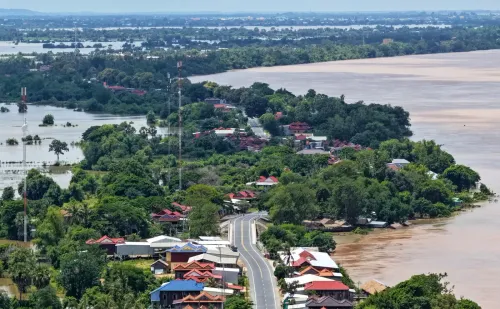
China's rare earth industry is driving severe pollution in the Mekong River, with heavy metals including arsenic, lead, cadmium, and manganese confirmed in the river's mainstream sediment, according to a report by Myanmar's Mizzima news portal. The contamination threatens downstream nations including Thailand, Laos, and Cambodia, as Beijing reportedly tightened domestic environmental enforcement while quietly shifting mining operations across the border into Myanmar's Kachin and Shan States.
Mining Explosion in Myanmar After 2021 Coup
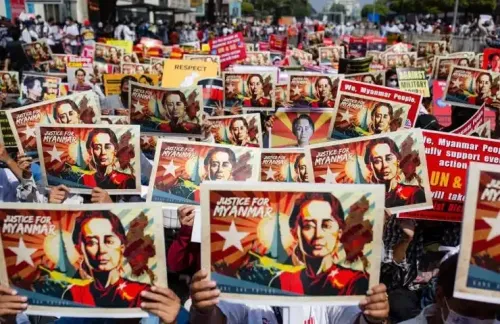
The 2021 military coup in Myanmar effectively handed resource-rich frontier territory to armed ethnic groups, creating conditions that allowed unregulated rare earth extraction to flourish. According to the Mizzima report, mining sites in Kachin State alone surged from roughly 130 in 2020 to over 370 by end of 2024.
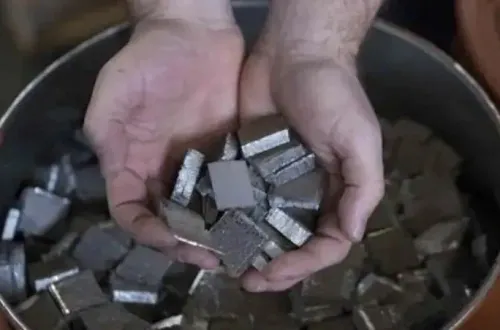
Myanmar's rare earth exports to China more than doubled in the two years following the coup. Critically, 85 per cent of the $4.2 billion in exports recorded between 2017 and 2024 came after the military takeover. By 2023, Myanmar was supplying more than 60 per cent of China's heavy rare earth imports by value — output that reportedly exceeded China's own domestic mining quota that year. These heavy rare earths are primarily used in EV motors and wind turbines, sectors central to the global clean energy transition.
Scale of Contamination: 833 Unregulated Mines
Satellite imagery compiled by the US-based Stimson Centre has identified 833 unregulated mines across the Mekong River Basin, of which 86 are confirmed rare earth operations using blue tarpaulin leaching ponds. More than half of these opened between 2024 and 2026, signalling a rapid acceleration of extraction activity.
Thai environmental testing in Chiang Mai and Chiang Rai in early 2026 found arsenic levels exceeding safety standards at all 23 monitored sites — the first time this threshold has been breached across every site simultaneously. Contamination has also spread into river tributaries, with heavy metals moving into fish populations and accumulating in human bodies. The Mizzima report warns that contaminated rice, garlic, and edamame from the affected region are entering the global food supply chain.
Armed Groups and Chinese Buyers: A Toxic Supply Chain
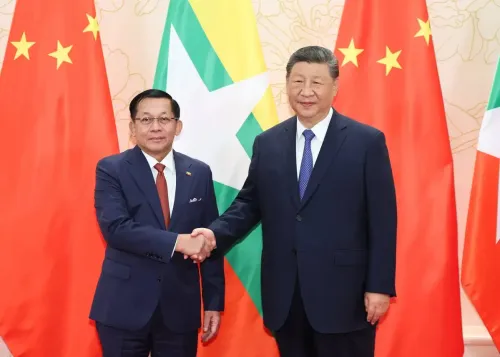
According to the report, Chinese companies and buyers deal directly with armed ethnic organisations including the United Wa State Army and the Kachin Independence Army. Mining revenue is reportedly financing militia operations and sustaining civil conflict, while creating no accountability trail for the environmental damage left behind.
This arrangement, critics argue, allows China to maintain a steady supply of heavy rare earths at reduced cost — mined effectively 50 miles across its own border — while its domestic environmental record improves on paper. The arrangement sidesteps Chinese environmental law entirely by externalising the ecological cost to a conflict zone with no functioning regulatory authority.
Geopolitical Dimensions and Regional Paralysis
The Mizzima report also highlights how China's near-total dominance over rare earth processing capacity has allowed Beijing to weaponise mineral exports as a geopolitical tool, restricting supplies to pressure Washington, Tokyo, and Brussels during trade disputes. This leverage is directly sustained by the unregulated extraction pipeline running through Myanmar.
Regional oversight bodies such as the Mekong River Commission have no binding authority to compel upstream change, and China's foreign ministry reportedly did not respond to press inquiries about the mineral imports fuelling the crisis, according to Mongabay reporting cited in the article. With no international enforcement mechanism in place, downstream communities face an escalating public health emergency with little recourse.
Point of View
Then imports the ecological destruction from a neighbour too fractured by conflict to resist. The clean energy transition's dirty secret is that EV motors and wind turbines run on heavy rare earths whose extraction is now underwritten by civil war revenue in Myanmar. Downstream nations like Thailand have the contamination data but no enforcement lever — the Mekong River Commission is structurally toothless against an upstream power that controls the resource and the processing. Until rare earth supply chains face the same ESG scrutiny as cobalt or palm oil, the Mekong will keep paying the price for the world's green ambitions.
NationPress
11 Oct 2026
Frequently Asked Questions
Why is China's rare earth industry polluting the Mekong River?
China tightened domestic environmental enforcement on rare earth mining but shifted extraction operations across the border into Myanmar's Kachin and Shan States, where the 2021 military coup eliminated regulatory oversight. The resulting unregulated mines are leaching arsenic and other heavy metals into waterways that drain into the Mekong, which flows downstream through Thailand, Laos, and Cambodia.
How severe is the arsenic contamination in the Mekong River?
Thai environmental testing in Chiang Mai and Chiang Rai in early 2026 found arsenic levels exceeding safety standards at all 23 monitored sites — the first time every site has simultaneously breached the threshold. Heavy metals including lead, cadmium, and manganese have also been detected in sediment, fish, and food crops like rice and garlic entering the global supply chain.
How many unregulated mines are operating in the Mekong Basin?
Satellite imagery from the US-based Stimson Centre has identified 833 unregulated mines across the Mekong River Basin, of which 86 are confirmed rare earth operations. More than half of these opened between 2024 and 2026, indicating a sharp acceleration in extraction activity.
Who are the armed groups involved in Myanmar's rare earth mining?
According to the Mizzima report, Chinese companies and buyers deal directly with armed ethnic organisations including the United Wa State Army and the Kachin Independence Army. Mining revenue reportedly finances these militias' operations, sustaining civil conflict while generating no accountability for environmental damage.
Can regional bodies stop the Mekong pollution?
The Mekong River Commission, the primary regional oversight body, has no binding authority to compel upstream change from China. China's foreign ministry reportedly did not respond to press inquiries about the mineral imports driving the crisis, leaving downstream nations with contamination data but no enforcement mechanism.