China building military footholds in Southeast Asia via dual-use network: Report
Synopsis
China isn't building traditional military bases in Southeast Asia — it's building something harder to challenge. A new report flags the Ban Keun training centre in Laos, inaugurated in September 2026, as potentially Beijing's first mainland military foothold, part of a wider dual-use infrastructure network spanning Cambodia and Myanmar that blurs the line between economic aid and strategic control.
Key Takeaways
China is reportedly building a dual-use military network across Southeast Asia through ports, airfields, logistics hubs and training centres, according to a Mekong News report.
The China-Laos Joint Support and Training Centre at Ban Keun , inaugurated in September 2026 , is cited as potentially Beijing's first military foothold in mainland Southeast Asia.
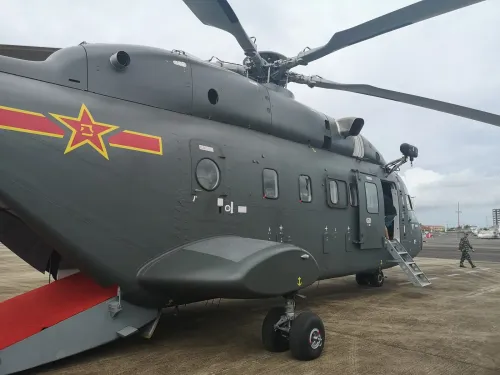
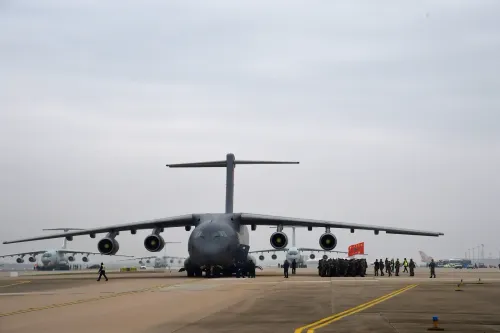
Satellite imagery reportedly revealed military vehicles and China-made aircraft at the Ban Keun facility, a site historically used by US forces during the Vietnam War .
The China-Laos high-speed railway , costing approximately $6 billion , has significantly deepened China's strategic presence in Laos alongside mining, energy and agriculture concessions.
The Ream Naval Base in Cambodia and China's expanded role in post-coup Myanmar reflect a broader pattern of strategic entrenchment across the region.
China is steadily expanding its strategic footprint across Southeast Asia by leveraging infrastructure, logistics networks and bilateral partnerships to establish what analysts describe as a 'dual-use military network' — civilian in presentation but capable of serving military purposes, according to a detailed report by Mekong News. The findings carry significant implications for regional security, including for India, which closely monitors Chinese strategic expansion along its periphery.
The Laos Precedent: A Mainland Military Foothold
The most striking new development cited in the report is the China-Laos Joint Support and Training Centre at Ban Keun, inaugurated in September 2026. Satellite imagery reportedly revealed rapid construction activity, military vehicles and China-made aircraft at the facility. Analysts have raised serious questions about whether Beijing has now secured its first fully fledged military foothold in mainland Southeast Asia.
Notably, Ban Keun is a historically strategic site — it was once used by American forces during the Vietnam War. The location's return to strategic use, this time under Chinese influence, has drawn attention from defence researchers across the region.
Belt and Road Initiative: Economic Cover for Strategic Goals
For years, the Chinese Communist Party (CCP) has promoted the Belt and Road Initiative (BRI) as a purely economic undertaking aimed at improving connectivity and stimulating growth. However, developments in Laos, Cambodia and Myanmar suggest the initiative may also serve a strategic geopolitical purpose, the Mekong News report argues.
Infrastructure projects financed by Chinese state banks reportedly place recipient countries under significant debt obligations while simultaneously deepening their dependence on Beijing for investment, trade and development assistance. Over time, according to the report, that dependence translates into political leverage and strategic concessions — a pattern critics have long labelled 'debt-trap diplomacy.'
Laos: Deep Inside China's Economic Orbit
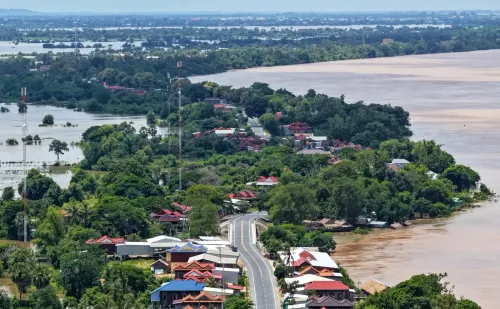
Laos has become among the most integrated countries into China's economic sphere. Chinese-backed hydropower projects dominate its electricity infrastructure. Chinese firms hold extensive mining concessions covering copper, gold and rare earth resources. Large agricultural zones producing bananas, rubber and timber are heavily linked to Chinese markets.
Most visibly, the China-Laos high-speed railway — costing approximately $6 billion — has dramatically increased China's strategic footprint within the country. The combination of energy, mining, agriculture and transport dependence gives Beijing layered leverage over Vientiane's decision-making, analysts note.
Cambodia and Myanmar: Expanding Influence
A similar pattern is visible in Cambodia, where China has become the country's largest investor and closest political and economic partner over the past decade. Massive Chinese financing has flowed into roads, ports, industrial zones and energy projects. The Ream Naval Base on Cambodia's Gulf of Thailand coastline has emerged as a focal point of international concern, with Western governments alleging it could serve Chinese naval interests.
Following the 2021 military coup in Myanmar and the subsequent deterioration in that country's relations with Western nations, China's influence there has expanded considerably, the report notes. Beijing has positioned itself as Myanmar's primary economic and diplomatic backer, further consolidating its regional leverage.
Strategic Implications for the Region
The dual-use infrastructure model — ports, airfields, logistics hubs and training centres presented as civilian projects but built to military specifications — represents a calculated evolution of Chinese power projection, according to the report. Rather than replicating the US model of overt overseas military bases, Beijing appears to be constructing a distributed network that can be activated for military use without the diplomatic friction of formal basing agreements.
As China's dual-use network in Southeast Asia matures, the pressure on regional states to navigate between economic dependence on Beijing and security ties with Washington is likely to intensify.
Point of View
Not an anomaly. Beijing has studied the backlash that traditional overseas bases attract and has engineered a workaround: infrastructure that looks civilian until it doesn't need to anymore. The CCP's genius here is deniability — every port, every railway, every training centre comes wrapped in a development narrative that recipient governments find politically convenient to accept. India, which shares a contested border with China and watches BRI expansion with deep suspicion, should read the Laos precedent carefully: what begins as a $6 billion railway and a 'support centre' can, over a decade, become the skeleton of a forward operating network. The region's smaller states lack the economic alternatives to say no, which means the burden of response falls on larger democracies — and that calculus has not yet been seriously tested.
NationPress
26 Oct 2026
Frequently Asked Questions
What is China's dual-use military network in Southeast Asia?
It refers to a strategy, identified in a Mekong News report, whereby China builds civilian infrastructure — ports, airfields, logistics hubs and training centres — that also possesses the capacity for military use. Rather than establishing overt overseas military bases, Beijing uses Belt and Road Initiative financing to create facilities that can serve strategic purposes while maintaining a civilian or cooperative facade.
What is the China-Laos Joint Support and Training Centre at Ban Keun?
It is a facility in Laos inaugurated in September 2026 that analysts believe could be China's first fully fledged military foothold in mainland Southeast Asia. Satellite imagery reportedly showed rapid construction, military vehicles and China-made aircraft at the site, which was historically used by US forces during the Vietnam War.
How has China expanded its influence in Cambodia?
China has become Cambodia's largest investor over the past decade, financing roads, ports, industrial zones and energy projects. The Ream Naval Base on Cambodia's Gulf of Thailand coastline has drawn particular international concern, with allegations that it could be used to project Chinese naval power in the region.
What is the significance of the China-Laos railway in this context?
The China-Laos high-speed railway, built at an approximate cost of $6 billion, is the most visible symbol of China's deepening strategic presence in Laos. Combined with Chinese control over hydropower, mining concessions and agricultural supply chains, the railway has made Laos significantly dependent on Beijing — dependency that the report says can be converted into political leverage.
Why does this matter for India?
India closely monitors Chinese strategic expansion in its neighbourhood, and the emergence of dual-use military infrastructure across Southeast Asia — including potential naval access at Ream in Cambodia — extends the arc of Chinese power projection closer to Indian interests. New Delhi has consistently raised concerns about BRI projects and debt-driven dependence that can translate into strategic concessions to Beijing.