CSC NSAs reaffirm Indian Ocean security at Male 8th meet
Synopsis
Member states of the Colombo Security Conclave, meeting in Male, issued a joint statement reaffirming five-pillar cooperation for a secure Indian Ocean. NSA Ajit Doval welcomed Admiral S N Ghormade as the first Secretary General and tied the CSC to India's Neighbourhood First outlook and Mahasagar vision, with Australia and Malaysia attending as guests.
Key Takeaways
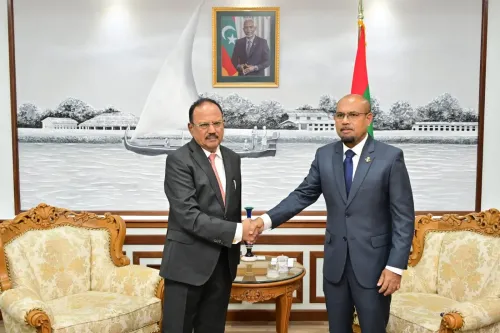
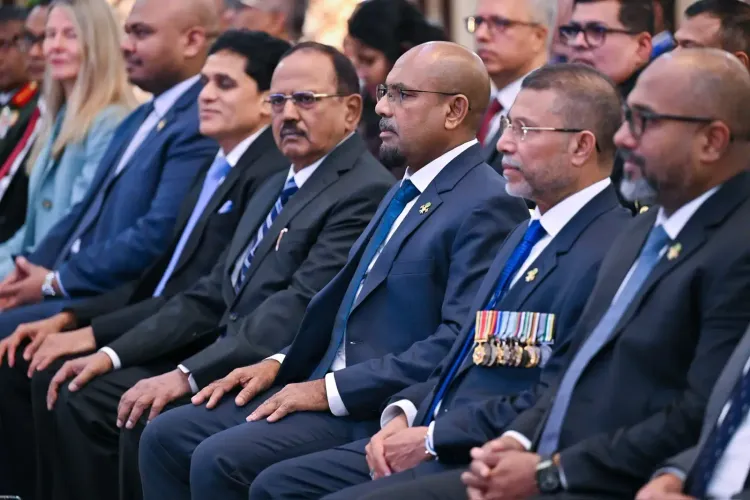
The 8th National Security Advisors Meeting of the Colombo Security Conclave was hosted by the Maldives in Male on Wednesday .
NSAs and high-level delegations from the Maldives , India , Sri Lanka and Bangladesh attended; Australia and Malaysia joined as guests.
Member states issued a joint statement reaffirming the Conclave's five pillars and a peaceful, secure, resilient Indian Ocean.
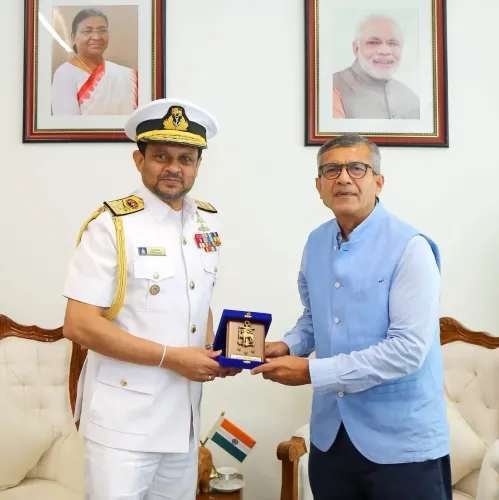
NSA Ajit Doval welcomed Admiral S N Ghormade (Retd.) as the first Secretary General of the CSC.
Doval said the CSC sits at the intersection of India's Neighbourhood-First outlook and the Mahasagar vision.
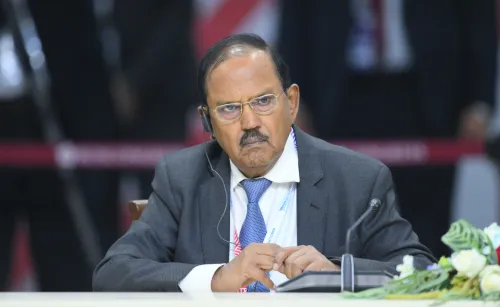
Member states of the Colombo Security Conclave (CSC) on Wednesday reaffirmed continued engagement in advancing the grouping's five pillars and strengthening collective efforts towards a peaceful, secure and resilient Indian Ocean region at the 8th National Security Advisors Meeting hosted by the Maldives in Male. National Security Advisors and high-level delegations from the Maldives, India, Sri Lanka and Bangladesh attended, while Australia and Malaysia took part as guest countries, according to the President's Office of the Maldives.
Joint statement after the Male talks
At the conclusion of the deliberations, member states issued a joint statement setting out the agreed minutes of the meeting. The President's Office of the Maldives posted on X that the Maldives had hosted the 8th National Security Advisors Meeting of the Colombo Security Conclave, with Australia and Malaysia participating as guests.
The Presidency said the session reaffirmed the importance of continued engagement among member states in advancing the Conclave's five pillars and in strengthening collective efforts towards a peaceful, secure and resilient Indian Ocean region. It also highlighted the collective efforts of the member states across the region. The joint minute is being presented as the working record of what the four members agreed in Male, rather than a purely ceremonial communique.
Doval's message to Indian Ocean littorals
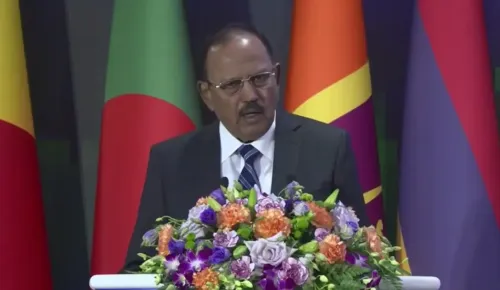
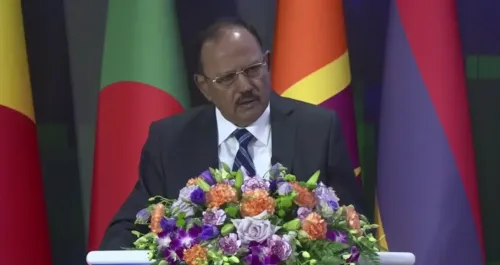
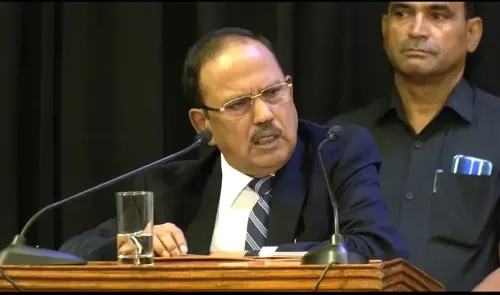
Earlier on Wednesday, National Security Advisor Ajit Doval told the meeting that countries of the Indian Ocean Region share a common maritime space and are connected by civilisational heritage shaped over a long period of history.
“We, the littoral states of the Indian Ocean region, share a common maritime space and are connected by civilisational heritage shaped over a long period of history... Let us leave for our progeny also a heritage, a tradition that will bind them together and not divide them through the seas,” he said.
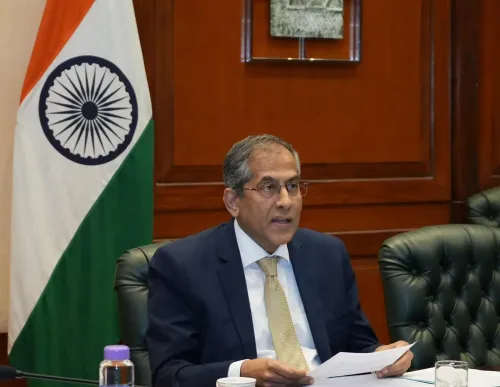
Doval welcomed the appointment of Admiral S N Ghormade (Retd.) as the first Secretary General of the CSC. He said the Conclave has been transformed into an action-oriented platform, with cooperation that prioritises the mutual benefit of all CSC member states. The creation of a Secretary General's post is the clearest institutional signal from this round that members want a standing mechanism rather than a meeting-to-meeting grouping.
Neighbourhood First meets Mahasagar
Doval also located the Conclave inside two of India's stated regional frameworks. “For India, the Colombo Security Conclave represents the intersection of our Neighbourhood-First outlook and the Mahasagar vision, which stands for Mutual and Holistic Advancement for Security and Growth Areas. We are committed to continue working closely with the CSC countries to enhance our collective capacities in dealing with the evolving serious security challenges,” he said.
Notably, guest participation by Australia and Malaysia sat alongside the four core members — the Maldives, India, Sri Lanka and Bangladesh. For New Delhi, that mix is consistent with a Neighbourhood-First lens that still reaches into a wider Indian Ocean security conversation under the Mahasagar formulation.
What happens next
This comes amid a shared recognition, voiced in Male, that littoral states face evolving and serious security challenges that no single capital can handle alone. Who is affected includes the security establishments, navies and coast guards of the four members, and, at one remove, extra-regional partners sitting in as guests. The immediate deliverable is the joint statement and the agreed minutes; the medium-term test is whether the new Secretary General can convert those minutes into coordinated work on the five pillars.
Member states have now put continued engagement on record. With Admiral Ghormade as the first Secretary General and India tying the forum to both Neighbourhood First and Mahasagar, the Male round will be judged by how quickly the CSC moves from reaffirmation to implementation across the Indian Ocean.
Point of View
Secure, resilient — than for the institutional bet: a first Secretary General and an explicit claim that the CSC is now action-oriented. Doval's pairing of Neighbourhood First with Mahasagar is New Delhi trying to keep a sub-regional security table without letting it look like an India-only project. Guest seats for Australia and Malaysia widen the tent, but they also raise a test the minutes do not answer: whether a four-member core can absorb extra-regional partners without diluting the littoral agenda. Reaffirming five pillars is easy; resourcing a new secretariat to deliver on them is the part that will show whether this was diplomacy or design.
NationPress
25 Nov 2026
Frequently Asked Questions
What happened at the Colombo Security Conclave 8th NSA meeting in Male?
Member states of the Colombo Security Conclave reaffirmed continued engagement on the grouping's five pillars at the 8th National Security Advisors Meeting hosted by the Maldives in Male on Wednesday. They issued a joint statement setting out the agreed minutes and pledged stronger collective efforts for a peaceful, secure and resilient Indian Ocean region.
Who attended the CSC National Security Advisors meeting in Male?
National Security Advisors and high-level delegations from the Maldives, India, Sri Lanka and Bangladesh attended the 8th CSC NSA meeting. Australia and Malaysia participated as guest countries.
What did NSA Ajit Doval say at the Colombo Security Conclave meeting?
Ajit Doval said Indian Ocean littoral states share a common maritime space and a civilisational heritage, and urged members to leave a tradition that binds future generations rather than divides them through the seas. He also said the CSC represents the intersection of India's Neighbourhood-First outlook and the Mahasagar vision, and that India would keep working with CSC countries on evolving security challenges.
Who is the first Secretary General of the Colombo Security Conclave?
Admiral S N Ghormade (Retd.) has been appointed as the first Secretary General of the Colombo Security Conclave. NSA Ajit Doval welcomed the appointment in Male and said the CSC has been transformed into an action-oriented platform prioritising mutual benefit for member states.
Why does the Male CSC meeting matter for India?
For India, the Colombo Security Conclave sits at the intersection of the Neighbourhood-First outlook and the Mahasagar vision of Mutual and Holistic Advancement for Security and Growth Areas. The Male round also locked in a first Secretary General and a joint statement on five-pillar cooperation, which New Delhi has framed as capacity-building against serious, evolving security challenges in the Indian Ocean.