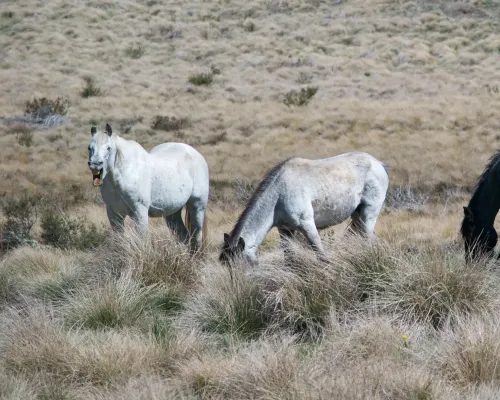
Congress Evaluates Wild Horse Management Amid Rising Costs

Synopsis
As wild horse populations surge on US public lands, Congress is scrutinizing the high costs of management. With proposals for expanded fertility control on the table, lawmakers are urged to rethink current strategies to ensure humane treatment and sustainability.
Key Takeaways
Wild horse populations are increasing significantly.
The costs of managing these populations are rising, exceeding $144 million annually.
Current management strategies are considered unsustainable.
Lawmakers are advocating for humane fertility control measures.
Public lands are integral to American identity and conservation efforts.
Washington, March 6 (NationPress) The burgeoning population of wild horses on public lands in the US and the exorbitant costs associated with their management are now facing intense examination within Congress. Lawmakers are evaluating proposals aimed at enhancing fertility control measures and decreasing dependency on expensive holding facilities.
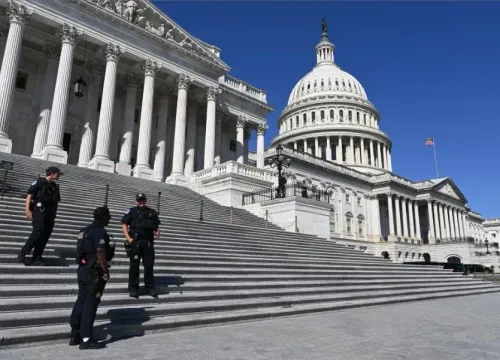
The inquiry took place during a hearing held by the House Appropriations Subcommittee on Interior, Environment, and Related Agencies last Friday, as legislators began to outline priorities for the fiscal year 2027 spending bill.
"The current strategy for equine management by the Bureau of Land Management is simply unsustainable for taxpayers, animal welfare, and the long-term vitality of our public lands," stated Representative Dina Titus from Nevada.
She pointed out that between fiscal years 2022 and 2024, the Bureau had removed over 41,000 horses and burros from their natural habitats.
"At present, more than 64,000 of these animals are confined in either short-term or long-term holding facilities, a number that is expected to soon surpass those remaining in the wild," she elaborated.
Titus emphasized that relying on roundups and long-term holding facilities was both financially burdensome and ineffective.
"According to the agency's own statistics, the removal and lifetime holding of horses costs nearly $48,000 per horse," she declared.
"In 2024, almost two-thirds of the entire program's budget was allocated to roundups and merely housing these horses."
She urged her colleagues to broaden the implementation of fertility control to stabilize the wild horse population.
"For fiscal year 2027, I respectfully request that at least 10 percent of the Wild Horse and Burro Program budget be earmarked for humane, reversible, or irreversible fertility control measures," Titus stated.
"These animals are not only iconic representations of the American West but are also cherished globally. They deserve humane management rather than just a path to holding facilities that could lead to their end," she added.
The Chairman of the House Appropriations Subcommittee on Interior, Environment, and Related Agencies, Mike Simpson, recognized the magnitude of the issue and the escalating expenses of the program.
"Last year, we allocated $144 million for the care of horses and burros," he remarked, adding: "When I share this with the public, they are astonished by the costs involved."
He mentioned that Congress has struggled for years to develop a feasible population control strategy.
"I don't possess the solution, but I am open to any suggestions for managing it, as it is detrimental to both the animals and our public lands," Simpson continued.
Titus also expressed concerns about proposals to diminish national monuments or sell off public lands, cautioning that such actions could jeopardize conservation initiatives and cultural heritage throughout the western US.
"Public lands across the West are integral to our identity," she remarked, urging lawmakers to incorporate protective measures in the Appropriations Bill.
For decades, wild horses and burros have been safeguarded under US federal law. However, their increasing numbers have sparked conflicts among conservationists, ranchers, and land managers regarding the most effective management of public lands.
Point of View
The rising concerns regarding wild horse management reflect a crucial intersection of animal welfare, fiscal responsibility, and environmental stewardship. The ongoing debate emphasizes the need for innovative solutions that balance these interests while preserving American heritage.
NationPress
23 Sept 2026
Frequently Asked Questions
What is the current population of wild horses in the US?
Currently, there are over 64,000 wild horses and burros in holding facilities, with numbers expected to surpass those remaining in the wild.
Why are lawmakers concerned about wild horse management?
Lawmakers are concerned due to the high costs associated with keeping wild horses in holding facilities and the sustainability of current management practices.
What proposals are being discussed to manage wild horse populations?
Proposals include expanding the use of fertility control measures and reducing reliance on costly roundups and holding facilities.
How much does it cost to manage a wild horse?
The Bureau of Land Management reports that the removal and lifetime holding of a horse costs nearly $48,000.
What are the implications of reducing national monuments?
Reducing national monuments could threaten conservation efforts and cultural heritage in the western US.