US House passes $26.3 billion farm bill 213-210 amid nutrition cuts row
Synopsis
The US House passed a $26.3 billion agriculture bill by just three votes — 213-210 — slashing USDA and FDA discretionary funding by 1.4% while adding new national security provisions targeting foreign-owned farmland and drug facilities in China and India. Democrats warn the WIC nutrition programme cuts will hurt vulnerable families; Republicans insist it remains fully funded. The Senate battle is next.
Key Takeaways
The US House passed the FY2027 Agriculture Appropriations Act by 213-210 on 6 June .
The bill allocates $26.27 billion in discretionary funding — a 1.4% reduction from the FY2026 enacted level. $1.16 billion is earmarked for the Animal and Plant Health Inspection Service , including funds to combat the New World screwworm .
Democrats criticised cuts to the WIC nutrition programme ; Republicans argue it remains fully funded based on projected participation.
New provisions target foreign-owned agricultural land and increase drug facility inspections in China and India .
The bill now moves to the Senate , which will draft its own version before reconciliation and presidential sign-off.
The US House of Representatives narrowly passed a $26.3 billion agriculture spending bill on 6 June, advancing Republican priorities on farm support, food safety, rural development, and national security by a razor-thin margin of 213-210. The legislation now moves to the Senate for consideration, where a separate version is expected to be drafted in the coming weeks.
What the Bill Covers
The Agriculture, Rural Development, Food and Drug Administration, and Related Agencies Appropriations Act for Fiscal Year 2027 allocates $26.27 billion in discretionary funding for the US Department of Agriculture (USDA), the Food and Drug Administration (FDA), and related agencies. This represents a reduction of approximately 1.4 per cent from the fiscal year 2026 enacted level. It is the second of 12 annual appropriations measures to clear the House this year.
The bill continues investments in agricultural research, rural development loan programmes, animal and plant health initiatives, and food safety oversight. It also increases resources for frontline meat and poultry inspectors and includes $1.16 billion for the Animal and Plant Health Inspection Service (APHIS), with dedicated funding to combat the New World screwworm — a parasite considered a significant threat to the American cattle industry.
Republican Backing and Key Arguments
Agriculture Appropriations Subcommittee Chairman Andy Harris said the measure supports American farmers and rural communities while eliminating unnecessary spending. 'This bill advances American agriculture by backing the farmers and ranchers who feed our nation, support millions of jobs, and power rural economies,' Harris said. He added that it 'eliminates unnecessary spending while preserving investments that strengthen agricultural production and food security.'
House Appropriations Committee Chairman Tom Cole framed the legislation around a broader principle: 'A strong America begins with a strong agricultural sector.' Cole added, 'The House floor is not where the soil is tilled, livestock is raised, or crops are harvested — but it is where we stand behind the hardworking people who make those things possible.'
Democratic Opposition Over Nutrition Cuts
Democrats opposed the bill primarily over spending reductions, arguing that cuts would disproportionately affect rural development, conservation, and nutrition programmes. Lawmakers on the Democratic side specifically criticised a reduction in funding for the Special Supplemental Nutrition Program for Women, Infants and Children (WIC), warning that lower allocations could harm vulnerable families.
Republicans countered that the WIC programme remains fully funded based on projected participation levels and available carry-over funds — a claim Democrats disputed during floor debate. The narrow final vote of 213-210 reflects the depth of that partisan divide.
Foreign Oversight and Security Provisions
The bill includes several national security-oriented provisions. These cover improved tracking of foreign-owned agricultural land, additional oversight of certain foreign land transactions, and greater transparency around agricultural research involving foreign governments. Countries specifically named for heightened scrutiny include China, Russia, North Korea, and Iran.
The legislation also calls for increased inspections of foreign drug manufacturing facilities in China and India, as part of broader efforts to strengthen oversight of pharmaceutical and food supply chains.
Trump Administration's Position and What Comes Next
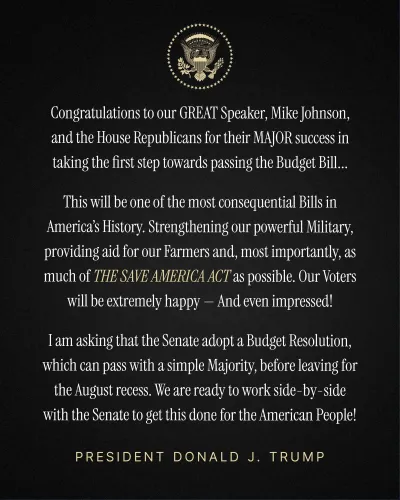
The Trump administration backed the legislation but expressed concern that funding levels exceeded its original budget request. The administration indicated it would continue working with Congress on issues related to hemp-derived products and broader agricultural priorities.
The Senate is expected to begin work on its own version of the agriculture spending bill in the coming weeks. Any differences between the two chambers' versions will need to be reconciled before the final legislation can be sent to President Donald Trump for his signature. Agriculture appropriations are among the most consequential annual spending measures in Congress, shaping federal support for farm programmes, food safety, rural communities, and nutrition assistance for millions of Americans.
Point of View
While Republicans are betting that projected carry-over funds will insulate them from the optics. The foreign land and drug facility provisions — targeting China, Russia, and notably India — are worth scrutiny; they embed geopolitical leverage into an appropriations bill that traditionally focuses on domestic farm economics. Whether the Senate preserves those provisions or softens them will reveal how much of this is policy and how much is posture.
NationPress
20 Sept 2026
Frequently Asked Questions
What is the US House agriculture spending bill passed on 6 June?
It is the Agriculture, Rural Development, Food and Drug Administration, and Related Agencies Appropriations Act for Fiscal Year 2027, which passed the House 213-210. The bill allocates $26.27 billion in discretionary funding for the USDA, FDA, and related agencies — a 1.4% reduction from FY2026 levels.
Why did Democrats oppose the farm bill?
Democrats opposed the bill primarily because of spending reductions they argue will harm nutrition and rural development programmes. They specifically criticised cuts to the WIC programme, warning that lower funding could affect low-income women, infants, and children. Republicans countered that WIC remains fully funded based on projected participation and carry-over funds.
What national security provisions does the bill include?
The bill includes improved tracking of foreign-owned agricultural land, additional oversight of certain foreign land transactions, and greater transparency around agricultural research involving foreign governments. It also calls for increased inspections of drug manufacturing facilities in China and India, with heightened scrutiny of agricultural transactions involving China, Russia, North Korea, and Iran.
What is the Trump administration's position on the bill?
The Trump administration backed the legislation but expressed concern that funding levels exceeded its original budget request. It said it would continue working with Congress on hemp-derived products and broader agricultural priorities.
What happens next after the House passed the farm bill?
The bill now moves to the Senate, which is expected to draft its own version in the coming weeks. Any differences between the House and Senate versions must be reconciled before the final legislation can be sent to President Donald Trump for his signature.