Chinese ownership of US food supply poses national security risk, warns Agriculture Secretary
Synopsis
US Agriculture Secretary Brooke Rollins told the Senate Appropriations Committee that America's largest pork company is Chinese-owned, four firms control 85% of meat-packing capacity, and the US ran a $50 billion agricultural trade deficit in 2023 — framing the entire food supply chain as a live national-security threat.
Key Takeaways
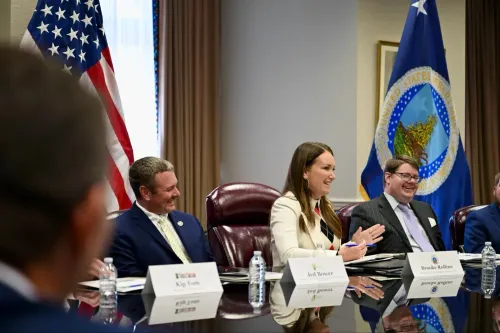
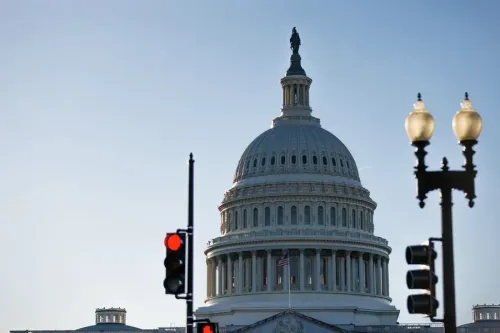
Agriculture Secretary Brooke Rollins testified before the Senate Appropriations Committee on 22 July , warning of national-security risks in the US food system.
Nearly 85 per cent of US meat-packing capacity is controlled by four companies , two of which are foreign-owned; America's largest pork company is reportedly Chinese-owned.
Just four fertiliser companies account for 78 per cent of US production; two seed companies supply more than half of all seed used domestically.
The US recorded an agricultural trade deficit of $50 billion after becoming a net food importer for the first time in 2023 .
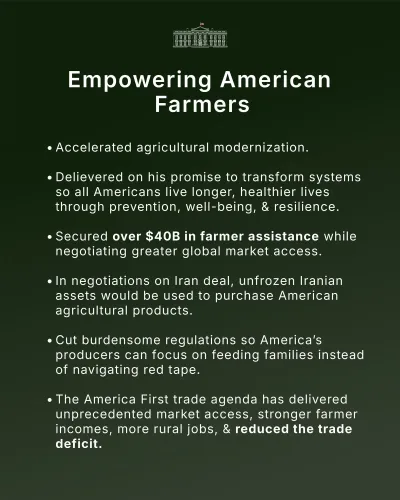
The administration claims 19 trade agreements secured and a 42 per cent reduction in the agricultural trade deficit within one year.
Rollins testified in support of President Trump's $87.6 billion supplemental funding request, including $10 billion for crop producers and $1.1 billion for freeze-affected farmers.
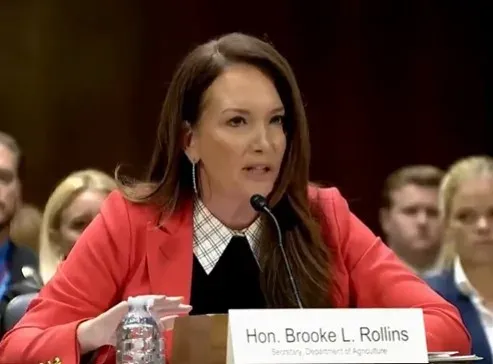
US Agriculture Secretary Brooke Rollins on 22 July told a Senate panel that Chinese ownership of American agricultural assets, growing dependence on foreign supply chains, and sweeping corporate consolidation have left the US food system dangerously exposed — framing food security as a matter of national survival.
Key Allegations Before Congress
Testifying before the Senate Appropriations Committee, Rollins warned that America had hollowed out its own farming base by shifting food production overseas and allowing processing, fertiliser, and seed industries to fall into the hands of a shrinking pool of corporations. 'As long as we are beholden to foreign and even hostile countries for our food and our fuel, our freedom is in jeopardy,' she said.
Rollins noted that nearly 85 per cent of US meat-packing capacity is now controlled by just four companies, two of which are foreign-owned. She specifically flagged Chinese ownership in the pork sector. 'Additionally, our largest pork company in America is owned by a China company, or China,' she told lawmakers.
Consolidation Across Fertilisers and Seeds
The concentration of market power extends well beyond meat processing. According to Rollins, just four fertiliser companies now account for 78 per cent of US production — a dramatic narrowing from dozens of businesses operating several decades ago. Similarly, only two seed companies supply more than half of all seed used across the country. 'These are national security implications,' she said.
The $87.6 Billion Funding Request
Rollins was appearing in support of President Donald Trump's $87.6 billion supplemental funding request, a package combining military, agricultural, humanitarian, and other spending. The agricultural component includes $10 billion in temporary relief for row-crop and speciality-crop producers, along with a further $1.1 billion for farmers hit by severe freezes during the previous winter.
She described the assistance as a short-term bridge while the administration pursues longer-term goals of rebuilding domestic production and reducing reliance on overseas supply chains. 'For the sake of American national security, American existence, and the American future, we must in the long run end this system that has grown up like a weed and strangled the American farmland and food production,' Rollins said.
Trade Deficit and Recent Progress
Rollins disclosed that the United States became a significant net importer of food for the first time in 2023, and subsequently recorded an agricultural trade deficit of $50 billion — a development she attributed in part to the absence of new trade agreements before Trump returned to office. She said the administration had since secured 19 trade agreements and reduced the agricultural trade deficit by 42 per cent in one year. Corn exports are expected to reach record levels, with ethanol, dairy, and tree-nut exports also climbing.
Bipartisan Concern on Food and National Security
Republican Senator Mike Rounds echoed Rollins's concerns, linking food security directly to national security. He argued that foreign adversaries, cyberthreats, industry consolidation, and unfair trade practices collectively threaten the capacity of American farmers to produce food, fuel, and fibre. This comes amid ongoing friction in the broader Washington–Beijing economic relationship, with agricultural trade — spanning soybeans, grains, and meat — remaining a recurring flashpoint. Notably, China is among the largest participants in global agricultural markets, making the question of ownership and dependency particularly charged.
Point of View
Including Republican ones, raising questions about why structural remedies were never pursued earlier. The $50 billion agricultural trade deficit is a real number, but attributing it primarily to missing trade deals glosses over decades of farm-policy choices that incentivised scale over resilience. The 42 per cent deficit-reduction claim, if accurate, is notable — but the baseline year and methodology matter enormously and were not publicly scrutinised in the hearing. Food security as a national-security frame is politically potent; whether it translates into durable policy or remains a funding-request lever is the question mainstream coverage has not yet pressed hard enough.
NationPress
20 Oct 2026
Frequently Asked Questions
What did US Agriculture Secretary Brooke Rollins tell Congress about Chinese ownership?
Rollins testified before the Senate Appropriations Committee on 22 July that America's largest pork company is owned by a Chinese entity, and that two of the four companies controlling 85 per cent of US meat-packing capacity are foreign-owned. She described these facts as national-security vulnerabilities.
Why is the US food system considered a national-security risk?
According to Rollins, the US has become heavily dependent on foreign supply chains for food production, fertiliser, and seeds, while domestic processing capacity has consolidated into just a handful of firms. The US also became a net food importer for the first time in 2023, recording a $50 billion agricultural trade deficit.
What is the $87.6 billion supplemental funding request?
It is a package proposed by President Donald Trump combining military, agricultural, humanitarian, and other spending. The agricultural portion includes $10 billion in temporary relief for crop producers and $1.1 billion for farmers affected by severe winter freezes.
How concentrated are the US fertiliser and seed industries?
Four fertiliser companies now control 78 per cent of US production, down from dozens of businesses several decades ago. Just two seed companies supply more than half of all seed used across the country, according to Rollins's testimony.
What progress has the administration cited on agricultural trade?
Rollins said the administration has secured 19 trade agreements and reduced the agricultural trade deficit by 42 per cent in one year. Corn exports are expected to hit record levels, with ethanol, dairy, and tree-nut exports also rising.