What is Behind the Humanitarian Crisis in KP's Tirah Valley?
Synopsis
The escalating humanitarian crisis in KP's Tirah Valley reveals serious divergences in counter-terrorism policies between Pakistan's federal and provincial governments. This conflict not only jeopardizes the safety of vulnerable residents but also highlights the urgent need for cooperative action to alleviate their suffering during the harsh winter months.
Key Takeaways
The crisis in Tirah Valley highlights political discord.
Residents are fleeing due to violence and harsh conditions.
Collaboration is crucial for effective humanitarian aid.
Military operations have led to significant civilian displacement.
Political leaders must prioritize citizen welfare over disputes.
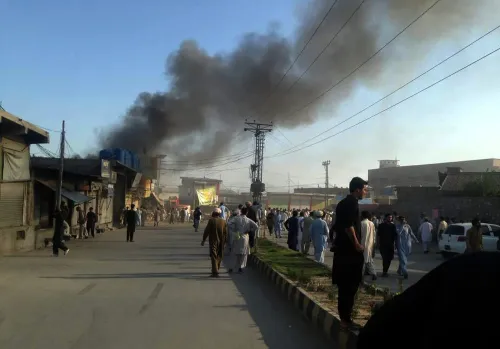
Islamabad, Jan 30 (NationPress) The federal government of Pakistan and the Khyber Pakhtunkhwa administration are engaged in a blame game over the humanitarian crisis in Tirah Valley, highlighting serious differences in their counter-terrorism strategies. This discord only exacerbates the plight of local residents forced to flee their homes during the harsh winter months, according to a report.
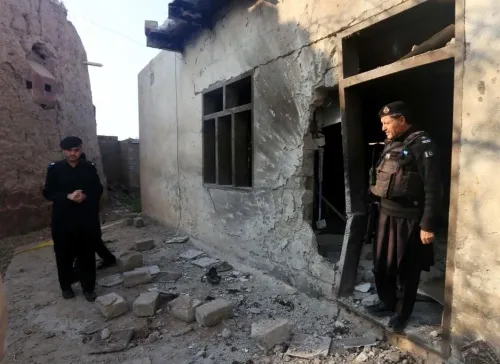
The editorial from Pakistan's prominent daily, The Express Tribune, notes, "Tirah Valley stands as a contentious area regarding the state's authority. Reliable reports indicate that this valley, which borders Afghanistan and falls within the Orakzai District as well as the southern part of Khyber District in Khyber-Pakhtunkhwa, has become a haven for various terrorist factions, including the Islamic State-Khorasan, Lashkar-i-Islam, and Jamaatul Ahrar."
According to the publication, it is the federal government's responsibility to eradicate these threats, while the Khyber Pakhtunkhwa government, representing provincial interests, is justified in voicing concerns and challenging federal actions.
Furthermore, The Express Tribune emphasizes, "The current hostile exchange between the Centre and the provincial administration regarding national security is a far cry from the responsible management that this dire situation demands."
Instead of collaborating to resolve what is increasingly becoming a humanitarian catastrophe, both entities are engaged in mutual accusations, showcasing a significant disparity in their counterterrorism policies. This not only aids anti-state factions but also intensifies the hardships faced by those displaced due to the ongoing conflict and the severe impacts of climate change.
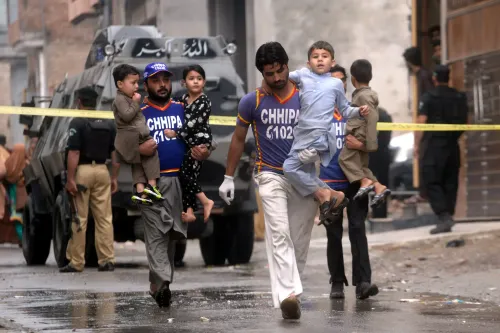
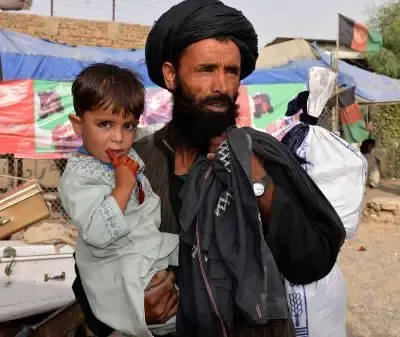
The federal government has claimed that there is merely seasonal migration occurring. However, local residents, who are not nomads, are compelled to escape the violence and seek refuge in safer locations. The publication urged that both the state and the Centre must address the challenges confronting these migrants by ensuring safe passage and providing adequate shelter, food, and medical support until conditions normalize.
Earlier reports indicated that the Pakistani Army, which has a significant influence over both domestic and foreign policies, has been accused of widespread human rights abuses in Khyber Pakhtunkhwa, a region long troubled by militancy and numerous military operations since the 2001 US-led invasion of Afghanistan.
Over the last two decades, major military campaigns targeting militants have resulted in civilian casualties and the displacement of millions.
A report from the Eurasia Review noted that tens of thousands have departed from Tirah Valley, crammed into vehicles ahead of an impending military operation against suspected militants in the area.
"The Pakistani Army has issued a deadline of January 25 for the evacuation of Tirah, a valley housing around 150,000 individuals near the Afghan border. This strategically significant region is a stronghold for the Tehrik-e Taliban Pakistan (TTP), which is intensifying its insurgency against Islamabad," the report highlighted.
“My shop was my livelihood, and now it’s gone, along with my income. What can I do?” Saeed Khan lamented, who is among those who rented a truck to move 22 family members and their belongings out of Tirah.
The report indicates that Khan is one of the approximately 80,000 individuals who have left Tirah, the provincial capital of Khyber Pakhtunkhwa. Many locals have expressed their opposition to the planned military offensive, describing the evacuation process as "chaotic and dangerous."
Point of View
It is imperative to emphasize that the well-being of our citizens must take precedence over political disputes. The humanitarian crisis in Tirah Valley demands immediate attention and a united front from both government factions to ensure the safety and welfare of those affected by this dire situation.
NationPress
25 Sept 2026
Frequently Asked Questions
What is causing the crisis in Tirah Valley?
The crisis is attributed to a combination of political blame between the federal government and Khyber Pakhtunkhwa administration, ongoing militant threats, and severe environmental conditions, compelling residents to flee.
What actions are being taken to address the situation?
There are calls for both the federal and provincial governments to collaborate in providing aid, safe travel, and adequate shelter for displaced residents affected by the conflict.
How many people have been displaced?
Approximately 80,000 individuals have evacuated Tirah Valley, seeking refuge from the escalating violence and military operations.
What is the role of the Pakistani Army in this situation?
The Pakistani Army has been accused of human rights violations and is also responsible for initiating military operations against militants in the region, which have led to significant civilian displacement.
What are the implications of the political blame game?
The political discord jeopardizes effective responses to the crisis, potentially exacerbating the suffering of the residents who are already facing dire conditions.