Cuba opens wholesale market to foreign firms, eases worker hiring rules
Synopsis
Cuba has quietly rewritten the rulebook for foreign businesses — allowing them to import, export, and distribute wholesale directly, while also letting them hire Cuban workers without going through state employment agencies. It is one of the most operationally significant openings for foreign capital since the island began its post-pandemic reform push in late 2025.
Key Takeaways
The Cuban government published new foreign trade rules in the Official Gazette of the Republic of Cuba on Friday, 3 October 2026 .
Foreign company branches in Cuba can now import, export, and distribute goods wholesale without Cuban intermediaries.
Decree-Law 128 (September) amended Foreign Investment Law 118 to allow direct worker hiring; the new rules extend this to commercial representative offices.
Cuban legal entities can now apply for import/export authorisation directly via the Foreign Trade Single Window online platform.
Cubans living abroad may participate in foreign investment projects on equal terms with other economic actors.
The measures form part of a reform drive initiated by Cuba's trade ministry since November 2025 .
The Cuban government has expanded foreign companies' access to its wholesale market and permitted their local commercial offices to hire workers directly, under new regulations published on Friday in the Official Gazette of the Republic of Cuba. The measures are designed to attract greater foreign investment, reduce supply chain bottlenecks, and support Cuba's broader economic recovery.
Key Provisions of the New Rules
Under the updated framework, branches of foreign companies established in Cuba are now permitted to import and export goods and distribute them wholesale within the country. Previously, foreign firms supplied goods while Cuban importers managed customs clearance, transportation, and distribution — a multi-layered process that critics argued inflated costs and slowed supply chains.
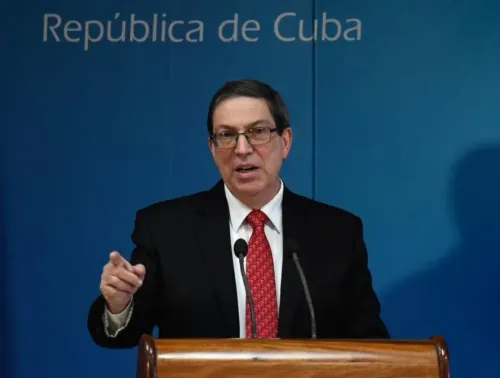
Deputy Minister of Foreign Trade and Investment Deborah Rivas said the changes would give foreign suppliers more direct access to the Cuban market. 'One of the main effects this measure could have is the elimination of intermediaries in the distribution chain,' Rivas said at a news conference, adding that fewer intermediaries should lead to lower prices for end consumers.
Hiring Reform Extends Earlier Decree
The employment provisions build on Decree-Law 128, published in September, which amended Foreign Investment Law 118 to allow businesses with foreign capital to choose whether to hire workers directly or through employment agencies. The latest rules extend that same option to foreign commercial representative offices, which operate under a separate regulatory regime. Rivas confirmed that this harmonises treatment across different categories of foreign business presence in Cuba.
Single Window Platforms Streamline Access
Cuban legal entities can now apply directly for authorisation to import and export through the Foreign Trade Single Window, an online platform accessible nationwide, removing the previous requirement to engage intermediaries. A separate Foreign Investment Single Window also remains operational and has reportedly received inquiries from prospective investors across multiple countries, according to Rivas.
Diaspora and Broader Investment Openings
In a notable inclusion, Cubans living abroad are also eligible to participate in foreign investment projects and contribute capital — from inside or outside Cuba — on equal terms with other economic actors. This provision signals an effort to tap the Cuban diaspora as a source of investment capital, a constituency that has historically been kept at arm's length from the island's formal economy.
Part of a Wider Reform Drive
The measures are the latest in a series of initiatives announced by Cuba's Ministry of Foreign Trade and Investment since November 2025, aimed at stimulating foreign trade and underpinning economic recovery. Cuba has faced acute shortages of fuel, food, and medicine in recent years, compounded by tightened US sanctions and the lingering economic fallout of the pandemic. 'Cuba is an open door to the world when it comes to foreign investment,' Rivas said. Whether the new rules translate into tangible investor confidence will be closely watched in the months ahead.
Point of View
But their real test lies in implementation. For decades, the Cuban state has maintained tight control over distribution channels and labour allocation precisely as instruments of political economy — dismantling that architecture even partially is a structural shift, not just a regulatory tweak. Yet the timing also reflects desperation: acute shortages of fuel, food, and medicine have made the status quo untenable. The inclusion of the diaspora as eligible investors is potentially the most underreported element — if channelled effectively, it could bring in remittance-linked capital at a scale no single foreign corporate investor could match. The risk is that without credible rule-of-law guarantees and an easing of US sanctions, the 'open door' rhetoric will struggle to convert inquiry-window traffic into committed capital.
NationPress
3 Oct 2026
Frequently Asked Questions
What new rights do foreign companies have in Cuba under the latest rules?
Foreign company branches in Cuba can now import and export goods and distribute them wholesale within the country, bypassing Cuban intermediaries who previously handled customs, transportation, and distribution. The rules were published in the Official Gazette of the Republic of Cuba on Friday, 3 October 2026.
What is Decree-Law 128 and how does it relate to these changes?
Decree-Law 128, published in September 2026, amended Foreign Investment Law 118 to allow businesses with foreign capital to hire workers directly rather than exclusively through state employment agencies. The latest regulations extend this hiring flexibility to foreign commercial representative offices operating under separate rules.
Who is Deborah Rivas and what did she say about the reforms?
Deborah Rivas is Cuba's Deputy Minister of Foreign Trade and Investment. She told a news conference that the changes would reduce intermediaries in the distribution chain, which should lead to lower prices, and described Cuba as 'an open door to the world when it comes to foreign investment.'
Can Cubans living abroad invest under the new rules?
Yes. The new provisions explicitly allow Cubans living abroad to participate in foreign investment projects and contribute capital from inside or outside Cuba on equal terms with other economic actors, marking a notable broadening of eligible investors.
How does the Foreign Trade Single Window work?
The Foreign Trade Single Window is a nationwide online platform through which Cuban legal entities can now apply directly for import and export authorisations, without engaging intermediaries. A separate Foreign Investment Single Window also exists and has received inquiries from prospective investors in multiple countries, according to Rivas.