US sanctions Cuba's nickel sector and military bodies, warns foreign firms
Synopsis
Washington has sanctioned four Cuban nickel enterprises and four military research bodies — alongside three senior officers — in one of its most targeted Cuba actions in recent years. The move goes further than past measures by explicitly warning foreign banks and companies that dealings with these entities could expose them to US sanctions, turning a bilateral action into a global business risk.
Key Takeaways
The US State Department sanctioned 8 Cuban entities and 3 military officials on 18 September 2026 under Executive Order 14404 .
Military entities targeted: SIMPRO , CIDNAV , CIDAI , and GELCOM , covering simulators, naval research, infantry weapons, and communications.
Nickel-sector entities targeted: SERCONI , CEPRONIQUEL , CEDINIQ , and Pinares S.A.
Officials sanctioned: Joaquin Francisco Cancio Monteagudo , Dioglis Pedrera Arguello , and Julio Hurtado Betancourt .
Foreign firms, including financial institutions, were explicitly warned of potential sanctions exposure for dealings with designated parties.
Designated parties may seek removal through the Treasury Department's reconsideration process.
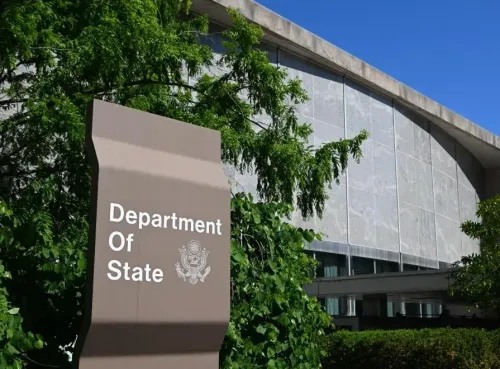
The United States on 18 September 2026 imposed sanctions on eight Cuban entities and three military officials, targeting Cuba's nickel industry and military research establishments in a sweeping action that also put foreign businesses on notice about potential sanctions exposure. The designations were announced by the State Department under Executive Order 14404, which authorises measures related to repression in Cuba and threats to US national security and foreign policy.
What the Sanctions Cover
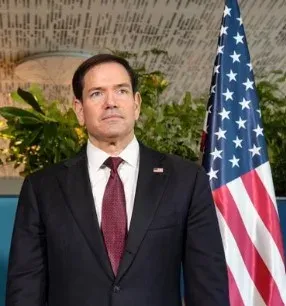
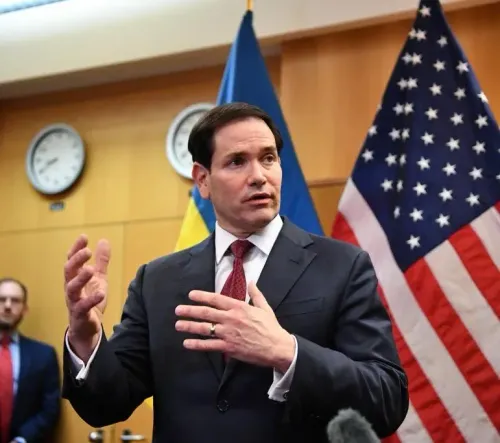
Secretary of State Marco Rubio said the designations spanned four state-run enterprises linked to Cuba's nickel sector, four military enterprises, and three senior officials heading military research organisations. The State Department alleged that the Cuban government channels mineral revenues into sustaining its security apparatus rather than improving conditions for ordinary citizens.
'For decades, the Cuban regime has channeled all of the island's resources into the hands of a narrow and corrupt military elite, leaving ordinary Cubans without reliable power, food, or dignity,' Rubio said.
Military Entities in the Crosshairs
The four military organisations targeted are SIMPRO, CIDNAV, CIDAI, and GELCOM. According to the State Department, their combined work spans training simulators, naval research, infantry weapons development, and electronics and communications equipment.
SIMPRO develops and manufactures simulators for Cuba's Revolutionary Armed Forces and other government bodies. CIDNAV conducts naval research; CIDAI handles the development, acquisition, modernisation, and evaluation of infantry weapons; and GELCOM produces electronics and communications systems.
The three officials sanctioned are Joaquin Francisco Cancio Monteagudo, director general of SIMPRO; Dioglis Pedrera Arguello, director general of CIDNAV; and Julio Hurtado Betancourt, director general of CIDAI. The State Department identified Cancio Monteagudo and Hurtado Betancourt as senior colonels in Cuba's Revolutionary Armed Forces and Pedrera Arguello as a captain.
Nickel Sector Designations
The nickel-related designations covered SERCONI, CEPRONIQUEL, CEDINIQ, and Pinares S.A., whose activities collectively include technical services, engineering, industrial research, and geological surveying of Cuban mineral deposits.
SERCONI supplies tools and services to the nickel industry. CEPRONIQUEL carries out engineering projects and coordinates state-run mineral extraction operations. CEDINIQ provides research, development, and innovation support for the sector, while Pinares conducts geological surveys. The State Department described nickel as a critical source of hard currency for Havana, alleging that earnings sustain the government without benefiting the wider population.
Implications for Foreign Businesses
Under the measures, all property and interests held in the United States or controlled by US persons that belong to designated parties are blocked and must be reported to the Treasury Department's Office of Foreign Assets Control (OFAC). Entities owned at least 50 per cent by blocked persons are also automatically blocked.
Notably, the State Department's fact sheet explicitly warned foreign financial institutions and other businesses: dealings with sanctioned parties — including returning assets or moving them for a designated party's potential benefit — could create sanctions exposure. This extraterritorial warning signals Washington's intent to pressure third-country firms with ties to Cuba's nickel or military sectors.
What Happens Next
Washington indicated that the purpose of the sanctions is to change behaviour rather than to punish indefinitely. Designated parties may seek removal through the Treasury Department's formal reconsideration process. No Cuban government response was included in the State Department's announcement. The action is the latest in a series of US pressure measures targeting Havana and is likely to draw scrutiny from nations that trade in Cuban nickel, including several European and Asian partners.
Point of View
Washington is effectively weaponising its sanctions infrastructure against Cuba's nickel trade — a commodity with buyers in Europe and Asia. Secretary Rubio's framing keeps the moral argument front and centre, but the practical lever is the threat to anyone who trades with these eight entities. Whether that secondary pressure succeeds depends on how much exposure key nickel importers have to the US financial system — and whether they judge Cuban supply worth the compliance risk.
NationPress
18 Sept 2026
Frequently Asked Questions
Which Cuban entities did the US sanction on 18 September 2026?
The US sanctioned eight Cuban entities: four in the nickel sector — SERCONI, CEPRONIQUEL, CEDINIQ, and Pinares S.A. — and four military research bodies — SIMPRO, CIDNAV, CIDAI, and GELCOM. Three senior military officials leading these organisations were also designated.
Why has the US imposed these sanctions on Cuba?
The State Department alleged that the Cuban government uses nickel revenues and military enterprises to sustain its security apparatus rather than benefit ordinary citizens. The sanctions were issued under Executive Order 14404, which covers repression in Cuba and threats to US national security.
How do the sanctions affect foreign companies?
Foreign businesses, including financial institutions, were explicitly warned that dealings with the designated parties — such as returning blocked assets or facilitating transactions for their benefit — could create US sanctions exposure. This extraterritorial element extends the action beyond a US-Cuba bilateral matter.
Who are the three Cuban officials sanctioned?
The three sanctioned officials are Joaquin Francisco Cancio Monteagudo (SIMPRO director general, senior colonel), Dioglis Pedrera Arguello (CIDNAV director general, captain), and Julio Hurtado Betancourt (CIDAI director general, senior colonel), all in Cuba's Revolutionary Armed Forces.
Can sanctioned Cuban entities or individuals seek removal from the list?
Yes. The State Department indicated that the purpose of the sanctions is to change behaviour, and designated parties may apply for removal through the Treasury Department's Office of Foreign Assets Control reconsideration process.