US sanctions Cuba's CUPET oil company under Trump's Executive Order 14404

Synopsis
The Trump administration has struck at the heart of Cuba's economy by sanctioning CUPET, the island's sole state energy company, accusing its leadership of hoarding fuel for the military and selling barrels on the black market while ordinary Cubans endure blackouts. It is one of the most targeted energy-sector moves in six decades of US-Cuba sanctions history.
Key Takeaways
The United States sanctioned Unión Cuba-Petróleo (CUPET) on 12 June under Executive Order 14404 .
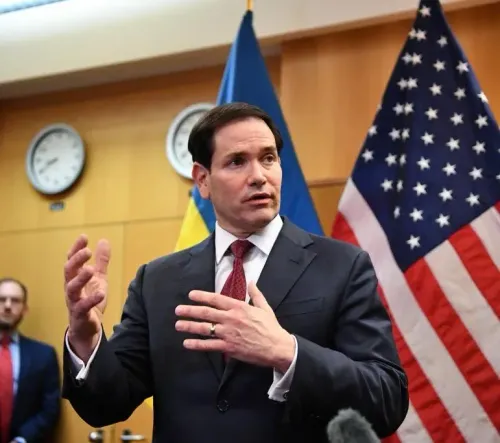
Secretary of State Marco Rubio accused Cuba's government of using energy as a tool of repression and regime enrichment.
All CUPET assets in the US or under US-person control must be frozen and reported to OFAC .
Foreign firms and financial institutions transacting with CUPET also face potential sanctions exposure.
The US has maintained sanctions on Cuba for more than six decades ; this designation targets the energy sector directly.
The United States imposed sweeping sanctions on Cuba's state-owned energy company, Unión Cuba-Petróleo (CUPET), on 12 June, escalating Washington's pressure on Havana as the Trump administration accused the Communist government of weaponising energy resources to sustain political repression and enrich its leadership.
The Designation and Its Legal Basis
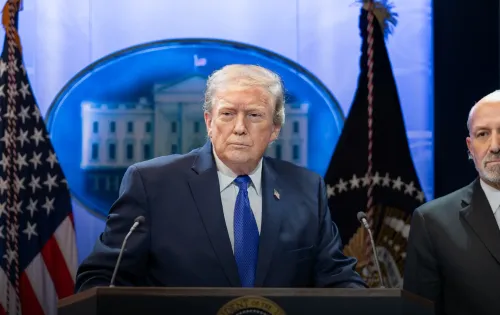
Secretary of State Marco Rubio announced the designation of CUPET under Section 2(a)(i)(A) of President Donald Trump's Executive Order 14404, citing the company's operation in the energy sector of the Cuban economy. The State Department noted that key assets of CUPET had been 'unlawfully expropriated from American owners years ago,' adding a restitution dimension to the punitive measure.
The sanctions form part of a broader US framework that also draws on Executive Order 14380 and National Security Presidential Memorandum-5, which the administration says are designed to advance human rights, the rule of law, free markets, and democracy in Cuba.
What the US Alleges Against Cuba's Government
Rubio alleged that Cuba's leadership has systematically diverted scarce energy resources for personal and political gain. 'Like every resource on the island, energy has long been weaponized by Cuba's Communist government as a tool of both repression and self-serving regime kleptocracy,' he said in a statement.
He further accused Cuban officials of 'reselling countless barrels of scarce energy on the secondary market, hoarding energy supplies for its military, intelligence and repressive forces, and rationing energy as a tool of social control.' Rubio contrasted this with the hardships faced by ordinary Cubans, who reportedly wait weeks to refuel vehicles and endure persistent blackouts, while, he alleged, luxury tourist hotels and regime-connected individuals maintain uninterrupted power.
How the Sanctions Work
Under the designation, all property and interests belonging to CUPET that are located in the United States or under the control of US persons must be frozen and reported to the Treasury Department's Office of Foreign Assets Control (OFAC). Transactions involving CUPET are prohibited unless specifically authorised by OFAC.
The State Department issued a caution to non-US parties as well, warning that foreign individuals, companies, and financial institutions engaging with sanctioned entities — or operating in designated sectors of the Cuban economy — could themselves face sanctions exposure. Transferring or returning assets to sanctioned entities, it added, carries 'significant sanctions risk.'
Decades of Sanctions, Renewed Pressure
The United States has maintained an economic sanctions regime against Cuba for more than six decades, making it one of the longest-running such regimes in modern history. Successive administrations have periodically adjusted the scope of restrictions and engagement policies, but core sanctions have largely remained intact. The Trump administration's targeting of CUPET represents one of the most direct strikes at Cuba's energy infrastructure within that broader framework.
The State Department framed the ultimate objective in measured terms: 'The ultimate goal of sanctions is not to punish, but to bring about a positive change in behavior.' Whether Havana adjusts course — or deepens its reliance on alternative energy partners — will determine the real-world impact of this latest escalation.
Point of View
And Cuba has historically deepened ties with Venezuela, Russia, and China when Washington tightens the screws. The secondary-sanctions warning to foreign firms is the more consequential signal — it puts European and Asian energy traders on notice in a way that bilateral US-Cuba measures alone never could. Whether that extraterritorial reach survives legal challenge, and whether allies comply, will define the real impact of this move.
NationPress
14 Sept 2026
Frequently Asked Questions
What is CUPET and why has the US sanctioned it?
Unión Cuba-Petróleo (CUPET) is Cuba's state-owned oil and gas company and the primary entity managing the island's energy sector. The US sanctioned it on 12 June under Executive Order 14404, alleging that Cuba's government has used energy resources to fund repression, enrich its leadership, and maintain political control over the population.
What do the sanctions mean in practice?
All CUPET property and financial interests located in the United States or held by US persons must be frozen and reported to the Treasury Department's Office of Foreign Assets Control (OFAC). Transactions with CUPET are prohibited for US persons unless OFAC grants a specific licence.
Can non-US companies still deal with CUPET?
Technically yes, but the State Department has warned that foreign individuals, companies, and financial institutions engaging with CUPET or other sanctioned entities in Cuba's energy sector could face US secondary sanctions. The department described the risk to foreign parties as 'significant.'
How do these sanctions fit into the broader US-Cuba relationship?
The United States has maintained economic sanctions on Cuba for more than six decades — one of the longest-running sanctions regimes in modern history. The Trump administration's designation of CUPET is part of a wider policy framework under Executive Orders 14404 and 14380, and National Security Presidential Memorandum-5, aimed at pressuring Havana on human rights and governance.
What is the stated goal of these sanctions?
The State Department stated that 'the ultimate goal of sanctions is not to punish, but to bring about a positive change in behavior.' The administration says it aims to curb Cuba's use of energy trade to sustain what it describes as a repressive security apparatus and a corrupt leadership structure.