Sheikh Hasina must not use Indian soil for politics: Dhaka tells New Delhi
Synopsis
Dhaka has formally asked New Delhi to stop Sheikh Hasina from using Indian territory to make political statements — a pointed diplomatic move that underscores how far India-Bangladesh ties have shifted since Hasina's ouster. The request, delivered directly to the Indian High Commissioner, puts New Delhi in an uncomfortable position between a long-standing ally and a new Dhaka administration demanding accountability.
Key Takeaways
Foreign Affairs Advisor Humayun Kabir raised the matter with Indian High Commissioner Dinesh Trivedi on 4 August in Dhaka.
Bangladesh asked India to ensure Sheikh Hasina and Awami League members cannot use Indian territory for political statements or destabilising activities.
The trigger was social media reports of Hasina planning a public address on 5 August .
High Commissioner Trivedi reportedly assured he would 'take the matter into due consideration and remain vigilant.' India's official statement on the meeting made no mention of the Hasina request, focusing instead on 'people-centric cooperation.' The Awami League has been designated a banned organisation by Bangladeshi authorities.
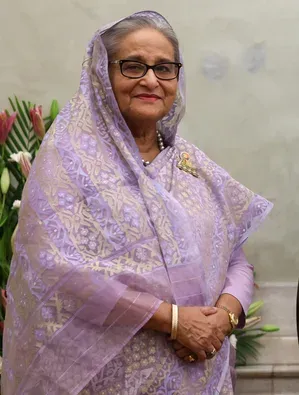
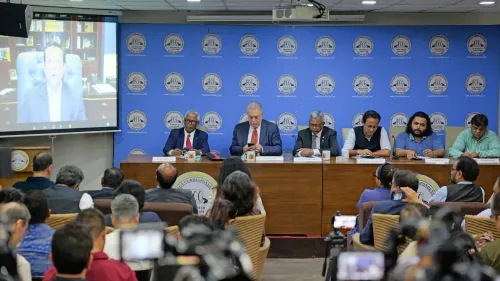
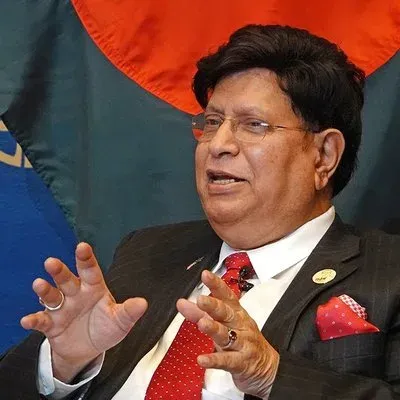
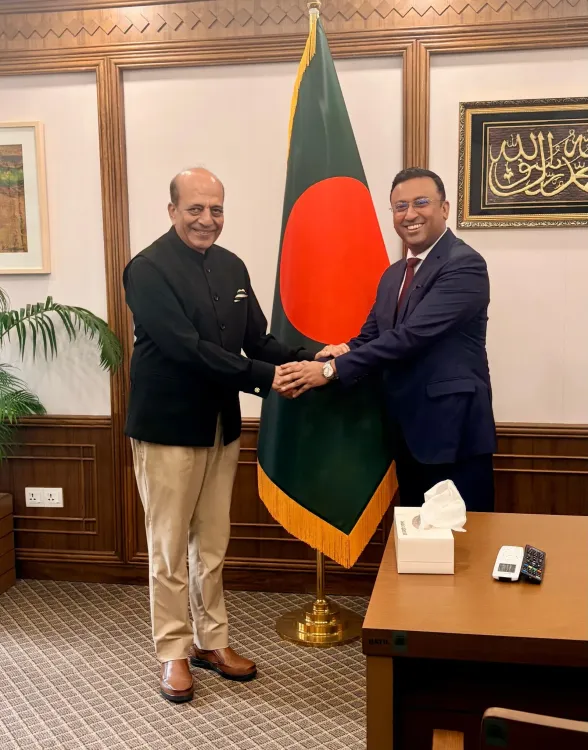
Bangladesh Prime Minister's Foreign Affairs Advisor Humayun Kabir on Monday, 4 August formally sought India's cooperation to prevent former Prime Minister Sheikh Hasina and any member of the Awami League from using Indian territory to make political statements or engage in activities aimed at destabilising Bangladesh. The request was conveyed during a courtesy call by Indian High Commissioner to Dhaka, Dinesh Trivedi, according to local media reports citing a statement from Bangladesh's Ministry of Foreign Affairs.
What Prompted the Request
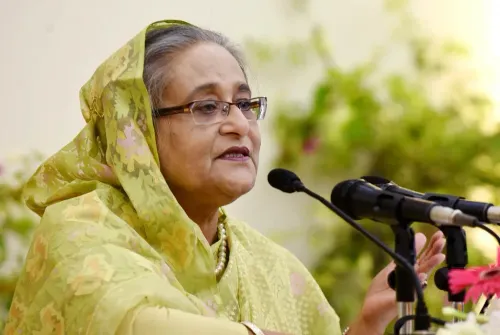
According to Bangladesh's Prothom Alo newspaper, the issue of Sheikh Hasina reportedly planning a public address on 5 August surfaced during the meeting. Social media reports about the speech had circulated widely, prompting Dhaka to raise the matter directly with the Indian envoy. Hasina, who is described as a 'fugitive' in the Bangladeshi foreign ministry's statement, has been residing in India since fleeing Bangladesh following a political crisis.
What Bangladesh's Foreign Ministry Said
The Bangladesh Ministry of Foreign Affairs statement, as cited by Prothom Alo, quoted Advisor Kabir as informing the High Commissioner that 'Bangladesh expects India's cooperation in ensuring that any person from the banned organisation, including the fugitive Sheikh Hasina, cannot use Indian territory to make political statements or conduct any activities aimed at creating instability within Bangladesh.'
India's Response
The Indian High Commission did not directly address the Bangladeshi request in its public communication. According to Prothom Alo, citing the Bangladesh foreign ministry statement, High Commissioner Trivedi 'assured that he would take the matter into due consideration and make necessary inquiries and remain vigilant in this regard.' Separately, the High Commission of India in Dhaka stated on X that the courtesy call focused on 'increasing people-centric cooperation between India and Bangladesh, based on mutual interest and mutual benefit,' and that the High Commissioner 'reiterated India's intent to work positively with the Government of Bangladesh to advance the developmental aspirations of the peoples of India and Bangladesh.'
Broader Diplomatic Context
Both sides, according to the Bangladesh foreign ministry statement, stressed the importance of 'continuing regular dialogue and constructive engagement' and expressed hope that 'long-term and sustainable solutions to all issues can be achieved through mutual trust and discussion,' Prothom Alo reported. This comes amid a notably strained phase in India-Bangladesh ties following Hasina's departure, with Dhaka's interim administration navigating a delicate balance between domestic political pressure and its historically close relationship with New Delhi. The Awami League has been described as a banned organisation by Bangladeshi authorities, adding a legal dimension to Dhaka's diplomatic request.
Point of View
And a public statement that said nothing about it — reflects the bind New Delhi is in. Sheltering Hasina was always going to carry a diplomatic cost with the interim Dhaka administration; that bill has now been formally presented. What is notable is the language Dhaka chose: 'fugitive' and 'banned organisation' are legal terms with extradition implications, not merely diplomatic colour. New Delhi's silence on the Hasina dimension of the meeting, while stressing 'people-centric cooperation,' suggests India is buying time rather than taking a position — a posture that may not hold if Hasina does address supporters publicly from Indian soil.
NationPress
18 Sept 2026
Frequently Asked Questions
Why did Bangladesh ask India to restrict Sheikh Hasina's political activity?
Bangladesh's Foreign Affairs Advisor Humayun Kabir raised the issue after social media reports emerged suggesting Hasina planned a public address on 5 August. Dhaka formally requested that India prevent Hasina and Awami League members from using Indian territory to make political statements or destabilise Bangladesh.
What was India's official response to Bangladesh's request?
According to reports citing the Bangladesh foreign ministry statement, Indian High Commissioner Dinesh Trivedi assured he would 'take the matter into due consideration and remain vigilant.' India's own public statement on the meeting focused on bilateral cooperation and made no reference to the Hasina issue.
Who is Humayun Kabir and what is his role?
Humayun Kabir is the Foreign Affairs Advisor to Bangladesh's Prime Minister, functioning as the country's de facto foreign policy chief. He conveyed Dhaka's request to the Indian envoy during a formal courtesy call on 4 August.
What is the current status of Sheikh Hasina and the Awami League in Bangladesh?
Sheikh Hasina has been residing in India since fleeing Bangladesh following a political crisis. Bangladeshi authorities have described her as a 'fugitive' and designated the Awami League a banned organisation, adding legal weight to Dhaka's diplomatic request to New Delhi.
What does this mean for India-Bangladesh relations?
The formal request signals a significant shift in bilateral dynamics. Both sides said they remain committed to dialogue and constructive engagement, but Dhaka's use of terms like 'fugitive' and 'banned organisation' in a diplomatic communication to India indicates the interim government is applying direct pressure on New Delhi over Hasina's presence on Indian soil.