Persistent Discrimination Against Minorities in Pakistan Following Court Ruling: An In-Depth Report
Synopsis
A recent report reveals that despite a court ruling declaring discriminatory job practices unconstitutional, non-Sunni Muslim communities in Pakistan continue to face systemic discrimination. This highlights the urgent need for societal change to combat entrenched biases.
Key Takeaways
Non-Sunni Muslim communities in Pakistan face ongoing discrimination.
The Islamabad High Court ruled discriminatory job practices unconstitutional.
Despite legal progress, societal biases remain deeply entrenched.
Fear of retaliation often prevents individuals from challenging discrimination.
Structural inequalities require comprehensive societal change.
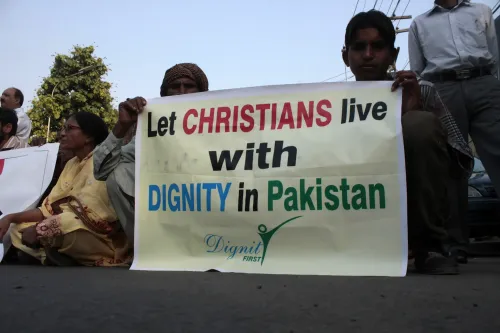
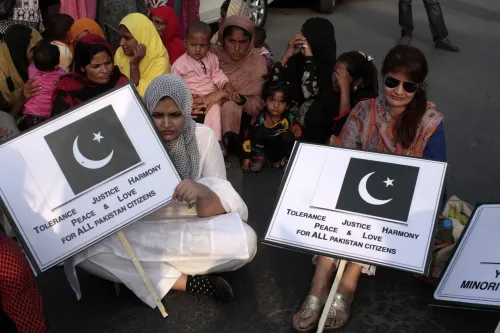
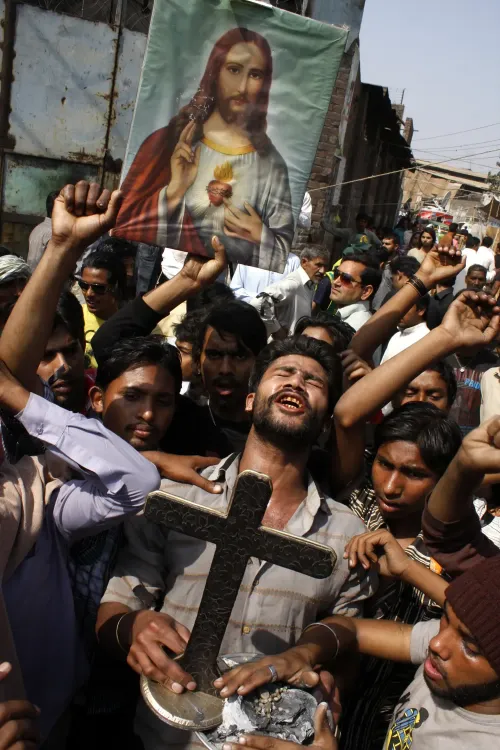
Islamabad, March 21 (NationPress) The non-Sunni Muslim populations in Pakistan, which include Christians, Hindus, Sikhs, and Ahmadis, have faced discrimination for many years and are often regarded as second-class citizens in various explicit and implicit ways.
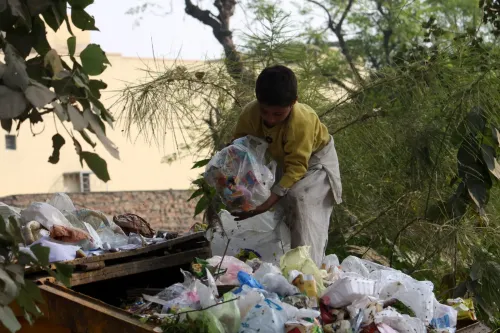
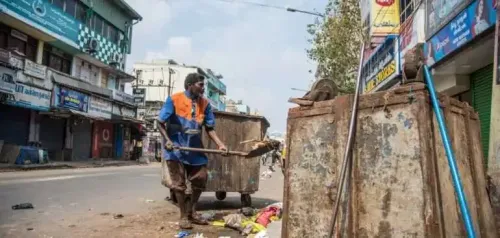
This situation is evident in their predominant roles in sanitation jobs and their minimal representation in other fields, a reality that is not by chance but rather arises from deep-rooted social structures perpetuated by government policies, according to a recent report.
By perpetuating the association between minority identities and 'low-status' occupations, public institutions in Pakistan continue to reinforce existing biases, making discrimination seem acceptable, as outlined in the online publication ‘Bitter Winter’.
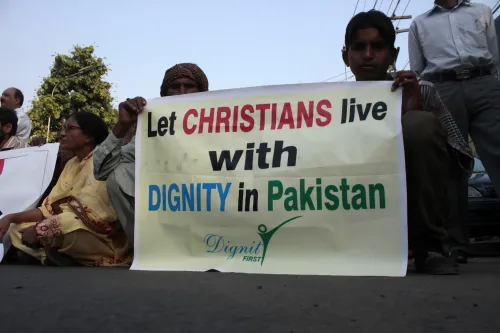
The Islamabad High Court recently released a comprehensive explanation for its judgement dated November 11, 2025, which states that the longstanding practice of designating sanitation jobs as 'for Christians only' is unconstitutional. This detailed reasoning validates claims made by human rights activists for years: linking a specific religion with sanitation work infringes on the principles of equality, non-discrimination, and the dignity of citizens.
The Court identified this practice as inconsistent with Articles 25, 27, and 36 of the Constitution, stressing that assigning a particular faith to a stigmatized job diminishes human dignity. Justice Inaam Ameen Minhas referred to dignity as the 'jewel in the crown of fundamental rights', underscoring the gravity of what might seem like a minor issue.
However, the report also highlights a significant problem: discriminatory job postings continue to emerge in both overt and coded language, despite the ruling.
Many individuals affected by this discrimination hesitate to challenge these advertisements due to fears of retaliation, lack of access to legal support, or the belief that combating such discrimination is pointless. While the Court's decision may encourage some to pursue justice, it does not retroactively protect those who previously lacked the resources or confidence to take legal action.
This ruling emphasizes that the issue extends beyond mere recruitment advertisements, reflecting deeper societal beliefs that allow such expressions to be created, approved, and disseminated throughout Pakistan.
The Court has challenged the notion that certain citizens are inherently suited for specific types of work based on their faith. However, changing entrenched mindsets is a slow process, and legal rulings alone cannot dismantle social hierarchies that have persevered for decades. The continued emergence of discriminatory advertisements post-ruling reveals that the issue is structural—embedded in bureaucratic norms, social expectations, and an accepted tolerance for inequality.
Point of View
It is clear that while legal progress has been made in addressing discriminatory practices in Pakistan, the societal attitudes that underpin these inequalities remain largely unchanged. Ongoing vigilance and advocacy are essential to ensure that the court's ruling translates into real-world change.
NationPress
26 Sept 2026
Frequently Asked Questions
What communities are affected by discrimination in Pakistan?
Non-Sunni Muslim communities, including Christians, Hindus, Sikhs, and Ahmadis, face discrimination in various forms in Pakistan.
What did the Islamabad High Court rule regarding job discrimination?
The Islamabad High Court ruled that advertising sanitation jobs as 'for Christians only' is unconstitutional, violating principles of equality and dignity.
Why are discriminatory job postings still prevalent?
Discriminatory job postings persist due to ingrained societal biases, fears of retaliation, and a lack of legal support for those affected.
How does the court's ruling affect future job practices?
While the ruling is a step forward, changing societal attitudes and structural inequalities is crucial for meaningful progress.
What are the implications of this ongoing discrimination?
The continuation of discriminatory practices highlights the need for broader societal change and legal enforcement to ensure equality for all citizens.