DR Congo Ebola cases cross 7,400 as North Kivu nears treatment collapse
Synopsis
The DRC's Ebola outbreak has crossed 7,400 confirmed cases and is no longer a single-front crisis. While Ituri shows early signs of decline, North Kivu's weekly cases nearly doubled in a fortnight and its treatment beds are 94.7% full — a warning signal that the epidemic's deadliest chapter may still be ahead.
Key Takeaways
The DRC has recorded 7,404 confirmed Ebola cases and 3,577 deaths as of Tuesday, 16 September 2026 .
The case fatality rate stands at 48.3 per cent ; only 1,776 patients have recovered.
The outbreak spans 62 health zones across seven provinces , with Ituri accounting for 77.7 per cent of all confirmed cases.
North Kivu has 373 patients hospitalised and bed occupancy at 94.7 per cent ; weekly cases nearly doubled to over 200 in two weeks.
Research chief Jean-Jacques Muyembe says Ituri has passed its peak, but North Kivu 'has not yet reached the plateau.' This is now the largest and deadliest Ebola outbreak in DRC history, and the second-largest globally after the 2014–2016 West Africa epidemic.
The Democratic Republic of the Congo (DRC) has recorded 7,404 confirmed Ebola cases, including 3,577 deaths, as the outbreak shifts from its long-time epicentre in Ituri to a rapidly escalating crisis in North Kivu, according to the latest government situation report released on Thursday, 17 September 2026. The country's overall case fatality rate now stands at 48.3 per cent, with only 1,776 patients having recovered so far.
Shifting Transmission Pattern
Jean-Jacques Muyembe, head of the country's National Institute of Biomedical Research, said on Tuesday in Kinshasa that Ituri had passed a 'peak' and entered a 'downward slope.' However, he cautioned that the epidemic curve in North Kivu was still rising and 'has not yet reached the plateau,' designating it as another major hotspot. Ituri still accounts for 77.7 per cent of all confirmed cases and remains the overall epicentre of the outbreak, which has spread across 62 health zones in seven provinces.
North Kivu Nearing Treatment Saturation
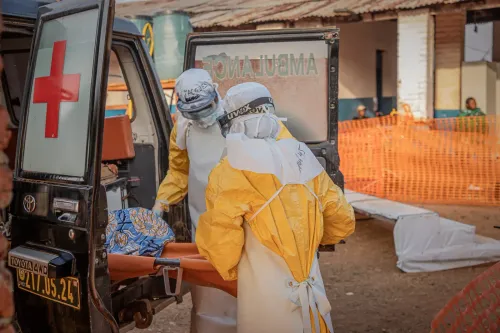
The pressure on health infrastructure in North Kivu has become acute, with 373 patients currently hospitalised and the overall bed occupancy rate reaching 94.7 per cent, according to the government report. Weekly cases in the province almost doubled over just two weeks, rising from approximately 100 to more than 200, raising fears that the region's already strained medical capacity could be overwhelmed in days.
WHO Warns of Continued Expansion
World Health Organisation (WHO) Director-General Tedros Adhanom Ghebreyesus acknowledged on Wednesday that the response was beginning to show encouraging signs in some of the worst-affected areas, particularly Ituri. He nonetheless warned that the epidemic continued to expand and claim lives. Speaking at a press briefing in Geneva, Tedros said: 'The area is so vast that it is hard to speak of a single epidemic. It is many outbreaks, in many places.'
Historic Scale of the Outbreak
The current outbreak has become the largest and deadliest Ebola epidemic in the DRC's recorded history, and the second-largest globally — surpassed only by the 2014–2016 epidemic in West Africa. That earlier outbreak killed more than 11,000 people across Guinea, Liberia, and Sierra Leone, and is widely regarded as the most devastating Ebola crisis in modern history. The DRC has battled multiple Ebola outbreaks over the past five decades, but none has matched the geographic breadth or mortality scale of the current one.
What Comes Next
With North Kivu's bed occupancy already at near-capacity levels, health officials face the immediate challenge of scaling up treatment infrastructure in a region marked by active conflict and difficult terrain. The dual-province crisis — one potentially declining, one still surging — will test whether international response resources can be redistributed quickly enough to prevent North Kivu from becoming the new, larger epicentre of the outbreak.
Point of View
The window to prevent a second, concurrent epicentre is narrowing fast. What mainstream coverage underweights is the structural obstacle: North Kivu is an active conflict zone, meaning supply chains, personnel movement, and community trust are all compromised simultaneously. The hopeful signals from Ituri must not distract from the harder question of whether international resources can be redeployed quickly enough — or whether the response will, as in 2018, chase the outbreak rather than outpace it.
NationPress
17 Sept 2026
Frequently Asked Questions
How many Ebola cases and deaths have been recorded in DR Congo so far?
As of Tuesday, the DRC has recorded 7,404 confirmed Ebola cases, including 3,577 deaths, giving an overall case fatality rate of 48.3 per cent. Only 1,776 patients have recovered, and the outbreak has spread across 62 health zones in seven provinces.
Why is North Kivu now considered a major Ebola hotspot?
North Kivu's weekly case count nearly doubled over two weeks, rising from around 100 to more than 200, while bed occupancy in treatment facilities reached 94.7 per cent. Research chief Jean-Jacques Muyembe confirmed the epidemic curve there 'has not yet reached the plateau,' signalling the crisis is still escalating in that province.
Is the situation improving anywhere in DR Congo?
Yes, partially. Ituri — the long-time epicentre accounting for 77.7 per cent of all cases — has reportedly passed its peak and entered a decline, according to Muyembe. WHO Director-General Tedros Adhanom Ghebreyesus also noted encouraging signs in the worst-affected areas, but warned that the epidemic continues to expand overall.
How does this outbreak compare to previous Ebola epidemics?
The current DRC outbreak is the largest and deadliest Ebola epidemic in the country's history, and the second-largest globally. It is surpassed only by the 2014–2016 West Africa epidemic, which killed more than 11,000 people across Guinea, Liberia, and Sierra Leone.
What did WHO say about the scale of the outbreak?
WHO Director-General Tedros Adhanom Ghebreyesus said at a Geneva press briefing that 'the area is so vast that it is hard to speak of a single epidemic — it is many outbreaks, in many places.' He warned that despite some encouraging signs in Ituri, the epidemic is still expanding and continuing to claim lives.