DR Congo Ebola toll reaches 1,033 dead, 2,536 confirmed cases
Synopsis
The DR Congo Ebola outbreak has killed over 1,000 people and infected more than 2,500 — but the crisis is being compounded by a parallel security emergency. With six humanitarian organisations suspending operations in Beni territory after a wave of deadly attacks, the disease response now has a dangerous blind spot at its epicentre, even as health officials warn it is too early to call a peak.
Key Takeaways
The DR Congo Ebola death toll has reached 1,033 , with 2,536 confirmed cases as of 23 July .
506 patients have recovered; 738 remain in isolation across 47 health zones in five provinces.
Treatment capacity is breached in North Kivu : 182 patients in isolation against a capacity of 141 beds .
Officials say case notifications show a plateau but warn it is 'too early' to confirm the outbreak has peaked.
At least 30 people were killed in attacks in Beni territory between 13–19 July , forcing six humanitarian organisations to suspend operations.
The outbreak, caused by the Bundibugyo virus , was declared on 15 May in Ituri Province .
The death toll from the Ebola outbreak in the Democratic Republic of the Congo (DRC) has climbed to 1,033, with confirmed cases reaching 2,536, according to the country's health authorities on Thursday, 23 July. The outbreak, centred in the eastern Ituri Province, continues to spread across 47 health zones in five provinces, with 46 still under active transmission.
Current Case Breakdown
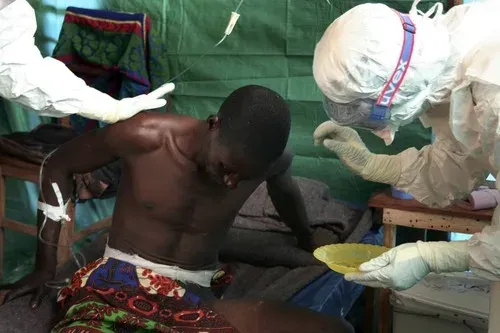
Of the total confirmed cases, 506 patients have recovered, while 738 others remain in isolation. No new affected health zones were reported in the latest situation update. The epidemic is described as being in a phase of sustained transmission, with health authorities cautioning that recent fluctuations in daily case counts should be read carefully given reporting delays and ongoing data consolidation.
Treatment Capacity Under Strain
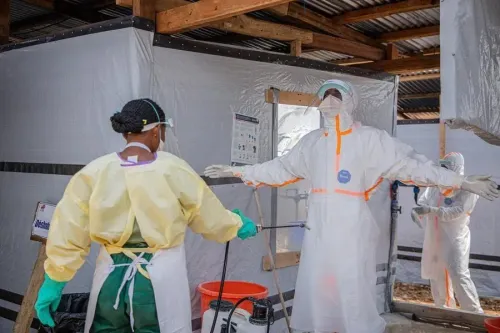
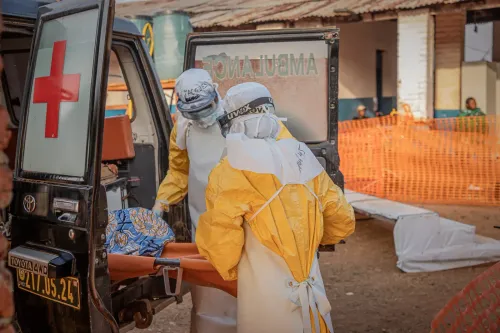
Treatment infrastructure is under severe pressure, particularly in North Kivu, where 182 patients are currently in isolation against a bed capacity of just 141. The shortfall highlights a structural gap in the response as case numbers remain elevated.
What Officials Said
Speaking at a press conference on Wednesday in Bunia, the capital of Ituri Province and the epicentre of the outbreak, Adelard Lufongola, operations manager for the national Ebola response coordination, said case notifications had entered a plateau in certain areas, with a slight downward trend. However, he added: 'But epidemiologically, it is still too early to say that we have reached the peak of the outbreak.'
The outbreak was formally declared on 15 May in Ituri Province. It is caused by the Bundibugyo virus, a strain of Ebola. Population movements, insecurity, artisanal mining activity, and cross-border exchanges with Uganda and South Sudan continue to drive transmission, according to the situation report.
Security Crisis Compounds the Response
Stephane Dujarric, spokesperson for the UN Secretary-General, said at a briefing on Wednesday that local civil society organisations reported at least 30 people killed and a dozen others injured in a series of attacks in the Beni territory of Ituri Province between 13 and 19 July. The violence has displaced civilians and severely restricted humanitarian access in affected areas.
At least six humanitarian organisations — including partners directly supporting the Ebola response — have suspended movements to several localities in Beni territory, citing the deteriorating security situation, according to the UN Office for the Coordination of Humanitarian Affairs (OCHA). This suspension risks creating blind spots in disease surveillance at a critical phase of the outbreak.
What Comes Next
With transmission sustained across nearly all affected zones and treatment capacity already breached in North Kivu, health officials face a compounding crisis: a viral outbreak embedded in an active conflict zone. Whether the apparent plateau in case notifications hardens into a genuine decline will depend heavily on whether humanitarian access — and with it, contact tracing and isolation — can be restored in Beni territory.
Point of View
And the DRC's response has historically been undermined more by insecurity than by medical capacity. The apparent plateau in case notifications may reflect reporting gaps caused by the security crisis rather than genuine epidemiological progress. Until access is restored, the official figures should be read with caution.
NationPress
22 Oct 2026
Frequently Asked Questions
What is the current Ebola death toll in DR Congo?
As of 23 July, the Ebola outbreak in the Democratic Republic of the Congo has killed 1,033 people, with 2,536 confirmed cases. A total of 506 patients have recovered, while 738 remain in isolation.
Which virus is causing the DR Congo Ebola outbreak?
The outbreak is caused by the Bundibugyo virus, a strain of the Ebola virus. It was formally declared on 15 May in Ituri Province in eastern DRC.
Has the DR Congo Ebola outbreak reached its peak?
Health officials say it is too early to confirm the outbreak has peaked. Adelard Lufongola, operations manager for the national Ebola response, said case notifications had entered a plateau in some areas but cautioned that 'epidemiologically, it is still too early to say that we have reached the peak.'
Why is the Ebola response in DRC being disrupted?
A deteriorating security situation in Beni territory, where at least 30 people were killed in attacks between 13 and 19 July, has forced at least six humanitarian organisations — including Ebola response partners — to suspend operations. This has restricted contact tracing and humanitarian access in affected areas.
Which provinces are affected by the Ebola outbreak in DRC?
The outbreak spans 47 health zones across five provinces, with 46 still under active transmission. Ituri Province, where the outbreak was first declared, remains the epicentre, and North Kivu is under particular pressure with treatment capacity exceeded.