Ramaswamy pledges Wright-Patterson base jobs for Dayton
Synopsis
Entrepreneur Vivek Ramaswamy has publicly committed to leveraging Wright-Patterson Air Force Base — one of the US Air Force's largest installations — as a catalyst for high-paying jobs and economic growth in the greater Dayton, Ohio community, signalling a push to align federal defence assets with regional commercial development.
Key Takeaways
Entrepreneur Vivek Ramaswamy posted on X on 22 October 2026 pledging to leverage Wright-Patterson Air Force Base for Dayton's economic growth.
Wright-Patterson , near Dayton, Ohio , is one of the largest US Air Force installations and a long-standing economic anchor for the region.
The base hosts advanced research labs, aerospace logistics, and defence procurement — all functions with commercial spillover potential.
BRAC rounds in the 1990s and 2005 reshaped base footprints nationally, underscoring how dependent communities are on federal decisions about base missions.
Ramaswamy's framing mirrors a broader US federal-local coordination playbook: aligning base assets with surrounding commercial and technology-sector ecosystems.
Specific project details, partnerships, and funding commitments for the Dayton region have not yet been announced.
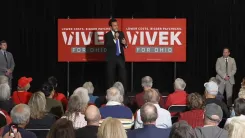
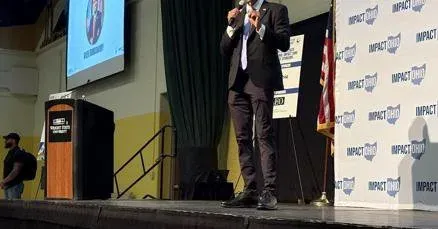
One of America's largest Air Force installations is now at the centre of an economic-development pitch — and entrepreneur Vivek Ramaswamy is making the case directly to the Dayton, Ohio community. In a post on X on 22 October 2026, Ramaswamy declared that Wright-Patterson Air Force Base is 'a strategic asset' whose potential to generate high-paying jobs and economic growth must be actively leveraged.
Wright-Patterson's weight in Dayton's economy
Wright-Patterson Air Force Base, sprawling across the eastern edge of Dayton, is among the largest single-site employers in the US Air Force. Its footprint encompasses advanced research laboratories, aerospace logistics hubs, and defence procurement operations — functions that already pump billions into the surrounding regional economy through direct payroll and contractor spending. For Dayton, a midwestern city whose industrial fortunes have risen and fallen with manufacturing cycles, the base has long been the most stable economic anchor in the region.
That structural dependency, however, has also been a vulnerability. When the Base Realignment and Closure (BRAC) rounds of the 1990s and 2005 reshaped mission mixes across the country, communities near affected installations learned how quickly federal decisions could redraw local economies. Wright-Patterson survived those rounds with its core mission intact — but the broader lesson stuck: passive reliance on a base is not a growth strategy.
Ramaswamy's federal-to-local economic pitch
Ramaswamy's statement signals an intent to move beyond passive reliance. The language — 'leverage,' 'high-paying jobs,' 'economic growth' — frames Wright-Patterson not merely as a defence facility but as a springboard for broader commercial and technology-sector development in the Dayton metro. This framing echoes a pattern visible across successive US administrations: aligning base missions and base-adjacent land or infrastructure with surrounding commercial ecosystems, from aerospace supply chains to advanced manufacturing clusters.
The approach is well-worn in policy circles. Military installations generate technology spillovers — patents, skilled workforces, test infrastructure — that, when deliberately channelled, can seed civilian industries. Whether through dual-use research partnerships, technology-transfer agreements, or targeted procurement that favours local contractors, the playbook exists. What Ramaswamy is signalling is a willingness to pick it up and run it for Dayton.
What Dayton's aerospace community will watch for
For Dayton residents and the local aerospace contractor base, the critical question now is specificity. A pledge to leverage a strategic asset is an opening statement, not a programme. Concrete follow-through — specific base-utilisation projects, federal-local partnership frameworks, or dedicated funding streams — will determine whether this commitment reshapes hiring in the region or remains a well-intentioned headline.
The Dayton region's aerospace and defence ecosystem has the density to absorb and multiply any serious federal push: skilled engineers, established suppliers, and a university corridor that feeds technical talent into the sector. The infrastructure is ready. The watch now is for the policy architecture to match the ambition.
Point of View
He is adopting a federalist economic-development posture that resonates in Rust Belt communities wary of deindustrialisation. The move also signals that his post-DOGE public role is gravitating toward place-based economic advocacy, not just fiscal reform rhetoric. For Dayton, the real test will come when pledges meet procurement calendars and federal appropriations.
NationPress
22 Oct 2026
Frequently Asked Questions
What did Vivek Ramaswamy say about Wright-Patterson Air Force Base?
Ramaswamy posted on X that Wright-Patterson Air Force Base is 'a strategic asset' and pledged to help leverage it to bring high-paying jobs and economic growth to the greater Dayton, Ohio community.
Where is Wright-Patterson Air Force Base located?
Wright-Patterson Air Force Base is located near Dayton, Ohio, and is one of the largest US Air Force installations in the country.
How important is Wright-Patterson AFB to Dayton's economy?
Wright-Patterson is among the largest single-site employers in the US Air Force and serves as a long-standing economic anchor for the Dayton region through direct payroll, defence procurement, and technology-sector activity.
What is Vivek Ramaswamy's background in government and business?
Ramaswamy is an entrepreneur, founder and executive chairman of Strive Asset Management, a former 2024 Republican presidential candidate, and former co-lead of the Department of Government Efficiency advisory effort.
What specific projects has Ramaswamy announced for Wright-Patterson AFB?
No specific projects, partnerships, or funding commitments have been announced yet; Ramaswamy's statement outlines intent to leverage the base for regional economic development, with details still to follow.