DR Congo Ebola cases cross 6,000 with nearly 3,000 deaths
Synopsis
The DRC's Ebola outbreak has crossed 6,041 confirmed cases and 2,911 deaths — making it the deadliest in the country's history and second only to the 2014–2016 West Africa epidemic globally. With a 48.2% fatality rate and 60 health zones affected, the launch of Ervebo vaccination in Tshopo is the most significant containment move yet, though its effectiveness against the Bundibugyo strain remains under study.
Key Takeaways
The DRC has recorded 6,041 confirmed Ebola cases and 2,911 deaths as of Saturday, 30 August .
The case fatality rate stands at 48.2% ; 1,366 patients have recovered.
The outbreak spans 60 health zones across six provinces : Ituri, North Kivu, South Kivu, Haut-Uele, Bas-Uele, and Tshopo.
It is the largest Ebola outbreak in DRC history and the second-largest globally , behind the 2014–2016 West Africa epidemic.
DRC Health Minister Roger Kamba launched Ervebo vaccination in Kisangani ; more than 50,000 doses have been received.
The vaccine drive covers 14 health zones in Tshopo, Bas-Uele, and Haut-Uele under a compassionate-use framework .
The Democratic Republic of the Congo (DRC) has recorded more than 6,000 confirmed Ebola cases, with close to 3,000 fatalities, according to figures released on Monday, 31 August. The outbreak, declared in May, has become the country's largest and deadliest Ebola epidemic on record — and the second-largest globally.
Scale of the Outbreak
As of Saturday, the DRC had logged 6,041 confirmed cases across six provinces, with 2,911 deaths — placing the overall case fatality rate at 48.2%. A total of 1,366 patients have recovered. The outbreak has spread across 60 health zones in the provinces of Ituri, North Kivu, South Kivu, Haut-Uele, Bas-Uele, and Tshopo.
Vaccination Drive Launched
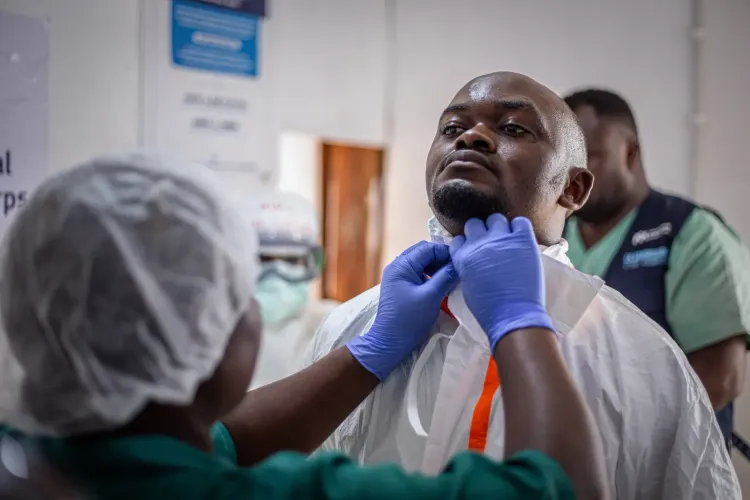
Last week, the DRC began Ebola vaccinations using the Ervebo vaccine under a compassionate-use framework in the northeastern province of Tshopo. DRC Health Minister Roger Kamba officially launched the drive in Kisangani, the capital of Tshopo Province, with healthcare and frontline workers among the first recipients. 'We have decided to use the Ervebo vaccine to protect first those who are on the front line, therefore our health care providers, but also people who have been in contact with patients,' Kamba said. More than 50,000 doses of Ervebo have been received, according to Kamba.
What the Government Said
The DRC health ministry stated on social media platform X that the vaccination launch marked an important step in the Ebola response, describing it as a measure to 'reinforce existing efforts aimed at protecting communities, breaking chains of transmission and containing the spread of the disease.' The campaign is expected to cover 14 selected health zones in Tshopo, Bas-Uele, and Haut-Uele — three provinces most recently affected.
Africa CDC Confirms Rollout
The Africa Centres for Disease Control and Prevention (Africa CDC) confirmed at a press briefing on Thursday that preventive vaccination had begun in Kisangani. Placide Mbala Kingebeni, Africa CDC's Director for Research, Clinical Trials and Innovation, said data would be collected during the rollout to assess the vaccine's potential effectiveness against the Bundibugyo ebolavirus strain driving the current outbreak — a strain for which Ervebo was originally designed for a different variant, making efficacy data critical.
Historical Context
The only deadlier Ebola outbreak on record remains the 2014–2016 West Africa epidemic, which killed more than 11,000 people across Guinea, Liberia, and Sierra Leone. The DRC has faced multiple Ebola outbreaks over decades, but the scale and geographic spread of the current one — spanning six provinces — marks a significant escalation. With vaccination now underway and surveillance data being collected, health authorities are under pressure to prevent further geographic spread before the outbreak reaches urban centres of higher density.
Point of View
But Ervebo was developed against Zaire ebolavirus; the current outbreak is driven by Bundibugyo ebolavirus, a distinct strain. Efficacy data being collected in real time means the DRC is, in effect, running a field trial during an active emergency. The international community's response to the second-deadliest Ebola outbreak on record has been notably quieter than during 2014–2016, and that asymmetry in global attention deserves scrutiny.
NationPress
1 Sept 2026
Frequently Asked Questions
How many Ebola cases has the DRC recorded in the current outbreak?
As of Saturday, 30 August, the DRC had recorded 6,041 confirmed Ebola cases across six provinces, with 2,911 deaths and 1,366 recoveries. The case fatality rate stands at 48.2%.
Why is the current DRC Ebola outbreak historically significant?
It is the largest and deadliest Ebola outbreak in the DRC's history and the second-largest globally, surpassed only by the 2014–2016 West Africa epidemic that killed over 11,000 people.
Which vaccine is being used and how is it being deployed?
The Ervebo vaccine is being deployed under a compassionate-use framework, prioritising healthcare and frontline workers. More than 50,000 doses have been received, with the rollout covering 14 selected health zones in Tshopo, Bas-Uele, and Haut-Uele provinces.
Is Ervebo effective against the current Ebola strain in DRC?
Ervebo was originally developed against Zaire ebolavirus, while the current outbreak is caused by Bundibugyo ebolavirus. According to Africa CDC, data will be collected during the rollout to assess the vaccine's potential effectiveness against this specific strain.
Which provinces and health zones are affected by the outbreak?
The outbreak has spread across 60 health zones in six provinces: Ituri, North Kivu, South Kivu, Haut-Uele, Bas-Uele, and Tshopo. The vaccination campaign is currently focused on 14 health zones in the three most recently affected provinces.