What impact did the recent earthquake have on Afghanistan?
Synopsis
A powerful earthquake measuring 6.3 struck northern Afghanistan, leading to tragic losses and injuries. This event highlights Afghanistan's ongoing struggles with natural disasters and humanitarian crises. Explore the impact of this seismic activity and the challenges faced by the nation.
Key Takeaways
Magnitude: The earthquake measured 6.3.
Casualties: At least seven fatalities and over 100 injuries reported.
Location: Near Mazar-e Sharif.
Rescue Operations: Ongoing efforts to save those trapped under debris.
Seismic Activity: Afghanistan is one of the most earthquake-prone regions in the world.
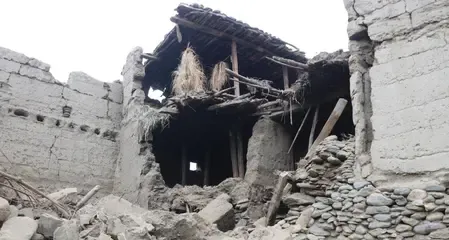
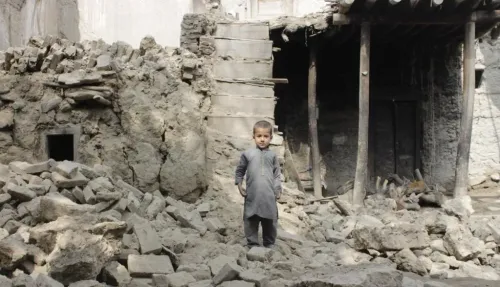
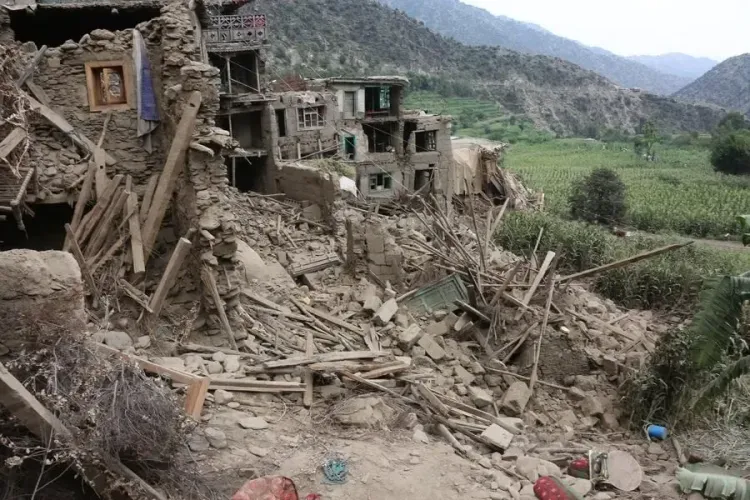
Kabul, Nov 3 (NationPress) A devastating earthquake measuring 6.3 on the Richter scale struck northern Afghanistan early Monday morning, resulting in at least seven fatalities and over 100 injuries, as reported by various media outlets.
The US Geological Survey (USGS) issued an orange alert via its PAGER system—an automated tool designed to evaluate the potential effects of earthquakes—cautioning that significant casualties are likely and that the disaster could be widespread.
The earthquake occurred at a depth of 28 km (17.4 miles) near Mazar-e Sharif, a bustling city with a population of approximately 523,000, according to the USGS.
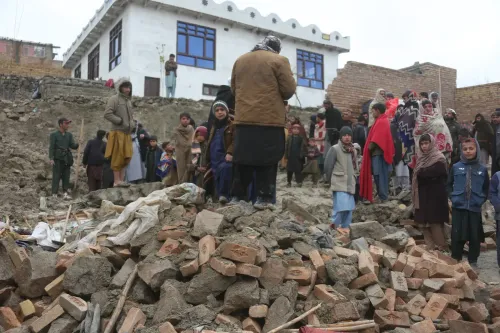
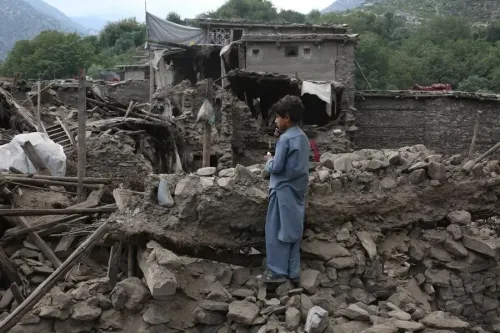
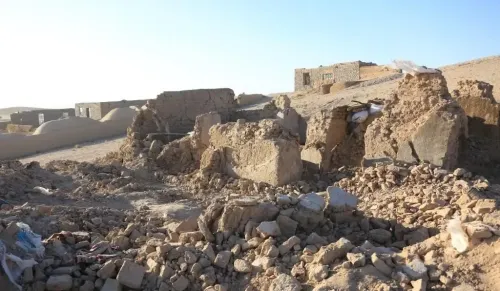
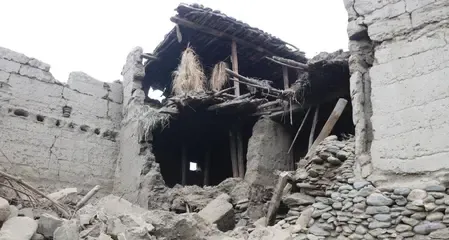
Videos depicting rescue efforts to save individuals trapped beneath debris, alongside images of collapsed structures and scattered wreckage, have circulated widely on the social media platform X.
Earlier, on September 23, a 4.9-magnitude earthquake had rocked southeastern Afghanistan, as reported by the GFZ German Research Centre for Geosciences. This earlier quake had an epicenter located at a shallow depth of 10 km, with geographical coordinates at 34.48 degrees north latitude and 70.71 degrees east longitude.
Since the Taliban came to power in 2021, they have contended with a series of catastrophic earthquakes, including a 2023 quake in the western Herat region close to the Iranian border, which resulted in over 1,500 casualties and the destruction of more than 63,000 homes.
A separate major quake—a shallow magnitude 6 tremor—hit the eastern region on August 31 of this year, claiming more than 2,200 lives, making it one of the deadliest earthquakes in Afghanistan's recent history.
Afghanistan is located at the convergence zone of the Eurasian and Indian tectonic plates, with additional seismic activity from the Arabian plate to the south, rendering it one of the most seismically active areas globally.
The nation is also facing numerous crises following decades of conflict, including widespread poverty, severe drought, and the involuntary repatriation of millions of Afghans from Pakistan and Iran.
Seismologist Brian Baptie from the British Geological Survey noted that northeastern Afghanistan has experienced 12 earthquakes exceeding magnitude 7 since 1900. Further studies indicate that over 355 earthquakes greater than magnitude 5.0 have occurred in the country since 1990.
The eastern and northeastern regions—especially areas bordering Uzbekistan, Tajikistan, and Pakistan—remain particularly vulnerable to seismic activity.
Point of View
It's imperative to recognize the ongoing struggles of the Afghan people. The combination of natural disasters and political instability has exacerbated their plight. As we report on these critical events, our commitment remains with the affected communities, ensuring their stories are told with compassion and accuracy.
NationPress
22 Sept 2026
Frequently Asked Questions
What was the magnitude of the recent earthquake in Afghanistan?
The recent earthquake in northern Afghanistan measured 6.3 on the Richter scale.
How many casualties were reported from the earthquake?
At least seven people have died, and over 100 individuals have been injured due to the earthquake.
Where did the earthquake occur?
The earthquake struck near Mazar-e Sharif in northern Afghanistan.
What previous earthquake events have occurred in Afghanistan?
Earlier this year, a 4.9-magnitude earthquake struck southeastern Afghanistan, and in August, a 6-magnitude quake caused over 2,200 fatalities.
What factors contribute to Afghanistan's seismic activity?
Afghanistan is situated at the convergence of the Eurasian and Indian tectonic plates, making it one of the most seismically active regions globally.