Ebola in DR Congo: Women, children bear heaviest toll in Ituri outbreak
Synopsis
The Ebola outbreak in DRC's Ituri province is hitting women and children hardest — maternal deaths have nearly doubled, six women die weekly from childbirth complications, and children account for a third of all fatalities despite making up a quarter of confirmed cases. With health service use down 40 per cent and nearly a million people displaced, the UN is racing to restore community trust before the outbreak crosses into South Sudan.
Key Takeaways
Nearly 1 million people are displaced in Ituri province, DRC , with 80 per cent being women and children.
Children represent almost one third of all Ebola deaths but only about a quarter of confirmed cases, per UNICEF .
Maternal deaths in Ituri have nearly doubled since the outbreak began, with roughly six women dying weekly from childbirth-related complications.
Health service use in the hardest-hit areas has fallen by more than 40 per cent due to fear of infection.
13,000 community workers have reached more than 2.4 million people with prevention messaging; over 500,000 household visits conducted.
South Sudan has screened more than 135,300 travellers at border entry points and pre-positioned over 7 tonnes of emergency supplies in Yambio .
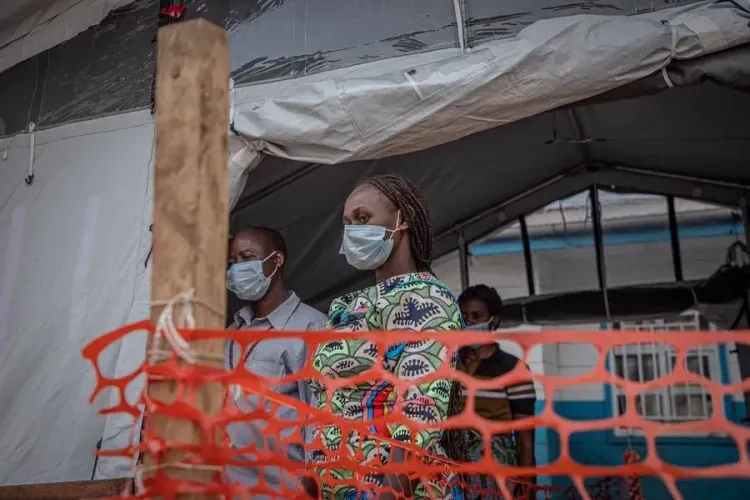
Women and children are bearing a disproportionate share of the ongoing Ebola outbreak in the Ituri province of the Democratic Republic of the Congo (DRC), the United Nations warned on 8 August, as maternal deaths and child fatalities mount in one of Africa's most volatile humanitarian corridors.
Scale of the Crisis in Ituri
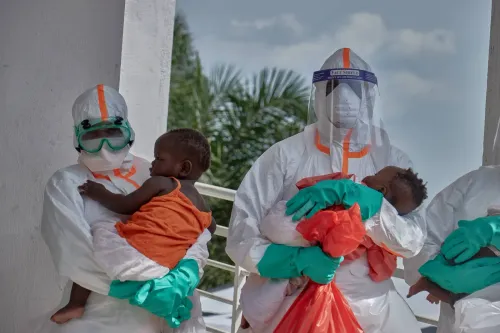
The outbreak is unfolding against an already dire backdrop: nearly 1 million people are displaced in Ituri, of whom approximately 80 per cent are women and children, according to the UN Office for the Coordination of Humanitarian Affairs (OCHA). The UN Children's Fund (UNICEF) reports that children account for nearly one third of all Ebola deaths, even though they represent roughly a quarter of confirmed cases — a fatality ratio that signals severe gaps in paediatric care and early detection.
Maternal Deaths and Collapse of Health Services
The outbreak is also dismantling the region's already fragile health infrastructure. In the hardest-hit areas of Ituri, use of health services has dropped by more than 40 per cent in recent months, as fear of infection deters communities from seeking care, UNICEF said. The UN Population Fund (UNFPA) warned that overstretched facilities and fear of Ebola are preventing pregnant women from accessing essential services. Maternal deaths in Ituri have reportedly nearly doubled since the outbreak began, with an average of approximately six women dying each week from childbirth-related complications. Ebola infection during pregnancy, according to UN agencies, remains associated with almost universal fetal loss.
Community Response and Outreach Efforts
OCHA stressed that rebuilding community confidence is central to containing the outbreak. UNICEF and partners — working alongside the DRC Ministry of Public Health, the World Health Organisation (WHO), and the Africa Centres for Disease Control and Prevention (Africa CDC) — have deployed 13,000 community workers, reaching more than 2.4 million people with Ebola prevention and early detection messaging. More than 500,000 household visits have been conducted to counter misinformation and encourage early care-seeking.
Cross-Border Risk: South Sudan on Alert
In neighbouring South Sudan, the UN and partners are supporting government-led preparedness efforts, even as no confirmed cases have been reported there. OCHA noted that population movement across the DRC-South Sudan border continues to pose a transmission risk. This month alone, health partners screened more than 135,300 travellers at South Sudan's points of entry. More than 300 health workers and front-line personnel have been trained in screening, triage, infection prevention, and safe burials. Over 7 tonnes of emergency medical supplies have been pre-positioned in Yambio, near the DRC border.
Insecurity Compounds the Challenge
Humanitarian operations face a compounding threat: insecurity. Between January and July, 451 incidents blocking or threatening humanitarian operations were recorded across South Sudan. Along the Yei-Morobo corridor, 32 humanitarian staff abductions have been documented since January of last year, underscoring the acute dangers faced by responders in the highest-risk zones. The combination of active conflict, displacement, and disease is testing the limits of the international response. How quickly community trust is restored in Ituri will determine whether this outbreak is contained or escalates further.
Point of View
The response corridor itself is under siege. The real test is not whether 13,000 community workers can reach 2.4 million people — they apparently can — but whether the political will exists to secure the humanitarian space needed to act on what those workers find.
NationPress
22 Sept 2026
Frequently Asked Questions
Which region of DRC is the Ebola outbreak affecting most severely?
The outbreak is centred in Ituri province in eastern DRC, where nearly 1 million people are displaced. Women and children make up approximately 80 per cent of the displaced population and are bearing the heaviest burden of the disease.
Why are children dying from Ebola at a higher rate than adults in Ituri?
According to UNICEF, children account for almost one third of all Ebola deaths despite representing only about a quarter of confirmed cases. This elevated fatality ratio points to delayed diagnosis and limited access to paediatric care, compounded by a 40 per cent drop in health service use driven by community fear of infection.
How has the Ebola outbreak affected maternal health in Ituri?
Maternal deaths in Ituri have nearly doubled since the outbreak began. Approximately six women die each week from childbirth-related complications, as fear of Ebola and overstretched health facilities prevent pregnant women from seeking care. Ebola infection during pregnancy is also associated with almost universal fetal loss, according to UN agencies.
Has Ebola spread to South Sudan?
No confirmed Ebola cases have been reported in South Sudan as of 8 August. However, OCHA has flagged ongoing cross-border population movement as a transmission risk. South Sudan has screened more than 135,300 travellers at points of entry and pre-positioned over 7 tonnes of emergency supplies near the DRC border.
What is the UN doing to contain the Ebola outbreak in DRC?
UNICEF, WHO, Africa CDC, and the DRC Ministry of Public Health have jointly deployed 13,000 community workers, reaching more than 2.4 million people with prevention and early detection messaging. Over 500,000 household visits have been conducted to counter misinformation and encourage early care-seeking, with community confidence identified as the key to containment.