Are Elections Feasible in Bangladesh Without the July Charter's Implementation?
Synopsis
As political unrest escalates in Bangladesh, the National Citizen Party claims elections cannot proceed without implementing the July Charter. This assertion raises questions about the future of governance and public trust. How will this impact the upcoming elections?
Key Takeaways
The NCP insists elections cannot occur without the July Charter's implementation.
Political tensions are escalating in Bangladesh as elections approach.
Public trust and stability are crucial for legitimate elections.
Multiple parties are calling for reforms to address public dissatisfaction.
Failure to engage in dialogue may lead to further unrest.
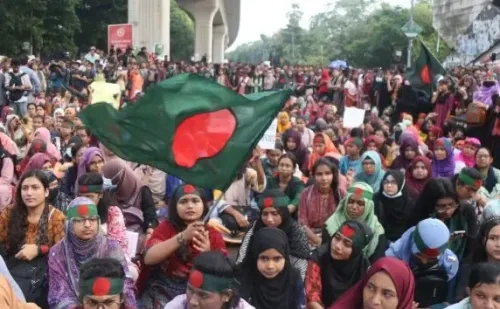
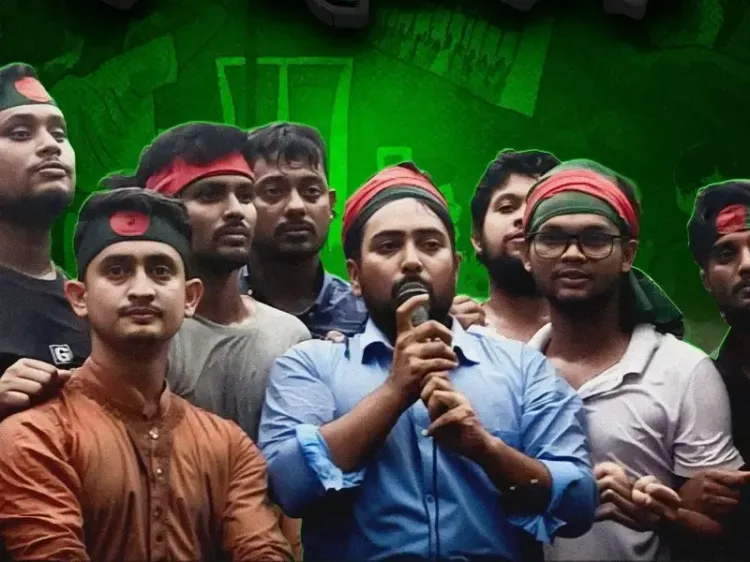
Dhaka, Oct 30 (NationPress) As political tensions rise in Bangladesh ahead of the upcoming elections next year, the National Citizen Party (NCP) has declared that conducting polls in the nation is impossible without the execution of the July Charter, according to local media.
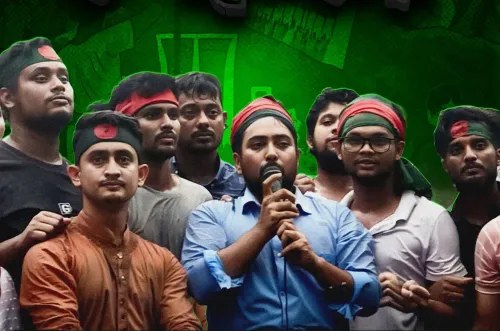
NCP convener Nahid Islam made these statements while speaking to the press after a party event in the Rangpur district.
“We are calling for swift elections. However, for those elections to be valid, there must be stability and trust. The populace anticipated the establishment of a functional and accountable government following the mass uprising. It is now our duty to meet those expectations,” quoted Jugantor, a Bengali daily from Bangladesh.
Nahid further emphasized, “We are convinced that if elections occur without addressing the fundamental desires of the populace, reforms, and justice, such elections will lack sustainability.”
He also indicated that since August 5, a new era of politics characterized by corruption, extortion, and occupation has emerged, leading to the rise of social fascism in the nation.
“For lasting and stable transformation, we advocate for the implementation of essential reforms, including certain constitutional amendments. Should any barriers arise or if the government procrastinates, both the government and those obstructing progress will have to confront the populace,” Nahid asserted.
In the meantime, as the political divide deepens regarding the July Charter, the Bangladesh Nationalist Party (BNP) has accused the National Consensus Commission of deceiving the people and political factions with its final recommendations on the July Charter, demanding immediate amendments to include dissenting opinions.
Conversely, the radical Islamist Party Jamaat–e–Islami has urged that a referendum on the constitutional reforms proposed in the July Charter be conducted before the elections, even if this means delaying the vote.
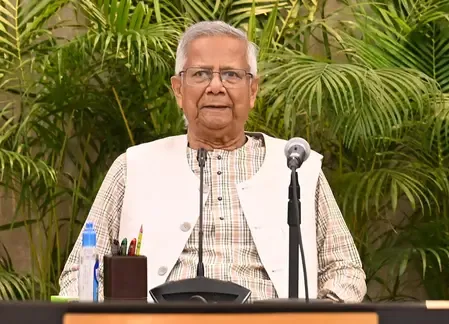
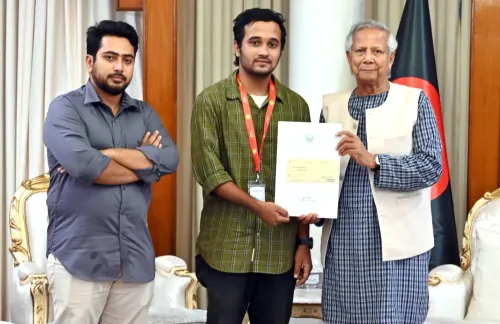
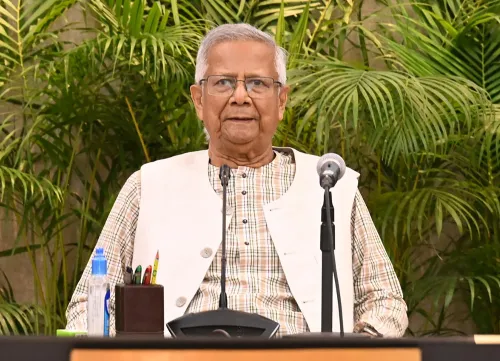
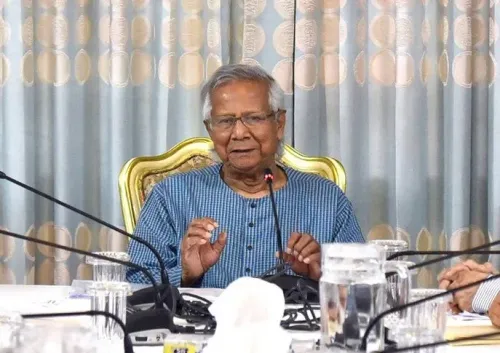
These events follow the submission of the NCC’s recommendations to the Chief Advisor of the interim government, Mohammad Yunus, regarding the implementation of the July Charter.
Bangladesh continues to grapple with increasing uncertainty and political unrest as the election date approaches.
The factions that once collaborated with Yunus to oust the democratically elected government of the Awami League, led by Sheikh Hasina, are now in conflict over reform proposals.
Point of View
It is essential that all parties engage in constructive dialogue to address the concerns surrounding the July Charter. The path to sustainable governance lies in fulfilling the public's expectations for transparency and accountability. As the nation approaches its elections, prioritizing unity and reform will be crucial in navigating these challenging times.
NationPress
19 Sept 2026
Frequently Asked Questions
What is the July Charter?
The July Charter refers to a set of proposed reforms aimed at ensuring fair and transparent elections in Bangladesh.
Why does the NCP believe elections are impossible without the July Charter?
The NCP asserts that elections must reflect the minimum aspirations of the people to be legitimate and sustainable.
What are the political implications of the NCP's statement?
The NCP's stance highlights the growing political divide and calls for urgent reforms to address public concerns.
How has the political landscape in Bangladesh changed recently?
Political tensions have increased significantly, with various parties now at odds over reform proposals and governance issues.
What are the demands of the Jamaat-e-Islami party regarding the elections?
Jamaat-e-Islami has demanded a referendum on the constitutional reforms in the July Charter before the elections, even if it means postponing the vote.