Essar Group's $18 billion Iowa steel plant would be largest in US history
Synopsis
At a White House event on 29 September, India's Ruia family unveiled a proposed $18 billion steel and mining investment spanning Minnesota and Iowa — a project Trump called the largest steel plant in American history. But conflicting cost figures from the Commerce Secretary and the Ruias themselves, combined with an undisclosed construction timeline, mean the headline numbers deserve scrutiny before the steel is poured.
Key Takeaways
Essar Group founder Ravi Ruia announced a combined investment of approximately $18 billion in a Minnesota iron ore mine and a southeastern Iowa steel plant on 29 September .
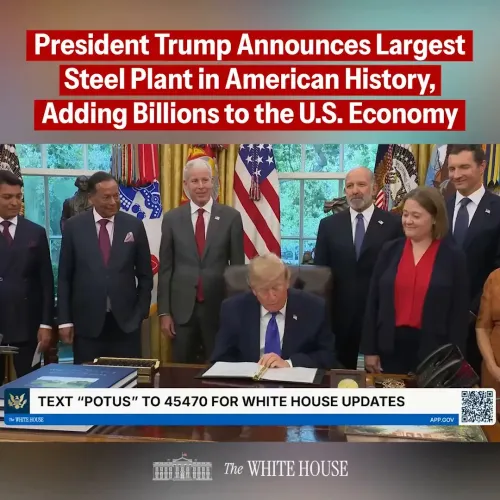
President Donald Trump described the proposed Iowa facility as the largest steel plant in American history , projecting output of 10 million tons of steel annually.
The project is expected to generate up to 6,000 construction jobs and nearly 2,000 manufacturing and mining jobs , according to Trump's projections.
Investment figures cited at the event differed: Commerce Secretary Howard Lutnick put the total at $17.5 billion , while Rewant Ruia cited $3 billion for the mine alone; no reconciliation was offered.
The US Export-Import Bank reportedly helped finance the Minnesota mine; the steel plant is described as privately funded.
No construction schedule or financing terms for the mill were disclosed at the White House event.
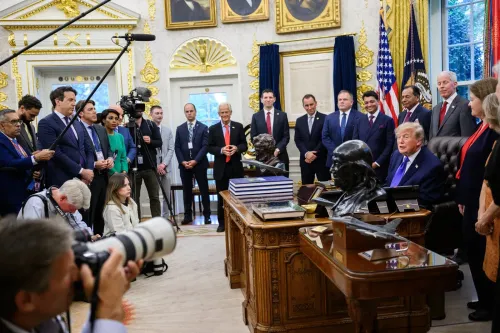
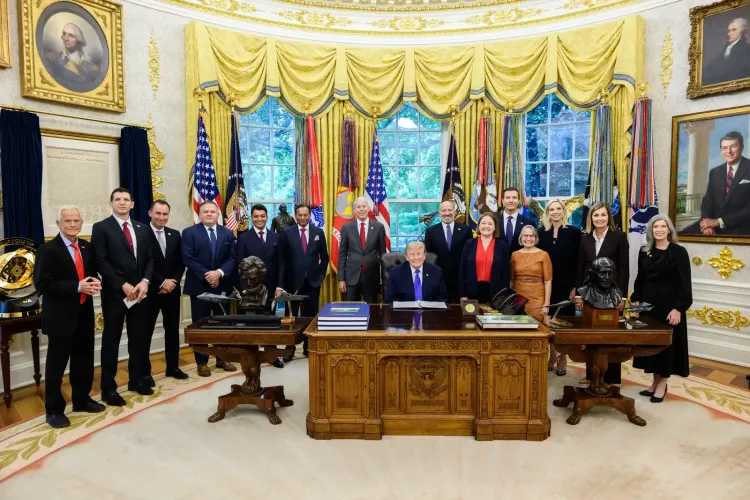
India's Essar Group has announced plans to build what President Donald Trump described as the largest steel plant in American history, with the Ruia family joining Trump at the White House on 29 September to unveil an investment the group's founder put at approximately $18 billion. The proposed facility, to be located in southeastern Iowa, would be supplied by an iron ore mine in Minnesota, linking two storied regions of American heavy industry.
What Was Announced
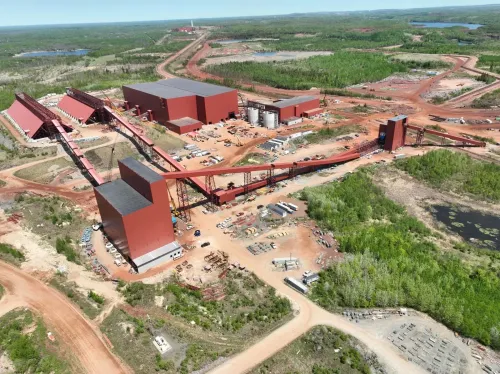
Essar Group founder Ravi Ruia, responding to a direct question from Trump about the total outlay, placed the combined investment at 'About $18 billion.' The proposed project pairs a mine in Minnesota's Iron Range — operated under the name Mesabi Metallics — with a steel complex in southeastern Iowa that Trump said would eventually produce 10 million tons of steel annually.
Trump projected up to 6,000 construction jobs and nearly 2,000 manufacturing and mining jobs from the project. Both figures are estimates for a facility whose steel production has not yet begun, and no construction schedule was disclosed at the event.
Discrepancies in the Investment Figures
The headline number was not without ambiguity. Commerce Secretary Howard Lutnick described the investment differently, citing a $2.5 billion mine and a $15 billion steel plant — a combined total of $17.5 billion. Rewant Ruia, son of Ravi Ruia and a US-educated executive who led the announcement, separately said the family was committing $3 billion to the mine alone. Neither Lutnick nor Rewant Ruia explained the differences in the figures publicly at the event.
Public Financing and State Involvement
The question of government support surfaced shortly after the announcement. Lutnick confirmed that the US Export-Import Bank had helped finance the Minnesota mine, while describing the steel plant itself as privately funded. He characterised the agreement as completed, though no financing terms or a detailed construction timeline for the mill were made available in the event transcript.
Iowa Governor Kim Reynolds acknowledged that negotiations had been difficult but welcomed the project, expressing hope that local businesses would be given the opportunity to work with Mesabi Metallics. She framed the announcement as a significant opportunity for jobs and local supply chains across the state.
The Ruia Family's American Connection
Rewant Ruia cast the announcement in personal terms, describing it as a homecoming. 'While I was born in India, I went to high school in New York, college in Boston, and did my MBA in California. I spent half my life here so announcing this investment today is a great honor and a true homecoming for me,' he said at the White House.
Ravi Ruia noted that he and his brother Shashi Ruia had built Essar over decades into a conglomerate spanning steel plants, refineries, ports, and power facilities across India and overseas. 'We have now chosen to build our next major chapter here in America,' he said, adding that the Iowa facility would draw on the group's accumulated industrial experience.
Scale, Timeline, and What Comes Next
A steel project of this magnitude — linking a mine, a rail network, energy infrastructure, and a greenfield mill — typically requires years of construction, equipment installation, and commissioning before reaching planned output. Essar's own history includes large-scale steel operations in India, giving the group relevant experience, though American regulatory, labour, and logistics conditions present a distinct operating environment.
This comes amid Trump's broader push to revive domestic steelmaking, with the Iowa announcement serving as a high-profile signal of that agenda. Notably, the involvement of the Export-Import Bank in mine financing raises questions about the boundary between private investment and public subsidy — a line that critics of industrial policy on both sides of the aisle are likely to scrutinise as the project moves forward.
Point of View
Flanked by the president. But the arithmetic does not yet add up cleanly: three different figures for the mine investment alone, no construction timeline, and Export-Import Bank financing that blurs the 'private investment' framing. Trump's industrial revival agenda needs headline wins, and Essar needs American credibility after a turbulent decade that included debt restructuring in India. Both parties have reasons to project confidence before the first shovel breaks ground. The real test will be whether Mesabi Metallics can secure permits, financing, and offtake agreements at a scale that justifies the $18 billion figure — and whether Iowa's supply chain is ready for a project of this complexity.
NationPress
29 Sept 2026
Frequently Asked Questions
What is the Essar Group Iowa steel plant project?
It is a proposed greenfield steel facility in southeastern Iowa, announced at the White House on 29 September by India's Ruia family alongside President Donald Trump. The project, linked to an iron ore mine in Minnesota operated as Mesabi Metallics, carries a combined investment that Essar Group founder Ravi Ruia put at approximately $18 billion.
Why did Trump call it the largest steel plant in US history?
Trump described the proposed Iowa facility as the largest in American history based on its projected annual output of 10 million tons of steel. The plant has not yet been built, and the claim refers to planned capacity rather than any operational benchmark.
How many jobs will the Iowa steel plant create?
President Trump projected up to 6,000 construction jobs and nearly 2,000 permanent manufacturing and mining jobs. These are estimates for a project that has not yet begun steel production, and no verified employment timeline was provided at the announcement.
Is public money involved in the Essar Iowa steel project?
Commerce Secretary Howard Lutnick confirmed that the US Export-Import Bank helped finance the Minnesota iron ore mine. He described the steel plant itself as privately funded, though no detailed financing terms were disclosed at the White House event.
Who are the Ruias and what is Essar Group?
Essar Group is an Indian conglomerate founded by brothers Ravi Ruia and Shashi Ruia, built over decades into a business spanning steel, refining, ports, and power. Rewant Ruia, Ravi's son, is a US-educated executive who led the Iowa announcement and described the investment as a personal and corporate homecoming.