White House Touts $15B Mesabi Steel Mill as Trump's Mining Reset
Synopsis
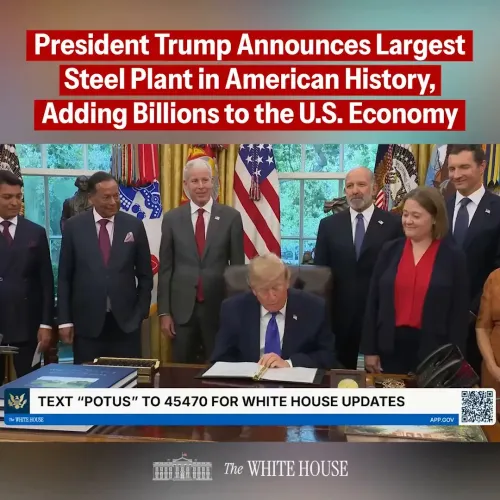
The White House says President Trump has approved a $15 billion Mesabi Metallics steel mill — one of the largest in U.S. history — promising 1,750 permanent jobs, 6,000 construction roles, and a $95 billion economic boost over ten years, framing it as a definitive reversal of years of anti-mining policy.
Key Takeaways
$15 billion investment announced for the Mesabi Metallics steel mill, described by the White House as one of the largest in American history.
Project is projected to create 1,750 permanent jobs and support 6,000 construction jobs .
The White House claims the facility will add $95 billion to the U.S. economy over the next decade.
The announcement is framed as President Trump reversing years of what the administration calls anti-mining policy.
The Mesabi name historically ties to Minnesota's iron-ore belt; the post references Iowa for job creation — a geographic detail not yet reconciled publicly.
Congressional permitting timelines and independent economic verification remain the critical next steps for the project.
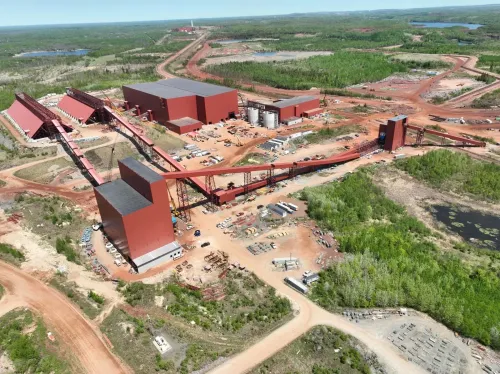
A $15 billion steel mill bearing the Mesabi Metallics name is at the centre of the White House's latest pitch for an American industrial revival — framed explicitly as President Donald Trump reversing years of what the administration calls anti-mining policy in a single sweeping move.
The Numbers the White House Is Leading With
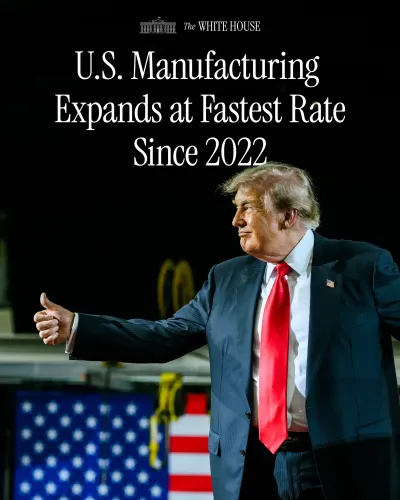
The official post from the White House, published on Tuesday, September 29, 2026, lays out three headline figures: 1,750 permanent jobs, support for 6,000 construction jobs, and a projected $95 billion contribution to the U.S. economy over the next decade. The facility is described as one of the largest steel plants in American history — a claim that, if borne out, would place it among a very short list of post-war industrial mega-projects on U.S. soil.
The White House did not specify the precise location of the plant in its post, though the Mesabi name is historically associated with the iron-ore-rich Mesabi Range in Minnesota — a region that supplied the raw material for American steel dominance through much of the twentieth century. The job-creation language in the post, however, references Iowa, a detail that has not been independently reconciled.
Trump's Deregulation Playbook, Revived at Scale
The announcement fits squarely inside a policy architecture Trump first assembled during his 2017–2021 first term: executive rollbacks on mining permits, an 'energy dominance' framing, and steep tariffs on imported steel designed to make domestic production economically competitive again. The Mesabi Metallics project, as presented, is the industrial capstone that administration allies have long argued those earlier moves were building toward.
Steel workers and mining communities — constituencies Trump has courted aggressively across multiple election cycles — are the most direct beneficiaries named in the White House framing. A facility of this stated scale would represent a generational shift in employment for whichever region hosts it, particularly given the decades-long contraction of integrated steelmaking capacity across the American Midwest.
What Comes Next for the Project
The key variables now are permitting timelines, congressional posture, and whether independent economic assessments validate the $95 billion decade-long projection. Large-scale mining and steel projects in the U.S. have historically faced multi-year environmental review processes, and any acceleration of those processes will itself become a political and legal flashpoint.
If the construction job figure of 6,000 materialises on schedule, the project's build-out phase alone would rank among the largest single-site employment events in American heavy industry in recent memory — and would hand the Trump administration a concrete, camera-ready symbol of its industrial policy heading into the next legislative cycle.
Steel made in America, at this scale, would be a hard image to argue against. Whether the numbers hold under scrutiny is the question every state capital and union hall near the site will be asking next.
Point of View
Photogenic industrial monument — the kind of project that can anchor a re-election or legacy narrative. Framing it as a reversal of 'years of anti-mining policy' is a deliberate contrast with Democratic-era environmental permitting regimes, designed to resonate with Rust Belt and mining-state constituencies. The $95 billion projection, however, will face intense scrutiny: mega-project economic forecasts in the U.S. have a mixed track record, and the geographic ambiguity between Minnesota and Iowa in the announcement suggests the public rollout is still ahead of the administrative detail. How quickly permits clear — and whether Congress backs any accelerated review — will determine whether this becomes a durable policy win or a headline that stalls on the ground.
NationPress
29 Sept 2026
Frequently Asked Questions
What is the Mesabi Metallics steel plant?
Mesabi Metallics is a large-scale steel manufacturing project announced by the White House as a $15 billion facility, described as one of the largest steel plants in American history, intended to boost domestic steel production.
How many jobs will the Mesabi Metallics mill create?
According to the White House announcement, the project will create 1,750 permanent jobs and support an additional 6,000 construction jobs during the build-out phase.
Where is the Mesabi Metallics steel plant located?
The Mesabi name is historically associated with the iron-ore-rich Mesabi Range in Minnesota, though the White House post references Iowa in its job-creation language — a geographic detail that has not been publicly clarified.
What is Trump's anti-mining policy reversal about?
The White House frames the Mesabi Metallics project as President Trump undoing years of restrictive mining and permitting policies, consistent with his administration's broader push for domestic energy and industrial dominance through deregulation and steel tariffs.
How much will the Mesabi steel mill add to the US economy?
The White House projects the facility will contribute $95 billion to the U.S. economy over the next decade, though this figure has not yet been independently verified.