EU GSP+ report on Pakistan reads like a chargesheet on rights abuses
Synopsis
The EU's latest GSP+ monitoring report doesn't just flag Pakistan's human rights record — it effectively puts Islamabad on notice. With 28 per cent of Pakistan's exports headed to Europe and revised GSP rules kicking in from 2027, the cost of continued regression is no longer abstract. This is the clearest signal yet that preferential trade access and democratic backsliding cannot indefinitely coexist.
Key Takeaways
The EU's 2023–2025 GSP+ monitoring report on Pakistan found the country 'regressed in a number of areas' on human rights and rule of law.
Enforced disappearances and extrajudicial killings reportedly increased, with no accountability for perpetrators.
Amendments to cybercrime, anti-terrorism, and blasphemy laws have been used against journalists, minorities, and dissidents, according to the report.
28 per cent of Pakistan's exports go to the European Union , making Europe its largest export market and amplifying the stakes.
Pakistan has been the largest GSP+ beneficiary since joining the scheme in 2014 , with continued access now tied to compliance under revised rules from 2027 .
The EU has outlined priority reforms including ending enforced disappearances, strengthening judicial independence, and protecting journalists and minorities.
The European Union's latest monitoring assessment of Pakistan under the Generalised Scheme of Preferences Plus (GSP+) trade framework reads less like a routine review and more like a formal indictment of the country's deteriorating human rights record, according to an analysis published in the Times of Israel. The report, covering the 2023–2025 period, places Pakistan's democratic trajectory under heightened international scrutiny and signals that future trade preferences may hinge on genuine institutional reform rather than legislative promises.
What the EU Report Found
Michael Arizanti, a writer and expert on Middle East affairs, described the EU assessment as one of the 'sharpest official evaluations' yet of Pakistan's democratic decline. He noted that Pakistan has held preferential trade access under the GSP+ scheme since 2014, making it the programme's largest beneficiary — a status now under pressure.
The European Commission and the EU High Representative for Foreign Affairs and Security Policy jointly concluded that Pakistan 'regressed in a number of areas while positive change was limited,' raising alarm over the rule of law and the shrinking space for civil society.
Key Human Rights Concerns Flagged
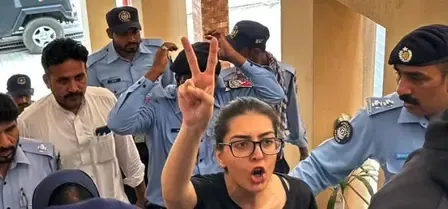
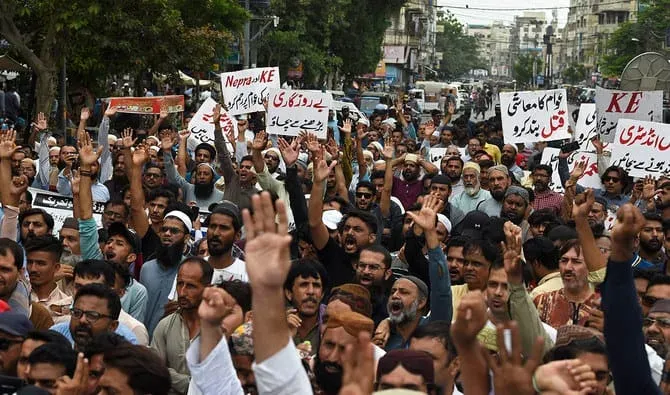
The joint monitoring report documented a pattern of serious violations. Enforced disappearances and extrajudicial killings reportedly increased during the review period, with no accountability for perpetrators. Freedom of expression deteriorated sharply, with amendments to cybercrime, anti-terrorism, and blasphemy laws enabling vague provisions to be deployed against dissidents, human rights defenders, journalists, religious minorities, and ordinary citizens.
The Commission outlined a series of priority reforms for Pakistan, including ending enforced disappearances, strengthening judicial independence, improving prison conditions, protecting journalists, amending cybercrime and blasphemy laws, enhancing safeguards for minorities, and ensuring accountability for human rights violations.
What Is at Stake for Pakistan
The economic stakes are considerable. According to Arizanti, nearly 28 per cent of Pakistan's exports are destined for the European Union, making Europe its largest export market. Any reduction in GSP+ benefits would strike at one of the country's most critical sources of export revenue at a moment when it is grappling with high poverty, fragile foreign exchange reserves, and deep structural economic challenges.
Arizanti noted that the GSP+ scheme's 27 international conventions — covering human rights, labour standards, environmental protection, and good governance — are not optional benchmarks but binding obligations tied to market access. 'These trade preferences are not unconditional economic benefits,' he wrote, adding that the question of whether Pakistan can retain commercial advantages while drifting from those standards is now unavoidable.
Revised GSP Rules and the 2027 Deadline
The EU has made clear that Pakistan's continued access to GSP+ benefits will depend on demonstrated compliance with its international commitments under the revised GSP rules from 2027. This signals a broader shift in European trade policy, where preferential market access is increasingly conditioned on governance, sustainability, and compliance with international norms — not merely treaty ratification. For Pakistan, the window for credible reform is narrowing.
Point of View
Not just admonish. Pakistan's dependence on European markets for nearly a third of its exports means this is a rare moment of genuine external leverage. The real question is whether Brussels has the political will to use it, or whether geopolitical considerations — counterterrorism cooperation, regional stability — will once again insulate Islamabad from accountability.
NationPress
18 Jul 2026
Frequently Asked Questions
What is the EU GSP+ scheme and why does it matter to Pakistan?
The EU's Generalised Scheme of Preferences Plus (GSP+) grants preferential tariff access to developing countries that ratify and implement 27 international conventions on human rights, labour standards, environmental protection, and good governance. Pakistan has been the scheme's largest beneficiary since joining in 2014, with nearly 28 per cent of its exports going to the EU — making continued access an economic priority.
What specific human rights violations did the EU report flag in Pakistan?
The joint EU monitoring report for 2023–2025 found that enforced disappearances and extrajudicial killings increased without accountability. It also cited deterioration in freedom of expression, with cybercrime, anti-terrorism, and blasphemy laws being used against journalists, human rights defenders, religious minorities, and dissidents.
Could Pakistan lose its GSP+ trade benefits?
The EU has warned that Pakistan's continued access to GSP+ will depend on compliance with its international commitments under revised GSP rules coming into effect from 2027. While no benefits have been withdrawn yet, the 2023–2025 monitoring report represents one of the sharpest official assessments of Pakistan's non-compliance to date.
What reforms has the EU demanded from Pakistan?
The European Commission outlined several priority reforms, including ending enforced disappearances, strengthening judicial independence, improving prison conditions, protecting journalists, amending cybercrime and blasphemy laws, enhancing safeguards for religious minorities, and ensuring accountability for human rights violations.
Who analysed the EU report and what was the key conclusion?
Michael Arizanti, a writer and expert on Middle East affairs, analysed the report in the Times of Israel, describing it as one of the 'sharpest official assessments' yet of Pakistan's democratic decline. His central argument was that Pakistan cannot indefinitely retain GSP+ commercial advantages while drifting from the human rights standards on which the programme is built.