EU-India FTA not driven by Trump tweets, say chief negotiators
Synopsis
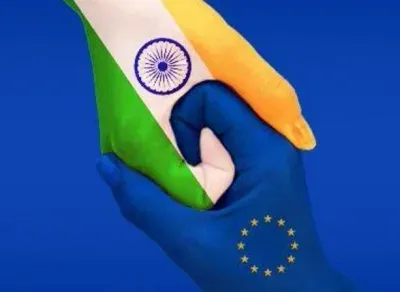
The EU and India's chief negotiators have publicly and pointedly rejected the narrative that Donald Trump's tariff disruptions pushed the two sides into a free trade deal — insisting the pact is the product of a decade-long strategic convergence, not a tweet. The rebuttal, delivered at a Washington think-tank, signals how both sides want the agreement's legacy framed: as a rules-based, values-driven partnership, not a reactive hedge.
Key Takeaways
EU chief negotiator Christophe Kiener rejected claims the EU-India FTA was driven by Trump's trade policies , saying the deal reflects genuine strategic and economic interest.
India's chief negotiator Darpan Jain noted that both sides committed to concluding talks in January 2025 — before US trade policy shifts began.
Original EU-India FTA negotiations stalled in 2013 and restarted from scratch in 2022 .
India has concluded nine free trade agreements in the past five years, reflecting a broader strategy of expanding market access.
The agreement requires legal review and ratification; EU officials hope for a signing in 2025 and implementation in 2026 .
Moderator Cecilia Malmstrom described the deal as sending 'a powerful geopolitical message' for rules-based trade.
The European Union has firmly rejected suggestions that shifting US trade policies under President Donald Trump were the catalyst for its landmark free trade agreement (FTA) with India, with both sides' chief negotiators insisting the pact reflects years of strategic and economic commitment rather than any short-term geopolitical pressure.
What the EU's Chief Negotiator Said
Christophe Kiener, the EU's chief negotiator for the agreement, pushed back sharply during a discussion hosted by the Peterson Institute for International Economics in Washington on 9 July, when asked whether recent trade turbulence had accelerated the deal's conclusion.
'I would dispute that,' Kiener said. 'We did not conclude this agreement because of a tweet. We concluded this agreement because there is a genuine and strategic and economic interest for the EU and India to come closer.'
Kiener acknowledged that the global trading environment had grown increasingly uncertain in recent years, but stressed that the agreement's foundations were laid well before the current wave of trade tensions. He described the FTA as 'the jewel on the crown' of a broader EU-India partnership spanning trade, security, defence, mobility, and technology, adding that it is 'commercially very, very meaningful.'
Why Talks Stalled — and Why They Restarted
Kiener recalled that the original negotiations broke down because 'the EU's menu for FTA did not quite match that of India,' prompting both sides to suspend talks in 2013. When negotiations resumed in 2022, they began on a fresh slate rather than building on earlier draft texts.
He cited several factors that reinforced the urgency of closer cooperation: the failure to advance global trade liberalisation through the World Trade Organization (WTO), supply-chain lessons from the Covid-19 pandemic, and instability generated by Russia's war against Ukraine. Together, these developments pushed both sides toward predictable rules and diversified supply chains.
India's Position: Commitment Predates US Policy Shifts
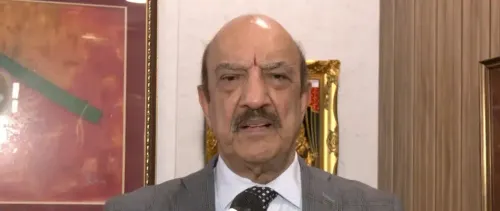
Darpan Jain, India's chief negotiator, echoed that assessment, dismissing any suggestion that the agreement was primarily a response to recent US trade policy changes. He noted that when the European Commission leadership visited New Delhi in January 2025 and both sides committed to concluding negotiations by year-end, 'the US trade policy changes had not started.'
'In fact, the new US administration had just taken over at that time,' Jain said, attributing the political will to the deepening India-EU relationship and India's broader strategy of expanding market access. He pointed out that India had concluded nine free trade agreements over the past five years, underpinned by 'a strong political commitment' to reduce disadvantages for Indian exporters and promote outward economic engagement.
The Geopolitical Significance
Both negotiators framed the agreement as carrying weight beyond commerce. Cecilia Malmstrom, who moderated the Peterson Institute discussion, said the pact sends 'a powerful geopolitical message' by demonstrating that two of the world's largest economies remain committed to transparent, rules-based trade at a time of rising tariffs and protectionism globally.
This comes amid a broader trend of major democracies seeking to anchor trade relationships in shared values and diversified supply networks, rather than dependence on any single trading partner.
What Comes Next
The agreement still requires legal review and formal ratification before it can enter into force. EU officials have expressed hope that it can be signed later in 2025 and implemented in 2026. Indian officials indicated that New Delhi's approval process is comparatively straightforward, requiring Cabinet approval followed by presidential ratification. The path ahead, while procedurally clear, will be watched closely by trade observers on both sides.
Point of View
Both sides are asserting the deal's legitimacy as a strategic choice rather than a panic response, which matters for its long-term durability. Yet the timing is hard to fully separate from the US trade environment: the 2022 restart and the 2025 deadline both coincide with periods of heightened global trade anxiety. The more interesting question mainstream coverage is missing is whether the FTA's ratification pace — comparatively swift on India's side — reflects a genuine shift in New Delhi's historically cautious approach to trade liberalisation, or whether political optics are driving a procedural sprint that could leave implementation gaps.
NationPress
9 Jul 2026
Frequently Asked Questions
Why did the EU reject claims that Trump drove the EU-India FTA?
EU chief negotiator Christophe Kiener stated that the deal was concluded because of genuine strategic and economic interest, not because of any tweet or short-term US trade policy shift. He said the foundations of the agreement were laid well before the current wave of trade tensions.
When did EU-India free trade agreement negotiations restart?
Negotiations restarted in 2022, beginning afresh rather than building on earlier draft texts. The original talks had stalled in 2013 because the two sides' negotiating priorities did not align.
What did India's chief negotiator say about the timing of the FTA?
Darpan Jain noted that when the European Commission visited New Delhi in January 2025 and both sides committed to concluding talks by year-end, the US trade policy changes under the new administration had not yet begun. He attributed the deal to India's broader FTA strategy and the deepening India-EU relationship.
When will the EU-India FTA come into force?
The agreement still requires legal review and formal ratification. EU officials hope it can be signed later in 2025 and implemented in 2026. India's approval process requires Cabinet approval followed by presidential ratification.
How many free trade agreements has India signed in recent years?
India has concluded nine free trade agreements over the past five years, according to chief negotiator Darpan Jain, reflecting a strong political commitment to expanding market access and reducing disadvantages for Indian exporters.