Pokhara Airport to get daily intl flights from Sept 23 as Flydubai steps in
Synopsis
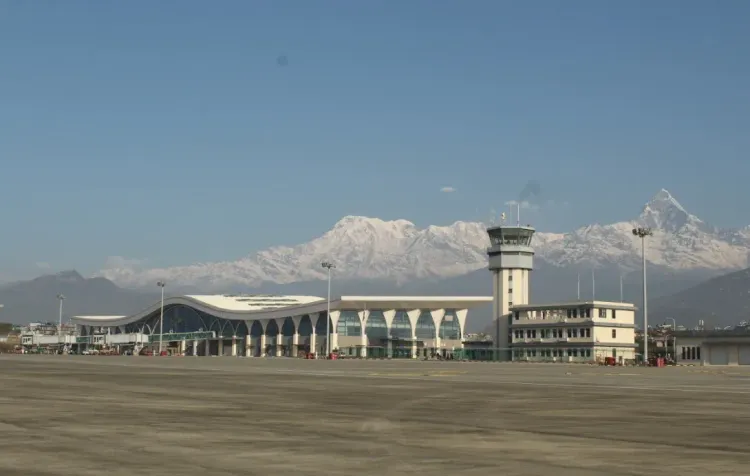
More than three years after opening to much fanfare, Nepal's China-funded Pokhara International Airport is finally getting its first daily international service — but only on a one-month trial basis. Flydubai's 23 September launch is a lifeline for an airport burdened by a $215.96 million debt, active corruption cases against six former ministers, and a government study flagging structural operational constraints that have kept airlines away.
Key Takeaways
Flydubai will launch daily Dubai–Pokhara direct flights from 23 September 2026 , operating from Terminal 3 of Dubai International Airport .
It is the first carrier to offer scheduled daily international services at Pokhara International Airport , inaugurated on 1 January 2023 .
The Civil Aviation Authority of Nepal (CAAN) has granted permission for a provisional one-month trial; regular approval follows a positive commercial assessment.
The airport was built with a $215.96 million loan from the China Export-Import Bank ; the CIAA has filed corruption charges against six former ministers and dozens of officials over the project.
CAAN has waived all aeronautical charges at the airport for three years to attract carriers, with limited success; no other airline has currently applied for services there.
Gautam Buddha International Airport in Bhairahawa faces a similar lack of international traffic, underscoring Nepal's broader airport viability challenge.
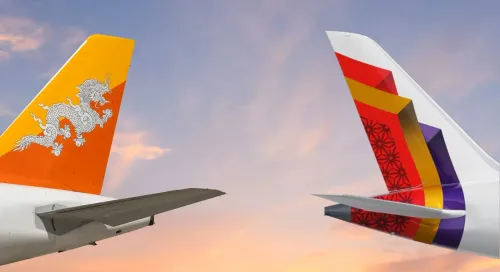
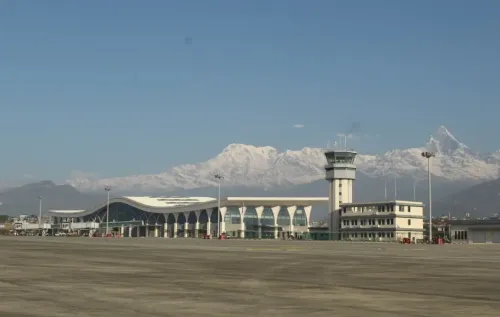
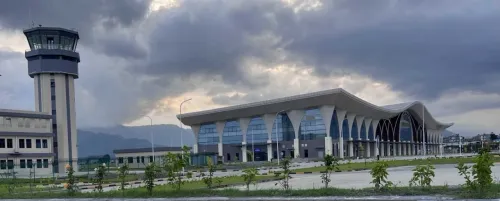
Pokhara International Airport, the $215.96 million China-funded facility in western Nepal that has struggled to attract regular international traffic since its inauguration on 1 January 2023, is set to finally receive daily international flights when Dubai-based carrier Flydubai launches a direct service from Dubai International Airport (DXB) on 23 September 2026. The airline will become the first carrier to operate scheduled daily international services to Nepal's tourism capital, marking a significant — if long-overdue — milestone for an airport that critics have labelled a 'white elephant'.
Flydubai's Announcement and Route Details
Flydubai confirmed that the daily direct service will operate from Terminal 3 of Dubai International Airport, connecting the UAE hub with Pokhara. The airline, which has operated in Nepal since 2009 and has carried approximately four million passengers on its Nepal routes to date, described the launch as 'a significant expansion' of its presence in the country.
The Civil Aviation Authority of Nepal (CAAN), which developed the airport with Chinese financing and is responsible for repaying the debt, has granted Flydubai permission for provisional scheduled flights for one month beginning 23 September. Gyanendra Bhul, Information Officer at CAAN, said the airline has committed to continuing operations if the route proves technically and commercially viable during the trial period. Regular commercial approval would follow a positive assessment, he added.
A Troubled History for the Airport
The airport's road to relevance has been rocky. It was built using a loan of $215.96 million from the China Export-Import Bank and constructed by China CAMC Engineering Co., Ltd. — both of which are now defendants in an ongoing corruption case. The Commission for Investigation of Abuse of Authority (CIAA), Nepal's anti-graft body, has filed corruption charges against six former ministers — one of whom is deceased — and several dozen senior officials over alleged irregularities in the project's construction.
The only international service previously operated from the airport was a weekly Pokhara–Lhasa route by Himalaya Airlines, a Nepal-China joint venture, which began in March 2025 but was discontinued by March 2026, leaving the airport without any regular international connection for months.
Structural Challenges Holding Back Traffic
A government study identified several operational constraints at the airport, including load restrictions arising from obstacles in the flight path, runway length limitations, temperature effects, and pavement quality concerns. These factors raise airlines' operating costs and have reportedly deterred international carriers from committing to the route.
To counter this, CAAN has waived landing, parking, navigation, security, ground-handling, and other aeronautical charges at Pokhara International Airport for the past three years. Despite these concessions, no other international airline has currently applied to begin regular services there, according to Bhul.
Nepal's Wider Airport Woes
Pokhara is not alone in its struggle. Gautam Buddha International Airport in Bhairahawa, in southwestern Nepal, faces a similar predicament. Carriers including Qatar Airways, AirAsia, Jazeera Airways, and Nepal Airlines have all previously operated from the airport, but CAAN officials confirm that no international flights are currently running from that facility either.
This pattern raises broader questions about Nepal's aviation planning and the viability of developing multiple international airports in a market constrained by geography, infrastructure, and airline economics.
What Comes Next
CAAN hopes that a successful Flydubai trial will encourage other carriers to explore Pokhara. Bhul said, 'If Flydubai continues its operations at the airport, we hope other airlines will also be encouraged to launch flights to the city.' The direct Dubai–Pokhara link is also expected to strengthen tourism flows between the two destinations. Whether the 23 September launch translates into sustained international connectivity — and begins to justify the airport's debt burden — will be closely watched by Nepal's aviation sector and its creditors alike.
Point of View
But it is a provisional lifeline, not a vindication of the airport's planning. A $215.96 million Chinese loan, active corruption charges against six former ministers, documented structural constraints, and three years of waived charges that still failed to attract carriers — the fundamentals have not changed. Nepal now has two international airports outside Kathmandu that cannot sustain regular international traffic, raising an uncomfortable question about whether the country's aviation ambitions were calibrated to market reality or to geopolitical optics. If Flydubai's trial fails to convert into a permanent route, the 'white elephant' label will be harder than ever to shake.
NationPress
24 Sept 2026
Frequently Asked Questions
When will Flydubai start daily flights to Pokhara?
Flydubai is scheduled to begin daily direct flights between Dubai and Pokhara on 23 September 2026, operating from Terminal 3 of Dubai International Airport. The service has been granted provisional permission for one month, after which CAAN will assess whether to approve regular commercial operations.
Why has Pokhara International Airport struggled to attract international airlines?
A government study identified load restrictions caused by obstacles, runway length, temperature effects, and pavement quality — all of which raise airlines' operating costs. Despite CAAN waiving all aeronautical charges for three years, these structural constraints have deterred carriers from committing to the route.
What corruption cases surround the Pokhara airport project?
Nepal's anti-graft body, the Commission for Investigation of Abuse of Authority (CIAA), has filed corruption charges against six former ministers and several dozen senior officials over alleged irregularities in the airport's construction. China CAMC Engineering Co., Ltd., which built the airport, is also among the defendants.
Who funded the construction of Pokhara International Airport?
The airport was built using a loan of $215.96 million from the China Export-Import Bank and was constructed by China CAMC Engineering Co., Ltd. CAAN, Nepal's aviation regulator, is responsible for repaying the debt.
Has any other airport in Nepal faced similar problems?
Yes. Gautam Buddha International Airport in Bhairahawa, southwestern Nepal, has also struggled to retain international services. Carriers including Qatar Airways, AirAsia, Jazeera Airways, and Nepal Airlines have previously operated from the airport, but no international flights are currently running there, according to CAAN officials.